440 books match the query 'Colonialism & Post-Colonialism' and 8 start with u
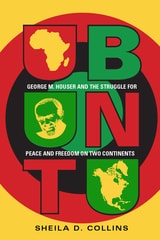
cover of Ubuntu: George M. Houser and the Struggle for Peace and Freedom on Two Continents

Ubuntu

George M. Houser and the Struggle for Peace and Freedom on Two Continents

Sheila D. Collins

Ohio University Press, 2020

This remarkable biography features a white American pacifist minister whose tireless work for justice and human rights helped reshape Black civil rights in the U.S. and Africa.

George M. Houser (1916–2015) was one of the most important civil rights and antiwar activists of the twentieth century. A conscientious objector during World War II, in 1942 Houser cofounded and led the Congress of Racial Equality (CORE), whose embrace of nonviolent protest strategies and tactics characterized the modern American Civil Rights Movement. Beginning in the 1950s, Houser played a critical role in pan-Africanist anticolonial movements, and his more than thirty-year dedication to the cause of human rights and self-determination helped prepare the ground for the toppling of the South African apartheid regime.

Throughout his life, Houser shunned publicity, preferring to let his actions speak his faith. Sheila Collins’s well-researched biography recounts the events that informed Houser’s life of activism—from his childhood experiences as the son of missionaries in the Philippines to his early grounding in the Social Gospel and the teachings of Mohandas Gandhi. In light of the corruption the U.S. and the world face today, Houser’s story of faith and decisive action for human rights and social justice is one for our time.
[more]
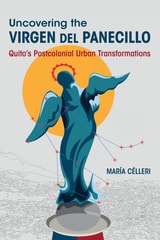
cover of Uncovering the Virgen del Panecillo: Quito’s Postcolonial Urban Transformations

Uncovering the Virgen del Panecillo

Quito’s Postcolonial Urban Transformations

María Célleri

University of Illinois Press, 2026

The stories behind an icon
 
Taller than the Rio de Janiero’s Christ the Redeemer statue, the Virgen del Panecillo draws visitors to the center of Quito, Ecuador, to take advantage of the site’s unique view of the city. But few know the history behind El Panecillo or the monument.

María Célleri examines the eighty-year effort to complete Quito’s soaring monument to the Virgin Mary. Focusing on the negotiations behind the project, Célleri uncovers the links between the government and Church—links that became stronger during moments of political and economic transition. Célleri also investigates how the city’s residents and activists, and artists like filmmakers, graffiti artists, and photographers, interact with the monument. Throughout, she looks at questions like the Virgen del Panecillo’s service to Ecuador as a form of cultural capital, the Virgen’s symbolic meanings to different groups, and the often-hidden connections between colonialism, Catholicism, and artistic production.

Original and multifaceted, Uncovering the Virgen del Panecillo provides readers with a rigorous decolonial analysis of an iconic monument and its history.
[more]
cover of Unmaking Botany: Science and Vernacular Knowledge in the Colonial Philippines

Unmaking Botany

Science and Vernacular Knowledge in the Colonial Philippines

Kathleen Cruz Gutierrez

Duke University Press, 2025
In Anglo-European botany, it is customary to think of the vernacular as that which is not a Latin or Latinized scientific plant name. In Unmaking Botany, Kathleen Cruz Gutierrez traces a history of botany in the Philippines during the last decades of Spanish rule and the first decades of US colonization. Through this history, she redefines the vernacular, expanding it to include embodied, cosmological, artistic, and varied taxonomic practices. From the culinary textures of rice and the lyrics crooned to honor a flower to the touch of a skirt woven from banana fiber, she illuminates how vernaculars of plant knowing in the Philippines exposed the philosophical and practical limits of botany. Such vernaculars remained as sovereign forms of knowledge production. Yet, at the same time, they fueled botany’s dominance over other ways of knowing plants. Revealing this tension allows Gutierrez to theorize “sovereign vernaculars,” or insight into plants that made and unmade the science, which serves as a methodological provocation to examine the interplay of different knowledge systems and to study the history of science from multiple vantage points.
[more]
cover of Unreasonable Histories: Nativism, Multiracial Lives, and the Genealogical Imagination in British Africa

Unreasonable Histories

Nativism, Multiracial Lives, and the Genealogical Imagination in British Africa

Christopher J. Lee

Duke University Press, 2015

In Unreasonable Histories, Christopher J. Lee unsettles the parameters and content of African studies as currently understood. At the book's core are the experiences of multiracial Africans in British Central Africa—contemporary Malawi, Zimbabwe, and Zambia—from the 1910s to the 1960s. Drawing on a spectrum of evidence—including organizational documents, court records, personal letters, commission reports, popular periodicals, photographs, and oral testimony—Lee traces the emergence of Anglo-African, Euro-African, and Eurafrican subjectivities which constituted a grassroots Afro-Britishness that defied colonial categories of native and non-native. Discriminated against and often impoverished, these subaltern communities crafted a genealogical imagination that reconfigured kinship and racial descent to make political claims and generate affective meaning. But these critical histories equally confront a postcolonial reason that has occluded these experiences, highlighting uneven imperial legacies that still remain. Based on research in five countries, Unreasonable Histories ultimately revisits foundational questions in the field, to argue for the continent's diverse heritage and to redefine the meanings of being African in the past and present—and for the future.
[more]
cover of Up Against the Archive: Experiments in Writing British Empire History Otherwise

Up Against the Archive

Experiments in Writing British Empire History Otherwise

Antoinette Burton, editor

Duke University Press, 2027
In essays covering five centuries of British imperialism and a variety of genres and forms, the contributors to Up Against the Archive make the case for experimental historical writing as a way to work through the gaps and erasures of imperial archives. Drawing on Black feminist theory and Saidiya Hartman’s method to “creatively disorder the institutional fictions and the violent abstractions authorized as fact and truth,” they challenge ways of knowing and telling inherited from British imperialism. Each contribution centers on a distinct archival object or moment in time, exploring ways of understanding historical subjectivity from means and material not included or legible in the traditional archive. In Up Against the Archive, interdisciplinary scholars meet the challenges of our contemporary moment with inventive forms of storytelling that suggest possibilities for doing empire history in an anti-imperial mode.
[more]
cover of Urban Saniscapes: Slums, Housing and Everyday Sanitation in  Accra and Nairobi, 1908–1963

Urban Saniscapes

Slums, Housing and Everyday Sanitation in Accra and Nairobi, 1908–1963

Waseem-Ahmed Bin-Kasim

Michigan State University Press, 2025
In this comparative study, Bin-Kasim examines environmental sanitation in the historical development of Accra and Nairobi, the capitals of the Gold Coast (Ghana) and Kenya. This book traces the approaches to sanitation during colonial rule and urban growth throughout the first half of the twentieth century and beyond. From the consolidation of the colonial regimes to the Great Depression, urbanization waves, and postwar development, sanitation was both a cause and a consequence of the built environment. Bin-Kasim characterizes this complex relationship between sanitation and urban growth over time as the 'saniscape.' The saniscape is the confluence of public health, planning interventions, and various urban constituencies, and includes an array of influences like colonial expertise and African industry, which shaped the two cities regardless of their power dynamics and land tenure. Attention to the saniscape validates how Africans called out colonial discrimination and inefficiencies to intervene and shape cities. This volume highlights the shared histories of Accra and Nairobi and upends conventional narratives that attach too much difference to non-settler and settler colonialism.
[more]
cover of Utrecht University and Colonial Knowledge: Exploration, Exploitation and the Civilising Mission since 1636

Utrecht University and Colonial Knowledge

Exploration, Exploitation and the Civilising Mission since 1636

Henk van Rinsum

Amsterdam University Press, 2025

In this book, Henk van Rinsum provides an in-depth description of the colonial past of Utrecht University in the Netherlands, from its foundation in 1636. He describes the development of (scientific) knowledge and knowledge transfer about and in the Dutch colonies, especially in the Dutch East Indies. The central theme of his book is the idea of Western superiority – the assumption that we are ‘developed’ and therefore modern, while those in the colonies are ‘not (yet) developed’ and therefore primitive or traditional. This colonial past is also the framework in which Utrecht University became involved in slavery and its abolition.
Henk van Rinsum shows how the knowledge acquired in the colony also contributed significantly to the scientific development of the university, especially towards the end of the nineteenth century. Utrecht University and Colonial Knowledge is therefore an important contribution to both colonial and intellectual history.
[more]
cover of unrest in the nebulae

unrest in the nebulae

Gitan Djeli

Duke University Press, 2026

In unrest in the nebulae, Gitan Djeli wields prose poetry to archive five hundred years of exploitative colonization, ecocide, extinction, militarization and deportation, slavery, indenture, negotiated nationhood, postcolonial plantation structures, and apologist histories. Writing in a queer anticolonial poetics, and using lines of Kreol, Gitan Djeli mines the tension that emerges between colonialism and language, disarticulating the myth-making aesthetics of the colonial world. She tells the story of the ‘other slavery’ in the Indian Ocean and its histories of enslavement and indenture through a subversive, fragmented poetics, and often from the perspective of its geologic witnesses—a misnamed ocean or the range of mountains within it or the volcanic idea of islands. In a charge of resistance to the catastrophe of modernity, unrest in the nebulae takes seriously Sylvia Wynter’s invitation to engage “a new science of the word.”
[more]