Results by title
162 books match the query 'Comparative Politics' and 2 start with u
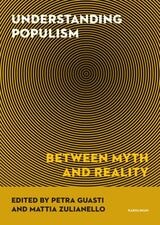
Understanding Populism
Between Myth and RealityEdited by Petra Guasti and Mattia Zulianello
Karolinum Press, 2026
A concise and analytically rigorous guide to one of the most contested concepts in contemporary politics.
Understanding Populism is driven by a clear objective: to advance understanding of populism by systematically dismantling the myths that continue to dominate public discourse and, at times, academic debate. The book approaches populism as a coherent yet flexible set of ideas that can be analyzed through careful conceptual clarification and comparison.
The book opens with an unconventional introduction structured as a dialogue that directly addresses common misunderstandings and establishes the volume’s analytical orientation. The core of the book consists of 101 short chapters organized into six thematic sections, each devoted to critically examining a central myth about populism. Each section concludes with a synthetic reflection highlighting key insights.
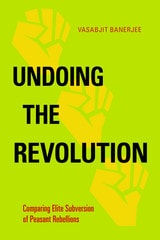
Undoing the Revolution
Comparing Elite Subversion of Peasant RebellionsVasabjit Banerjee
Temple University Press, 2019
Undoing the Revolution looks at the way rural underclasses ally with out-of-power elites to overthrow their governments—only to be shut out of power when the new regime assumes control. Vasabjit Banerjee first examines why peasants need to ally with dissenting elites in order to rebel. He then shows how conflict resolution and subsequent bargains to form new state institutions re-empower allied elites and re-marginalize peasants.
Banerjee evaluates three different agrarian societies during distinct time periods spanning the twentieth century: revolutionary Mexico from 1910 to 1930; late-colonial India from 1920 until 1947; and White-dominated Zimbabwe (Rhodesia) from the mid-1960s to 1980. This comparative approach also allows examination of both the underclass need for elite participation and the variety of causes that elites use to incentivize peasant classes to participate, extending from religious-ethnic identity and common political targets to the peasants’ and elites’ own economic grievances.
Undoing the Revolution demonstrates that both international and domestic investors in cash crops, natural resources, and finance can ally with peasant rebels; and, after threatened or actual state collapse, they can bargain with each other to select new state institutions.