Results by title
436 books match the query 'Disability' and 7 start with u
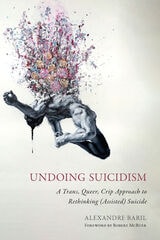
Undoing Suicidism
A Trans, Queer, Crip Approach to Rethinking (Assisted) SuicideAlexandre Baril
Temple University Press, 2023
Undoing Suicidism questions the belief that the best way to help suicidal people is through the logic of prevention. Alexandre Baril presents the thought-provoking argument that supporting assisted suicide for suicidal people could better prevent unnecessary deaths. Offering a new queercrip model of (assisted) suicide, he invites us to imagine what could happen if we started thinking about (assisted) suicide from an anti-suicidist and intersectional framework.
Baril provides a radical reconceptualization of (assisted) suicide and invaluable reflections for academics, activists, practitioners, and policymakers.

Ungendering Menstruation
przybylo
University of Minnesota Press, 2025
Why and how menstrual pain needs to be incorporated into discussions of gender, embodiment, and disability
Honing a “cranky” approach to being a menstruating body expected to accept and embrace trauma, Ungendering Menstruation examines menstrual suppression, toxicity, and the cooptation of menstrual positivity rhetoric. Drawing on their own experiences as a toxic shock survivor and a menstrual pain and period dysphoria sufferer, Ela Przybyło questions why, on what terms, and for whom menstruation has been fixed around experiences of pain. Instead, they present a vision for menstrual justice that refuses the womaning of bleeding and the further erasure, dismissal, and denial of menstrual pain as real pain.
If menstruating is framed as somatechnically elective, Przybyło contends, it provides avenues for both celebrating and appreciating cultures of bleeding as well as for remaining critical of the ways in which bleeding has been used as a transphobic and sexist tool to fix gender in place.
Unlearning Eugenics
Sexuality, Reproduction, and Disability in Post-Nazi EuropeDagmar Herzog
University of Wisconsin Press, 2020
Bringing together the latest findings in Holocaust studies, the history of religion, and the history of sexuality in postwar—and now also postcommunist—Europe, Unlearning Eugenics shows how central the controversies over sexuality, reproduction, and disability have been to broader processes of secularization and religious renewal. Herzog also restores to the historical record a revelatory array of activists: from Catholic and Protestant theologians who defended abortion rights in the 1960s–70s to historians in the 1980s–90s who uncovered the long-suppressed connections between the mass murder of the disabled and the Holocaust of European Jewry; from feminists involved in the militant "cripple movement" of the 1980s to lawyers working for right-wing NGOs in the 2000s; and from a handful of pioneers in the 1940s–60s committed to living in intentional community with individuals with cognitive disability to present-day disability self-advocates.
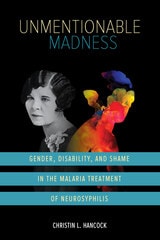
Unmentionable Madness
Gender, Disability, and Shame in the Malaria Treatment of NeurosyphilisChristin L. Hancock
University of Illinois Press, 2025
Christin L. Hancock looks through the lens of feminist disability to examine the popular but ethically suspect treatment and its consequences. As Hancock shows, the treatment’s purported success rate relied on the disabled minds and bodies of people incarcerated in mental hospitals. The backgrounds and identities of these patients reflected and perpetuated attitudes around poverty, gender, race, and disability while betraying authorities’ desire to protect the public from women and men perceived as abnormal, sexually tainted, and unworthy of community life.
Paying special attention to the patients’ voices and experiences, Unmentionable Madness offers a disability history that confronts the ethics of experimentation.
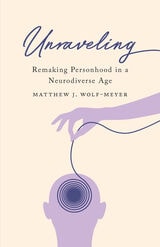
Unraveling
Remaking Personhood in a Neurodiverse AgeMatthew J. Wolf-Meyer
University of Minnesota Press, 2020
Developing a cybernetic model of subjectivity and personhood that honors disability experiences to reconceptualize the category of the human
Twentieth-century neuroscience fixed the brain as the basis of consciousness, the self, identity, individuality, even life itself, obscuring the fundamental relationships between bodies and the worlds that they inhabit. In Unraveling, Matthew J. Wolf-Meyer draws on narratives of family and individual experiences with neurological disorders, paired with texts by neuroscientists and psychiatrists, to decenter the brain and expose the ableist biases in the dominant thinking about personhood.
Unraveling articulates a novel cybernetic theory of subjectivity in which the nervous system is connected to the world it inhabits rather than being walled off inside the body, moving beyond neuroscientific, symbolic, and materialist approaches to the self to focus instead on such concepts as animation, modularity, and facilitation. It does so through close readings of memoirs by individuals who lost their hearing or developed trauma-induced aphasia, as well as family members of people diagnosed as autistic—texts that rethink modes of subjectivity through experiences with communication, caregiving, and the demands of everyday life.
Arguing for a radical antinormative bioethics, Unraveling shifts the discourse on neurological disorders from such value-laden concepts as “quality of life” to develop an inclusive model of personhood that honors disability experiences and reconceptualizes the category of the human in all of its social, technological, and environmental contexts.
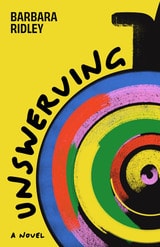
Unswerving
Barbara Ridley
University of Wisconsin Press, 2024
In rehab, Tave relearns life skills and comes to recognize that her future will be completely different than she’d imagined. Where will she live? How will she find the help she needs? Can her friends rise to the occasion? Or will she be forced to move back in with her mother, putting up with endless talk of faith healers? Her one beacon of hope is Beth, her physical therapist. But Beth’s relationship problems with her own girlfriend push her toward overinvolvement—and risk damaging both her career and Tave’s recovery.
A story of courage, resilience, and love, Unswerving challenges readers’ preconceived notions of disability, of limitations, and of the inevitability of fate.
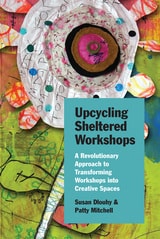
Upcycling Sheltered Workshops
A Revolutionary Approach to Transforming Workshops into Creative SpacesSusan Dlouhy
Ohio University Press, 2015
At a time when the traditional sheltered workshop model has fallen under rightful criticism, and a new paradigm for disability programming is not yet in place, Upcycling Sheltered Workshops offers a revolutionary alternative. As many push to dismantle sheltered workshops, Susan Dlouhy and Patty Mitchell present the Creative Abundance Model, a proven method that redirects sheltered workshops from routine to creativity, putting participants in the driver’s seat.
The Creative Abundance Model does away with the repetitive tasks that characterize traditional workshops. Instead, it is a structured but more open program that incorporates art, music, and other creative pursuits, freeing participants to discover their individual skills and talents. The authors both advocate for the model and provide instructions for implementing it, outlining such steps as obtaining funding, gaining the support and participation of the surrounding community, and preparing studios. Case studies from around the nation and inspiring photographs illustrate Dlouhy and Mitchell’s methods and document the many ways in which participants in Creative Abundance thrive.