Results by title
577 books match the query 'Earth Sciences' and 9 start with u
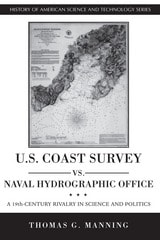
U.S. Coast Survey vs. Naval Hydrographic Office
A 19th-Century Rivalry in Science and PoliticsThomas G. Manning
University of Alabama Press, 1988
UP
A Scientist's Guide to the Magic Above UsLucy Rogers
Michigan State University Press, 2027
Engineer and bubble scientist Lucy Rogers invites us to explore the wonders of the air, sky, and space; understand the science; and appreciate the insights this offers about life on Earth. The sky is a world of endless wonder. From the intricate dance of clouds and the vibrant hues of the aurora borealis to the marvel of effortless soaring birds and the silent majesty of the stars, it is a living storybook. Join Rogers on a marvelous adventure through a kite market in India, creep through the Borneo jungle to witness millions of bats pour out of a cave at dusk, venture to Tornado Alley to chase the raw power of storms, and journey to Mexico to stand in awe of a total solar eclipse. Up is for anyone who has ever looked up at the sky in awe and needs to know the science behind its never-ending phenomena.
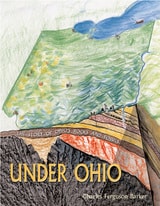
Under Ohio
The Story of Ohio’s Rocks and FossilsCharles Ferguson Barker
Ohio University Press, 2007
Under Osman's Tree
The Ottoman Empire, Egypt, and Environmental HistoryAlan Mikhail
University of Chicago Press, 2017
The early modern Middle East was the world’s most crucial zone of connection and interaction. Accordingly, the Ottoman Empire’s many varied environments affected and were affected by global trade, climate, and disease. From down in the mud of Egypt’s canals to up in the treetops of Anatolia, Alan Mikhail tackles major aspects of the Middle East’s environmental history: natural resource management, climate, human and animal labor, energy, water control, disease, and politics. He also points to some of the ways in which the region’s dominant religious tradition, Islam, has understood and related to the natural world. Marrying environmental and Ottoman history, Under Osman’s Tree offers a bold new interpretation of the past five hundred years of Middle Eastern history.
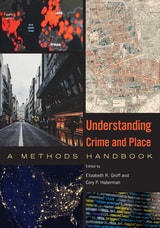
Understanding Crime and Place
A Methods HandbookEdited by Elizabeth R. Groff and Cory P. Haberman
Temple University Press, 2023
Place has become both a major field of criminological study as well as an important area for policy development. Capturing state of the art crime and place research methods and analysis, Understanding Crime and Place is a comprehensive Handbook focused on the specific skills researchers need.
The editors and contributors are scholars who have been fundamental in introducing or developing a particular method for crime and place research. Understanding Crime and Place is organized around the scientific process, introducing major crime and place theories and concepts, discussions of data and data collection, core spatial data concepts, as well as statistical and computational techniques for analyzing spatial data and place-based evaluation. The lessons in the book are supplemented by additional instructions, examples, problems, and datasets available for download.
Conducting place-based research is an emerging field that requires a wide range of cutting-edge methods and analysis techniques that are only beginning to be widely taught in criminology. Understanding Crime and Place bridges that gap, formalizes the discipline, and promotes an even greater use of place-based research.
Contributors: Martin A. Andresen, Matthew P J Ashby, Eric Beauregard, Wim Bernasco, Daniel Birks, Hervé Borrion, Kate Bowers, Anthony A. Braga, Tom Brenneman, David Buil-Gil, Meagan Cahill, Stefano Caneppele, Julien Chopin, Jeffrey E. Clutter, Toby Davies, Hashem Dehghanniri, Jillian Shafer Desmond, Beidi Dong, John E. Eck, Miriam Esteve, Timothy C. Hart, Georgia Hassall, David N. Hatten, Julie Hibdon, James Hunter, Shane D. Johnson, Samuel Langton, YongJei Lee, Ned Levine, Brian Lockwood, Dominique Lord, Nick Malleson, Dennis Mares, David Mazeika, Lorraine Mazerolle, Asier Moneva, Andrew Newton, Bradley J. O’Guinn, Ajima Olaghere, Graham C. Ousey, Ken Pease, Eric L. Piza, Jerry Ratcliffe, Caterina G. Roman, Stijn Ruiter, Reka Solymosi, Evan T. Sorg, Wouter Steenbeek, Hannah Steinman, Ralph B. Taylor, Marie Skubak Tillyer, Lisa Tompson, Brandon Turchan, David Weisburd, Brandon C. Welsh, Clair White, Douglas J. Wiebe, Pamela Wilcox, David B. Wilson, Alese Wooditch, Kathryn Wuschke, Sue-Ming Yang, and the editors.
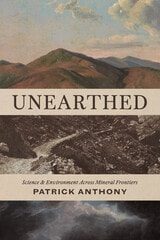
Unearthed
Science and Environment Across Mineral FrontiersPatrick Anthony
University of Chicago Press, 2026
Unearthed depicts a pivotal moment during the nineteenth century: As European and settler schemes to govern ever larger territories intensified, the earth and atmospheric sciences were also becoming more global in scope, assembling models of the planet while making use of militarized or highly industrialized systems. These efforts were informed by the physique du monde, or global physics, of Alexander von Humboldt (1769–1859), a program of vast data collection that spanned four hemispheres that aimed to determine general, scientific laws about the planet and its environments.
Using Humboldt’s itineraries as a frame, Unearthed traces an information order that linked far-flung industrial sites and frontier stations, from Prussian provinces to the Spanish and Russian empires. Humboldt intersected with Saxon miners, Mexican cartographers, and Siberian surveyors, among other itinerant Germans who mobilized the labor and resources of widespread mining operations for global surveys of earth and air. Interweaving the histories of capital and climate, Patrick Anthony takes readers from mines to mountains to show how the sciences of Humboldt’s circuits both measured and made modern natures. These sciences of the mineral frontier, he argues, ultimately laid the groundwork for carbon-intensive economics and a logic of unending extraction. Wide-ranging and ambitious, Unearthed will interest scholars working in the history of science, global history, and the environmental humanities.
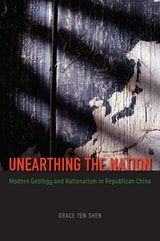
Unearthing the Nation
Modern Geology and Nationalism in Republican ChinaGrace Yen Shen
University of Chicago Press, 2014
The first major history of modern Chinese geology, Unearthing the Nation introduces the key figures in the rise of the field, as well as several key organizations, such as the Geological Society of China, and explains how they helped bring Chinese geology onto the world stage.
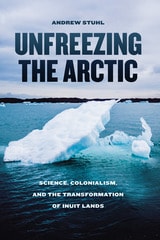
Unfreezing the Arctic
Science, Colonialism, and the Transformation of Inuit LandsAndrew Stuhl
University of Chicago Press, 2016
In Unfreezing the Arctic, Andrew Stuhl brings a fresh perspective to this defining challenge of our time. With a compelling narrative voice, Stuhl weaves together a wealth of distinct episodes into a transnational history of the North American Arctic, proving that a richer understanding of its social and environmental transformation can come only from studying the region’s past. Drawing on historical records and extensive ethnographic fieldwork, as well as time spent living in the Northwest Territories, he closely examines the long-running interplay of scientific exploration, colonial control, the testimony and experiences of Inuit residents, and multinational investments in natural resources. A rich and timely portrait, Unfreezing the Arctic offers a comprehensive look at scientific activity across the long twentieth century. It will be welcomed by anyone interested in political, economic, environmental, and social histories of transboundary regions the world over.
The author intends to donate all royalties from this book to the Alaska Youth for Environmental Action (AYEA) and East Three School's On the Land Program.

Urban Regimes and Strategies
Building Europe's Central Executive District in BrusselsAlex G. Papadopoulos
University of Chicago Press, 1996
In Brussels, Belgium—since 1957 home to the European Union—such change is taking place. Observing the change, Alexis G. Papadopoulos explores a new geographical concept, the Central Executive District. This urban form is significantly different from the Central Business District, its conventional counterpart. Drawing on game and rational choice theories, spatial analysis, and land economics, the author analyzes how the landscape of the city's center has evolved over the last three decades under the influence of successive coalitions of local and foreign elites. He describes how foreign diplomats, international corporate executives, and real-estate developers cooperate with one another to carry out major urban projects in the face of resistance from local neighborhood groups, conservationists, and political factions.
This study makes a substantial contribution to geography and urban studies both for its implications about the future of world cities like New York, London, and Paris and for its original application of the notion of cooperative regimes.