Results by title
447 books match the query 'Eastern' and 11 start with u
Ukraine as a Migration Nexus
Perspectives on Historical and Current Population MovementsOleksii Chebotarov
Central European University Press, 2025
Ukraine's Patronal Democracy and the Russian Invasion
The Russia-Ukraine War, Volume OneBálint Madlovics
Central European University Press, 2023
The Russian invasion of Ukraine in 2022 jeopardizes the country's independence and its chances for Western-style development. However, the heroic attitude of the Ukrainian people, combined with a solidifying national identity, makes the domestic foundations for a western turn stronger than ever. After the invasion, building strong foundations of liberal democracy will be a top priority. In addition to alleviating immediate problems, the country must also address its post-communist legacy and address the constraints of patronalism.
The authors of this edited volume, leading Ukrainian scholars supplemented by colleagues from Hungary, examine the chances of an anti-patronal transformation after the war. The book provides an overview of the development of Ukraine's political-economic system: color revolutions in 2004 and 2014 brought democratic transformation, but no change in the patronage system The result was patronal regime cycles instead of the emergence of a Western-type liberal democracy in the country. Building on the conceptual framework of the editors' The Anatomy of Post-Communist Regimes (CEU Press, 2020), the 12 chapters examine the impact of the war on patronal democracy, the relational economy, clientelist society, and the international environment in which Ukraine operates.
This collection is complemented by the book entitled Russia. Imperial Endeavor and Geopolitical Consequences.
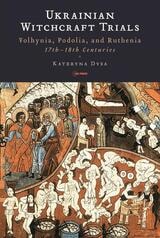
Ukrainian Witchcraft Trials
Volhynia, Podolia, and Ruthenia, 17th–18th CenturiesKateryna Dysa
Central European University Press, 2020
Drawing on quantitative data drawn from a range of trials Kateryna Dysa first describes the ideological background of the tribunals based on works written by priests and theologians that reflect attitudes toward the devil and witches. The main focus of her work, however, is the process leading to witchcraft accusations. From the stories of participants of the trials she shows what led people to enunciate first suspicions then accusations of witchcraft. Finally, she presents a microhistory from one Volhynian village, comparing attitudes toward two “female crimes” in the Ukrainian courts.
The study is based on archival research including witch trials transcripts. Dysa approaches the trials as indications of belief and practice, attempting to understand the actors involved rather than dismiss or condemn them. She takes care to situate early modern Ukrainian witchcraft and its accompanying trials in a broader European context, with comparisons to some African cases as well.

Under Eastern Eyes
A Comparative History of East European Travel Writing on EuropeAlex Drace-Francis
Central European University Press, 2008
Under a Pannonian Sky
Ten Women Poets from HungaryEdited by Ottilie Mulzet
Seagull Books, 2025
Under a Pannonian Sky is a landmark anthology that brings the voices of ten extraordinary Hungarian women poets to English readers. Edited by award-winning translator Ottilie Mulzet, this collection spans generations, offering a rare glimpse into the rich and complex world of Hungarian poetry. The anthology features renowned poets like Ágnes Nemes Nagy and Zsuzsa Rakovszky, whose works have been celebrated internationally, alongside voices such as Gizella Hervay and Magda Székely, who are introduced in-depth to English readers for the first time. Through original and lyrical language, these poets chronicle the traumas of World War II, the Hungarian Holocaust, and the societal upheavals of the 1989 regime change, exploring themes of identity and resilience. Their poems reflect deeply personal confrontations with their roles as citizens, daughters, mothers, and witnesses to turbulent and often disorienting historical epochs.
Under a Pannonian Sky is an essential collection for readers seeking to discover the richness of Hungarian poetry and its profound engagement with the personal and political landscapes of the twentieth century and beyond.
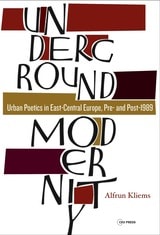
Underground Modernity
Urban Poetics in East-Central Europe, Pre- and Post-1989Alfrun Kliems
Central European University Press, 2021
The literary scholar Alfrun Kliems explores the aesthetic strategies of Eastern European underground literature, art, film and music in the decades before and after the fall of communism, ranging from the ‘father’ of Prague Underground, Egon Bondy, to the neo-Dada Club of Polish Losers in Berlin.
The works she considers are "underground" in the sense that they were produced illegally, or were received as subversive after the regimes had fallen. Her study challenges common notions of ‘Underground’ as an umbrella term for nonconformism. Rather, it depicts it as a sociopoetic reflection of modernity, intimately linked to urban settings, with tropes and aesthetic procedures related to Surrealism, Dadaism, Expressionism, and, above all, pop and counterculture.
The author discusses these commonalities and distinctions in Czech, Polish, Slovak, Ukrainian, Russian, and German authors, musicians, and filmmakers. She identifies intertextual relations across languages and generations, and situates her findings in a transatlantic context (including the Beat Generation, Susan Sontag, Neil Young) and the historical framework of Romanticism and modernity (including Baudelaire and Brecht).
Despite this wide brief, the book never loses sight of its core message: Underground is no arbitrary expression of discontent, but rather the result of a fundamental conflict at the socio-philosophical roots of modernity.
Underground Streams
National-Conservatives after World War II in Communist Hungary and Eastern EuropeJános M. Rainer
Central European University Press, 2023
The authors of this edited volume address the hidden attraction that existed between the extremes of left and right, and of internationalism and nationalism under the decades of communist dictatorship in Eastern Europe. One might suppose that under the suppressive regimes based on leftist ideology and internationalism their right-wing opponents would have been defeated and ultimately removed. These essays, on the other hand, recount the itinerary of survival and revival of "right-wing" thought and activities under communist dictatorship. Resistance and accommodation are explored in the various phases from the Stalinist era to the demise of the Soviet Bloc, with the continuity provided by tacit or concealed right-wing discourses receiving particular consideration. The Eastern European right, both in its conservative and fascist version, centered on nationalism, a legitimizing factor that increased with the downfall of the regimes, and the authors thus accord nationalism special attention.
Two documentary sources for these essays that stand out are files of the security services and the exceptionally rich Oral History Archive compiled by the 1956 Institute in Budapest, Hungary.

Underground Symphony
The Plastic PeopleFrantišek Stárek and Martin Valenta
Karolinum Press, 2026
First-hand insight into the Czechoslovak underground music scene and the numerous obstacles placed in its way by communist-era security services.
Underground Symphony: The Plastic People traces the history of the rock band The Plastic People of the Universe against the backdrop of political developments in communist Czechoslovakia. It begins with the band’s formation in the 1960s, when psychedelic rock was first introduced to Czechoslovakia, through the emergence of the first concepts of cultural opposition and politically oriented dissent, particularly Charter 77, ending with a detailed account of the band’s breakup in the second half of the 1980s.
The authors rely on primary sources, many of which have not been published; for example, the Plastic People’s chronicles, extensive interviews with band members and friends, and contemporary writings by individual participants (in samizdat publications, private correspondence, diaries, etc.). They also “mine” archival sources from the State Security (Archive of Security Services, National Archives, etc.). The result is an insightful study of the legendary underground band and its era.
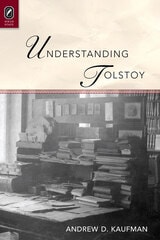
Understanding Tolstoy
Andrew D. Kaufman
The Ohio State University Press, 2010
Understanding Tolstoy recreates Tolstoy’s lifelong artistic and spiritual journey, taking readers to the core of the writer’s world through nuanced close readings of his major novels and novellas. Andrew D. Kaufman’s broad and accessible analysis of Tolstoy’s work speaks to the ways in which Tolstoy, despite living in a manner far removed from the experiences of most modern-day Americans, is still applicable and contemporary.
From a reconstruction of Olenin’s search for truth in The Cossacks to an illuminating analysis of Hadji-Murat’s tragic last stand, Understanding Tolstoy brings to life the fascinating parallels between Tolstoy’s personal quest and his characters’ journeys. Whether writing about the ballrooms and battlefields of War and Peace or the spectrum of sexual and spiritual attachments in Anna Karenina, Tolstoy emerges as a vital, searching artist who continually grows and surprises us, yet is driven by a single, unchanging belief in universal human truths.
Understanding Tolstoy is a treasure trove of critical and philosophical insights that will appeal to Tolstoy aficionados of all kinds, from advanced scholars to undergraduate students. The book offers an eminently readable guide to those entering Tolstoy’s world for the first time or the tenth, and it invites them to grapple alongside the writer and his characters with the most urgent existential questions of our time, and all times.
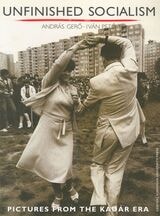
Unfinished Socialism
Pictures from the Kádár EraAndrás Gero
Central European University Press, 1999
This extraordinary book provides a snapshot of socialism throughout the Kádár regime in Hungary (1956-1989) and captures the essence of the world behind the ‘iron curtain’ in a stunning, and often stark, collection of photographs.
Unfinished Socialism is a visually stunning anthropological study containing 450 photographs, many previously unpublished, which portray life in Hungary from every angle: from the May Day March to pop music and from the homeless to sport.
With an introduction that will help the reader understand and appreciate the true meaning of the photographs, this political, social and cultural study of the Kádár years transports the reader back to a time of great significance in Hungary’s long and turbulent history.
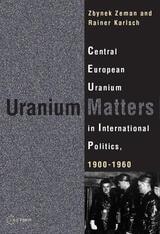
Uranium Matters
Central European Uranium in International Politics, 19001960Rainer Karlsch
Central European University Press, 2008