679 books match the query 'Ecology' and 5 start with u
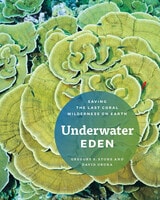
cover of Underwater Eden: Saving the Last Coral Wilderness on Earth

Underwater Eden

Saving the Last Coral Wilderness on Earth

Edited by Gregory S. Stone and David Obura

University of Chicago Press, 2012
“It was the first time I’d seen what the ocean may have looked like thousands of years ago.” That’s conservation scientist Gregory S. Stone talking about his initial dive among the corals and sea life surrounding the Phoenix Islands in the South Pacific. Worldwide, the oceans are suffering. Corals are dying off at an alarming rate, victims of ocean warming and acidification—and their loss threatens more than 25 percent of all fish species, who depend on the food and shelter found in coral habitats. Yet in the waters off the Phoenix Islands, the corals were healthy, the fish populations pristine and abundant—and Stone and his companion on the dive, coral expert David Obura, determined that they were going to try their best to keep it that way.
 
Underwater Eden tells the story of how they succeeded, against great odds, in making that dream come true, with the establishment in 2008 of the Phoenix Islands Protected Area (PIPA). It’s a story of cutting-edge science, fierce commitment, and innovative partnerships rooted in a determination to find common ground among conservationists, business interests, and governments—all backed up by hard-headed economic analysis.
 
Creating the world’s largest (and deepest) UNESCO World Heritage Site was by no means easy or straightforward. Underwater Eden takes us from the initial dive, through four major scientific expeditions and planning meetings over the course of a decade, to high-level negotiations with the government of Kiribati—a small island nation dependent on the revenue from the surrounding fisheries. How could the people of Kiribati, and the fishing industry its waters supported, be compensated for the substantial income they would be giving up in favor of posterity? And how could this previously little-known wilderness be transformed into one of the highest-profile international conservation priorities?
 
Step by step, conservation and its priorities won over the doubters, and Underwater Eden is the stunningly illustrated record of what was saved. Each chapter reveals—with eye-popping photographs—a different aspect of the science and conservation of the underwater and terrestrial life found in and around the Phoenix Islands’ coral reefs. Written by scientists, politicians, and journalists who have been involved in the conservation efforts since the beginning, the chapters brim with excitement, wonder, and confidence—tempered with realism and full of lessons that the success of PIPA offers for other ambitious conservation projects worldwide.
 
Simultaneously a valentine to the diversity, resilience, and importance of the oceans and a riveting account of how conservation really can succeed against the toughest obstacles, Underwater Eden is sure to enchant any ocean lover, whether ecotourist or armchair scuba diver.

[more]
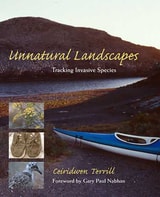
cover of Unnatural Landscapes: Tracking Invasive Species

Unnatural Landscapes

Tracking Invasive Species

Ceiridwen Terrill; Foreword by Gary Paul Nabhan

University of Arizona Press, 2007

Louisiana crawfish, cheatgrass, Russian thistle, Hottentot figs, rats, and sweet fennel. These and dozens of other seemingly benign flora and fauna have become some of the worst culprits in the destruction of ecosystems and native wildlife in the American Southwest and Baja California.

Although widely publicized threats—such as pollution, land development, changes in the atmospheric condition, fire, and drought—are frequently credited with posing the greatest danger to indigenous animals and plants, invasive species are quickly becoming a far more insidious peril to the survival of native wildlife. A result of both accident and human intervention, the frequency with which exotic species are being introduced into nonnative environments is increasing at an alarming rate.

In Unnatural Landscapes, Ceiridwen Terrill combines lucid science writing with first-person tales of adventure to provide a compelling introduction to invasion ecology and restoration management. Traveling aboard her trusty kyak, The Grebe, Terrill brings readers on a firsthand tour of various “islands” in the Southwest and Mexico—both actual islands and self-contained habitat communities. From the islands of Anaho, Santa Cruz, and Anacapa to Isla Tiburón in the Sea of Cortez, Mexicali irrigation canals, and Pyramid Lake, Terrill takes an in-depth look at the damage that invasive species cause.

Drawing on field observations, research, and interviews with scientists, resource managers, and local residents, this book provides readers with the background and knowledge they need to understand and to begin combating what is quickly becoming the most important environmental crisis facing the fragile ecosystems of the Southwest.

For more information on invasive species visit the
Author's Web site.
[more]
cover of Unruly Complexity: Ecology, Interpretation, Engagement

Unruly Complexity

Ecology, Interpretation, Engagement

Peter J. Taylor

University of Chicago Press, 2005

Ambitiously identifying fresh issues in the study of complex systems, Peter J. Taylor, in a model of interdisciplinary exploration, makes these concerns accessible to scholars in the fields of ecology, environmental science, and science studies. Unruly Complexity explores concepts used to deal with complexity in three realms: ecology and socio-environmental change; the collective constitution of knowledge; and the interpretations of science as they influence subsequent research.

For each realm Taylor shows that unruly complexity-situations that lack definite boundaries, where what goes on "outside" continually restructures what is "inside," and where diverse processes come together to produce change-should not be suppressed by partitioning complexity into well-bounded systems that can be studied or managed from an outside vantage point. Using case studies from Australia, North America, and Africa, he encourages readers to be troubled by conventional boundaries-especially between science and the interpretation of science-and to reflect more self-consciously on the conceptual and practical choices researchers make.
[more]
cover of Untangling Ecological Complexity: The Macroscopic Perspective

Untangling Ecological Complexity

The Macroscopic Perspective

Brian A. Maurer

University of Chicago Press, 1998

Ecologists increasingly find themselves called upon to address the impacts of global change on biodiversity. Yet most studies of biodiversity focus solely on intensive, experimental analyses of localized ecological communities. In Untangling Ecological Complexity, Brian A. Maurer argues for a more pluralistic approach, showing how ecologists might enhance their ability to tackle global problems by incorporating broader spatial and temporal perspectives into their research.

Maurer begins by reviewing the strengths and limitations of reductionist experimental approaches. Although these studies have produced much valuable data, their small scale restricts the kinds of inferences that can be drawn from them. Maurer then demonstrates how statistical methods can be used to identify processes (such as dispersal or nonrandom extinction) that operate across broad geographic scales, yet which also have profound impacts on local ecosystems. This macroscopic perspective, Maurer suggests, provides a powerful tool for untangling ecological complexity.
[more]
cover of Untold Tales from the Book of Revelation: Sex and Gender, Empire, and Ecology

Untold Tales from the Book of Revelation

Sex and Gender, Empire, and Ecology

Stephen D. Moore

SBL Press, 2014

An interlinked collection of essays representing the best of Stephen D. Moore’s groundbreaking scholarship

This collection of previously published essays is a companion to The Bible in Theory: Critical and Postcritical Essays (2010). Chapters engage postcolonial studies, cultural studies, deconstruction, autobiographical criticism, masculinity studies, queer theory, affect theory, and animality studies—methods Moore believes present unprecedented challenges to the monochrome model of Revelation scholarship based on traditional historical-critical methods.

Features:

  • Nine essays on biblical literary criticism including two co-written with Jennifer A. Glancy and Catherine Keller
  • Contextual introductions for each essay
  • Annotated bibliographies
[more]