Results by title
3388 books match the query 'Fiction' and 32 start with u
UNNATURAL VOICES
EXTREME NARRATION IN MODERN AND CONTEMPOBrian Richardson
The Ohio State University Press, 2006
Ualalapi
Fragments from the End of EmpireUngulani Ba Ka Khosa
Tagus Press, 2017
Ugly to Start With
John Michael Cummings
West Virginia University Press, 2011
Jason Stevens is growing up in picturesque, historic Harpers Ferry, West Virginia in the 1970s. Back when the roads are smaller, the cars slower, the people more colorful, and Washington, D.C. is way across the mountains—a winding sixty-five miles away.
Jason dreams of going to art school in the city, but he must first survive his teenage years. He witnesses a street artist from Italy charm his mother from the backseat of the family car. He stands up to an abusive husband—and then feels sorry for the jerk. He puts up with his father’s hard-skulled backwoods ways, his grandfather’s showy younger wife, and the fist-throwing schoolmates and eccentric mountain characters that make up Harpers Ferry—all topped off by a basement art project with a girl from the poor side of town.
Ugly to Start With punctuates the exuberant highs, bewildering midpoints, and painful lows of growing up, and affirms that adolescent dreams and desires are often fulfilled in surprising ways.

Ultranatural
Candice Wuehle
University of Iowa Press, 2026
Before Love became a household name, she was Lacey Dove Bart, a determined teen with dreams of stardom. Desperate to escape her bleak small-town life, Lacey dazzles at an audition for the prestigious Newland Academy, catching the eye of mega producer Jimmy Coins. Lacey’s friend and co-performer, Carrie-Anne, believes they’re on the brink of achieving their shared dream of escaping Appalachia. But a betrayal by Lacey leaves them both reeling.
As Lacey is transformed into “Love,” the carefully controlled idol of a generation, she loses piece after piece of herself. She’s contracted for stints on Christian variety shows, toured through malls and state fairs, and even locked in a fortress-like mansion between recording sessions. With her life spiraling out of control and younger, hungrier replacements waiting in the wings, Love’s only chance at freedom is to reconnect with Carrie-Anne and seek redemption in the one authentic bond she has left. Part pop elegy, part horror story, part radical reimagining of female celebrity, Ultranatural autotunes the static of fame until it sounds like prophecy.
Unbuilt Projects
Paul Lisicky
Four Way Books, 2012
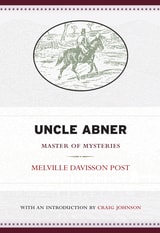
Uncle Abner
Master of MysteriesMelville Davisson Post
West Virginia University Press, 2015
First published in 1918, Uncle Abner: Master of Mysteries is an anthology of detective stories written by Melville Davisson Post. The popular stories within this collection were serialized in national magazines such as the Saturday Evening Post in the early 20th century.
Uncle Abner is an amateur detective in present-day Harrison County, West Virginia. Throughout his journeys around this antebellum wilderness, long before the nation had a proper police system, the honest Uncle Abner is confronted by murders and mysteries that cannot be ignored. With uncanny intuition, impressive logic, and keen observation of human actions, Uncle Abner is Melville Davisson Post’s most celebrated literary creation and is considered to be one of the most important texts in American detective and crime fiction.
This new edition contains an introduction by Craig Johnson, author of the Walt Longmire novels.
Uncle Ovid's Exercise Book
Don Webb
University of Alabama Press, 1988
Awarded the 1988 Illinois State University/Fiction Collective Prize through a nationwide fiction competition, Webb's first book of fiction, Uncle Ovid's Exercise Book, explores the theme of change in hitherto unimagined manifestations—from the everyday to the mysterious to the miraculous. These eight dozen "metamorphoses" are widely funny, profound, and—like change itself—always surprising.
With rare originality and breadth, Webb draws upon Egyptian mythology, molecular biology, classical poetry, contemporary pop culture, literary theory, Eastern mysticism, and science fiction, composing them into an offbeat fugue on the theme of transformation.
"Metamorphosis No. 39" resurrects the ancient Egyptian gods, Set, Toth, and Osiris, who return to America to mastermind a plot to alter contemporary consciousness. Their scheme includes the broadcast of subliminal archetypal images during returns of "I Love Lucy." In a later metamorphosis, another ancient god—Dionysius—returns to modern day Atlantic City to recruit winos for a new band of satyrs. Ancient gods are not the only agents of change. Metamorphosis also spreads to the White House in an episode describing the clandestine life of the president's drug supplier—who risks death to satisfy the chief executive's taste for organic hallucinogens.
A hilarious New Age western saga unfolds in "Metamorphosis No.5" W.B. Porter, the "Last of the Singing Cowboys"— a hero with a degree in chemical engineering and a proficiency on the sitar—foils the Uzi-toting Mendoza gang—"tough hombres schooled in the Fourteen Mysteries of Toltec Sorcery"—in their attempt to pull a heist on a condo construction project.
This theme of transformation extends even to the farming narrative of UOEB itself, which at one point unexpectedly becomes the diary of an Englishwoman who is held captive in a potting shed by a maniacal pastor.
These variations on a theme are sometimes hilarious, sometimes cryptic, sometimes curiously moving—and always disturbingly provocative. With his hat off to Ovid, Don Webb pulls together high-spirited wit, eclecticism, and sheer inventiveness to make Uncle Ovid's Exercise Book a richly comic, absorbing, and singular work of a new order.
Uncommon Weather
Alaska StoriesRichard Chiappone
University of Alaska Press, 2024
Richard Chiappone’s characters hail from a wide range of socioeconomic strata, each one attempting to figure out the difficult question of how best to live among others. Odd connections abound. In the seriocomic title story, a lonely middle-aged woman, weary of her austere Alaskan life and her crumbling marriage, picks up a hockey stick and a younger man and tries to brawl her way to some better future. A man diagnosed with an apparently terminal illness is caught up in a catastrophic criminal undertaking masterminded by a precocious seventeen-year-old girl. A young boy, determined to fit in with his edgier peers, goes through a metamorphosis, becoming a strange new creature he’s never seen before. With sometimes hilarious missteps, each character stumbles in and out of predicaments that are by turns tender, heartbreaking, dangerous, and even violent.
Told with great empathy and often deeply ironic, wry, and sardonic humor, these stories are a counterpoint to the usual mythos, illuminating an Alaska not usually portrayed in books, on TV, or in movies.

Under 25
Duke Narrative and Verse, 1945–1962: A Collection of Short Stories and Verse by Sixteen Duke AuthorsWilliam M. Blackburn, ed.
Duke University Press, 0

Under a Glass Bell
Anaïs Nin
Ohio University Press, 2013
Under the Spell
A NovelBenjamin Hedin
Northwestern University Press, 2021
Unmoored and seeking connection, Sandra also meets Lee, a single mother with a drinking problem, and begins babysitting her daughter. But Sandra can’t stop herself from continuing the correspondence with Ryan, in the process uncovering more about her husband—and Ryan herself. A novel that forces us to question how much of a person, even those closest to us, remains obscure, Under the Spell reveals the astonishing, transformative power of grief. This compelling study in bereavement joins classics such as Don DeLillo’s The Body Artist and Joan Didion’s The Year of Magical Thinking.
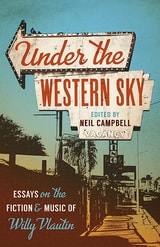
Under the Western Sky
Essays on the Fiction and Music of Willy VlautinNeil Campbell
University of Nevada Press, 2018
Brutally honest, raw, gritty, down to earth, compassionate and affecting, Willy Vlautin’s writing evokes a power in not only theme, but in methodology. Vlautin’s novels, The Motel Life, Northline, Lean on Pete and The Free (2006-2014) chart the dispossessed lives of young people struggling to survive in difficult economic times and in regions of the U.S. West and Pacific Northwest traditionally viewed as affluent and abundant. Yet as his work shows, are actually highly stratified and deprived.
Likewise, Vlauntin’s songs, penned as lead singer of the Americana band Richmond Fontaine chart a related territory of blue-collar landscapes of the American West and Northwest with a strong emphasis on narrative and affective soundscapes evocative of the similar worlds defined in his novels.
Featuring an interview with Vlautin himself, this edited collection aims to develop the first serious, critical consideration of the important novels and songs of Willy Vlautin by exploring relations between region, music, and writing through the lens of critical regionality and other interdisciplinary, cultural, and theoretical methodologies. In so doing, it will situate his work within its regional frame of the American New West, and particularly the city of Reno, Nevada and the Pacific Northwest, whilst showing how he addresses wider cultural and global issues such as economic change, immigration shifts, gender inequality, and the loss of traditional mythic identities.
The essays take different positions in relation to considerations of both novels and music, looking for links and relations across genres, always mindful of their specificity. Under the Western Sky shows how although apparently rooted in place, Vlautin’s work traces diverse lines of contemporary cultural enquiry, engaging in an effective and troubling examination of regional haunting.
Under
StoriesGlen Pourciau
Four Way Books, 2025
Underground Women
Jesse Lee Kercheval
University of Wisconsin Press, 2019
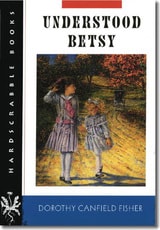
Understood Betsy
Dorothy Canfield Fisher
Brandeis University Press, 1999
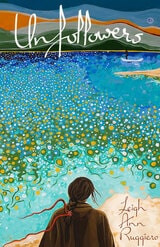
Unfollowers
Leigh Ann Ruggiero
University of Massachusetts Press, 2022
Winner of the 2023 National Indie Excellence Award in Multicultural Fiction
Winner of the 2022 Forward INDIES Silver Award for Literary Fiction
Finalist of the 2023 National Indie Excellence Award in New Fiction
Finalist of the 2023 Eric Hoffer Book Award
Barb Matheson doesn’t fit in: not on the Standing Rock Reservation where her mother was born; not at the mission in rural Ethiopia where she grew up; and certainly not at the Pennsylvania church where her husband preaches. Expansive and lyrical, Unfollowers is a tale of religious angst, unrequited love, and the upheaval of racial and economic privilege. Equally adrift on both sides of the Atlantic, Barb must negotiate the distance between white America and Africa, between the spirituality of her ancestors and the straight tones of evangelicalism, and between rules and grace. When a former lover crashes her daughter’s third birthday party, she’s offered the chance to find her way home to Ethiopia, leaving her to choose between a rote life in America and an improvised life abroad.
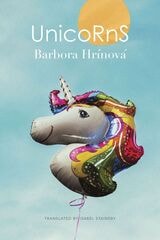
Unicorns
Barbora Hrínová
Seagull Books, 2026
The award-winning Slovak writer Barbora Hrínová’s short stories paint an intimate portrait of people searching for happiness in a world that feels increasingly unstable and uncertain. Across the eight stories in this volume, we meet a rich cast of ordinary yet unconventional people trying to find their place in a society that often prefers conformity over authenticity. Taking us to such settings as a bustling cafe, a small village shack, a rental flat, or a psychiatric ward, Hrínová captures the texture of everyday life with piercing accuracy and a fresh, original voice.
Unicorns is a remarkable debut that resonates across generations. With compassion, wit, and an eye for detail, it shows us that weirdness isn’t rare—it’s a universal human experience.
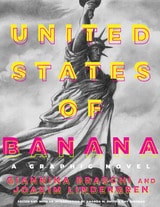
United States of Banana
A Graphic NovelGiannina Braschi and Joakim LindengrenEdited and with an introduction by Amanda M. Smith and Amy Sheeran
The Ohio State University Press, 2021
Universal Grammar and Narrative Form
David Herman
Duke University Press, 1995
Following an extensive historical overview of theories about universal grammar, Herman examines Joyce’s Ulysses, Kafka’s The Trial, and Woolf’s Between the Acts as case studies of modernist literary narratives that encode grammatical principles which were (re)fashioned in logic, linguistics, and philosophy during the same period. Herman then uses the interpretation of universal grammar developed via these modernist texts to explore later twentieth-century cultural phenomena. The problem of citation in the discourses of postmodernism, for example, is discussed with reference to syntactic theory. An analysis of Peter Greenaway’s The Cook, The Thief, His Wife, and Her Lover raises the question of cinematic meaning and draws on semantic theory. In each case, Herman shows how postmodern narratives encode ideas at work in current theories about the nature and function of language.
Outlining new directions for the study of language in literature, Universal Grammar and Narrative Form provides a wealth of information about key literary, linguistic, and philosophical trends in the twentieth century.
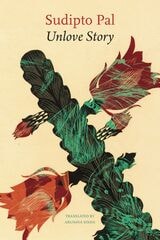
Unlove Story
Sudipto Pal
Seagull Books, 2024
Mallar, a shy and introspective sixteen-year-old, finds himself drawn to Srijan, his classmate’s enigmatic elder cousin, during a fateful summer in a small-town family home. At first, Mallar’s fantasies take shape in secret sketches of Srijan. But soon, their connection becomes a complex play of mutual desire and dominance, which leads to the forging of a unique pact—a promise never to fall in love with each other.
As their lives take them from the serene landscapes of Bengal to the vibrant beaches of Chennai, the mysterious alleys of Paris, and the buzzing streets of Bangalore, the two men’s unconventional companionship deepens. With each meeting comes a new revelation, a fresh twist to their agreement, and a surprising facet of their identities. Mallar, reviving his childhood passion, embarks on a journey to establish himself as an artist. Collaborating on an art project, Mallar transforms Srijan’s body into a living canvas. But what begins as a creative endeavor quickly becomes a voyage into uncharted depths, as the canvas asks questions, challenges their resolve, and unravels hidden truths, culminating in new beginnings.
Delving into the intricate layers of two men’s lives, their fears, insecurities, hopes, and the mosaic of experiences that shape them, this novel is a testament to the complexities of human connection. One of the first openly gay novels written in Bengali, and the first to be translated into English, Sudipto Pal’s Unlove Story is a groundbreaking addition to the canon of queer literature from around the world.
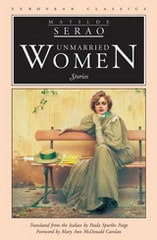
Unmarried Women
StoriesMatilde Serao
Northwestern University Press, 2007
This collection, the first to make Serao’s short stories available in English translation, reflects this naturalistic writer’s interest in the everyday drama of the lives of women in the Italy of her day. In Serao’s spare and simple prose, the young women of turn-of-the-century Naples come to life, negotiating the details of school and work, church and marriage, in a world circumscribed by fathers and chaperones, fiancés and bosses. Infused with the writer’s deep sense of humanity, their quietly involving stories—at once so poetic and so ordinary—attest to the transformative power of literature, and to the promise that even the most humble life holds.
Unnatural Narratology
Extensions, Revisions, and ChallengesEdited by Jan Alber and Brian Richardson
The Ohio State University Press, 2020
Unremembering Me
Luiz Ruffato
Tagus Press, 2018
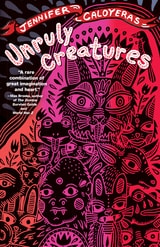
Unruly Creatures
StoriesJennifer Caloyeras
West Virginia University Press, 2017
Independent Publisher’s Book Awards, Silver Medal, Short Story Fiction
In some stories, the bodies have surrogates: a high-school girl babysits an elderly woman’s plastic doll while negotiating her own sexual awakening, and a young man finds that he can only receive affection from his father when he is in costume. Dark humor and magical realism put in sharp relief the everyday trials of Americans in a story collection that asks, in what way are we more than the sum of our parts?
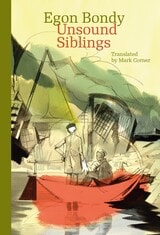
Unsound Siblings
Egon Bondy
Karolinum Press, 2026
Bondy's merry utopia, or rather anti-utopia, was written during the bleakest years of “normalization” in Communist Czechoslovakia during the 1970s. Once considered a cult novel of the Czech underground, Unsound Siblings is not only a celebration of the “alternative way of life” of people living deliberately outside of (Communist) state power and a mockery of the contemporary consumerist ideas of the police state, but also a light parody of science fiction, organically incorporating philosophical themes. As much as this work can also be described as “adventure literature,” evoking, for example, the scenery of a “mysterious island,” its overall message reaches the power of a religious, gospel message that it is, despite all odds, possible to live in this world after all. Unsound Siblings, first published in Czech by the exiled 68 Publishers in Toronto and circulated in samizdat copies in Czechoslovakia, later won the Egon Hostovský Prize.
Unswerving
Barbara Ridley
University of Wisconsin Press, 2024
In rehab, Tave relearns life skills and comes to recognize that her future will be completely different than she’d imagined. Where will she live? How will she find the help she needs? Can her friends rise to the occasion? Or will she be forced to move back in with her mother, putting up with endless talk of faith healers? Her one beacon of hope is Beth, her physical therapist. But Beth’s relationship problems with her own girlfriend push her toward overinvolvement—and risk damaging both her career and Tave’s recovery.
A story of courage, resilience, and love, Unswerving challenges readers’ preconceived notions of disability, of limitations, and of the inevitability of fate.

Up
Ronald Sukenick
University of Alabama Press, 2000
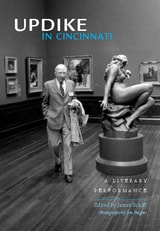
Updike in Cincinnati
A Literary PerformanceJames Schiff
Ohio University Press, 2007
For two spring days in 2001, John Updike visited Cincinnati, Ohio, engaging and charming his audiences, reading from his fiction, fielding questions, sitting for an interview, participating in a panel discussion, and touring the Queen City.
Successful writers typically spend a portion of their lives traveling the country to give readings and lectures. While a significant experience for author and audience alike, this public spectacle, once covered in detailed newspaper accounts, now is barely noticed by the media. Updike in Cincinnati—composed of a wealth of materials, including session transcripts, short stories discussed and read by the author, photographs, and anecdotal observations about Updike's performance and personal interactions--is unique in its comprehensive coverage of a literary visit by a major American author.
Updike's eloquence, intelligence, improvisational skills, and gift for comedy are all on display. With natural grace, he discusses a range of topics, including his novels and short stories, his mother and oldest son as writers, Pete Rose and Shoeless Joe Jackson, the Nobel Prize, his appearance on The Simpsons, the Cold War, and Hamlet.
Augmented with commentary by critics W. H. Pritchard and Donald Greiner, and an introduction and interview by James Schiff, Updike in Cincinnati provides an engaging and detailed portrait of one of America's contemporary literary giants.
Ups and Downs of Life in the Indies
P. A. Daum
University of Massachusetts Press, 1987
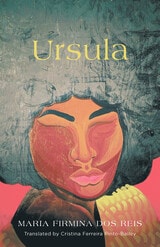
Ursula
Maria Firmina dos Reis, Translated by Cristina Ferreira Pinto-Bailey
Tagus Press, 2021
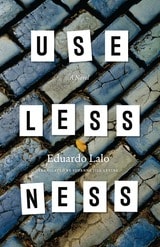
Uselessness
A NovelEduardo Lalo
University of Chicago Press, 2017
Lalo’s first novel, Uselessness is something of a bildungsroman of his own student days in Paris. But more than this, it is a literary précis of his oeuvre—of themes that obsess him still. Told in two parts, Uselessness first follows our narrator through his romantic and intellectual awakenings in Paris, where he elevates his adopted home over the moribund one he has left behind. But as he falls in and out of love he comes to realize that as a Puerto Rican, he will always be apart. Ending the greatest romance of his life—that with the city of Paris itself—he returns to San Juan. And in this new era of his life, he is forced to confront choices made, ambitions lost or unmet—to look upon lives not lived.
A tale of the travails of youthful romance and adult acceptance, of foreignness and isolation both at home and abroad, and of the stultifying power of the desire to belong—and to be moved—Uselessness is here rendered into English by the masterful translator Suzanne Jill Levine. For anyone who has been touched by the disquieting passion of Paris, Uselessness is a stirring saga.
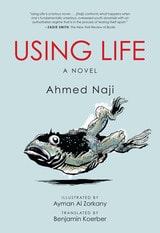
Using Life
By Ahmed Naji, Illustrations by Ayman Al Zorkany, Translated by Benjamin Koerber
University of Texas Press, 2017
Upon its initial release in Arabic in the fall of 2014, Using Life received acclaim in Egypt and the wider Arab world. But in 2016, Ahmed Naji was sentenced to two years in prison after a reader complained that an excerpt published in a literary journal harmed public morality. His imprisonment marks the first time in modern Egypt that an author has been jailed for a work of literature. Writers and literary organizations around the world rallied to support Naji, and he was released in December 2016. His original conviction was overturned in May 2017 but, at the time of printing, he is awaiting retrial and banned from leaving Egypt.
Set in modern-day Cairo, Using Life follows a young filmmaker, Bassam Bahgat, after a secret society hires him to create a series of documentary films about the urban planning and architecture of Cairo. The plot in which Bassam finds himself ensnared unfolds in the novel’s unique mix of text and black-and-white illustrations.
The Society of Urbanists, Bassam discovers, is responsible for centuries of world-wide conspiracies that have shaped political regimes, geographical boundaries, reigning ideologies, and religions. It is responsible for today’s Cairo, and for everywhere else, too. Yet its methods are subtle and indirect: it operates primarily through manipulating urban architecture, rather than brute force. As Bassam immerses himself in the Society and its shadowy figures, he finds Cairo on the brink of a planned apocalypse, designed to wipe out the whole city and rebuild anew.