Results by title
130 books match the query 'Gender identity' and 3 start with u
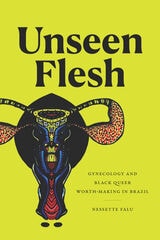
Unseen Flesh
Gynecology and Black Queer Worth-Making in BrazilNessette Falu
Duke University Press, 2023
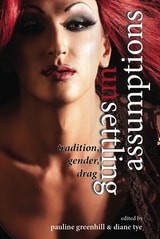
Unsettling Assumptions
Tradition, Gender, DragPauline Greenhill
Utah State University Press, 2014
In Unsettling Assumptions, editors Pauline Greenhill and Diane Tye examine how tradition and gender come together to unsettle assumptions about culture and its study.
Contributors explore the intersections of traditional expressive culture and sex/gender systems to question, investigate, or upset concepts like family, ethics, and authenticity. Individual essays consider myriad topics such as Thanksgiving turkeys, rockabilly and bar fights, Chinese tales of female ghosts, selkie stories, a noisy Mennonite New Year’s celebration, the Distaff Gospels, Kentucky tobacco farmers, international adoptions, and more.
In Unsettling Assumptions, folkloric forms express but also counteract negative aspects of culture like misogyny, homophobia, and racism. But expressive culture also emerges as fundamental to our sense of belonging to a family, an occupation, or friendship group and, most notably, to identity performativity and the construction and negotiation of power.
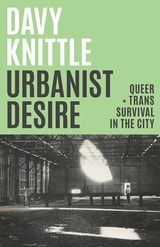
Urbanist Desire
Queer and Trans Survival in the CityDavy Knittle
University of Minnesota Press, 2026
How writers and artists have used city planning strategies to push back against harm
Black queer feminist thinker Audre Lorde famously declared that “the master’s tools will never dismantle the master’s house.” This language is normally understood as a metaphor, but as author Davy Knittle argues in this provocative book, queer and trans activists have long used the tools of city planning and urban design to create written and visual art that critiques those in power and offers points of resilience to their own communities.
A close look at the ways queer and trans writers and artists resisted predatory redevelopment in New York City from 1950 to 2020, Urbanist Desire draws on the work of James Schuyler, June Jordan, David Wojnarowicz, Julian Talamantez Brolaski, and Zeyn Joukhadar, exploring how they intervened in major political flashpoints like the War on Poverty, the AIDS-era housing crisis, and gentrification in Brooklyn and Queens. Presenting a new cultural history of New York City, Knittle explains how urban change and the more-than-human life of cities have been foundational concerns for queer and trans cultural production since the 1950s.
Ending with analysis of the 2022 speculative novel Everything for Everyone: An Oral History of the New York Commune, 2052–2072, Urbanist Desire looks to the past to imagine a better future for New York City and for all marginalized people. Knittle demonstrates how to move past a recuperative response to harm and toward one that can change the structure of society by documenting how queer and trans activists have engaged the strategies of planning and design to address spatial, social, and economic inequality.
Retail e-book files for this title are screen-reader friendly with images accompanied by short alt text and/or extended descriptions.