Results by title
438 books match the query 'Hispanic & Latino' and 8 start with u
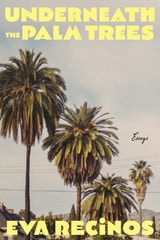
Underneath the Palm Trees
EssaysEva Recinos
Northwestern University Press, 2027
A raw and captivating exploration of what it means to live in the in-betweens of the American dream
Arts and culture writer Eva Recinos came of age in the towering city of Los Angeles, fed the story of the American dream. A daughter of immigrants, Recinos grew up facing the dichotomy of that dream: experiencing what it was like to live in South Central LA right next door to one of the wealthiest private universities in America—which Recinos herself would eventually attend. Navigating depression, anxiety, grief, sexuality, and the pressures of being a first-generation daughter and student, Underneath the Palm Trees examines the dissonant effects of straddling two disparate worlds. Recinos’s is an emerging and powerful Latinx voice that uses this engaging collection of essays to capture America’s idiosyncrasies, the complexities of girlhood, and how we find ourselves in art.
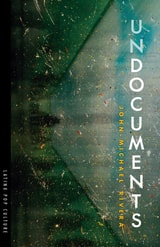
Undocuments
John-Michael Rivera
University of Arizona Press, 2021
How do you document the undocumented? UNDOCUMENTS both poses and attempts to answer this complex question by remixing the forms and styles of the first encyclopedia of the New World, the Florentine Codex, in order to tell a modern story of Greater Mexico. Employing a broad range of writing genres and scholarly approaches, UNDOCUMENTS catalogs, recovers, and erases documents and images by and about peoples of Greater Mexico from roughly the first colonial moment. This brave and bracing volume organizes and documents ancient New World Mexican peoples from the Florentine Codex (1592) to our current technology-heavy age, wherein modern lawmakers and powerful global figures desire to classify, deport, and erase immigrants and their experiences.
While grappling with anxiety and the physical and mental health consequences of the way the United States treats immigrant bodies, John-Michael Rivera documents and scrutinizes what it means to seek opportunities in America. With a focus on the poetics of Latinx documentality itself, this book is concerned with the complicated and at times contradictory ways peoples of Greater Mexico have been documented and undocumented within systems of colonial knowledges, and how these peoples have been rendered as specters of the bureaucratic state. Rivera takes us through the painful, anxiety-ridden, and complex nature of what it means to be documented or undocumented, and the cruelty married to each of these states of being.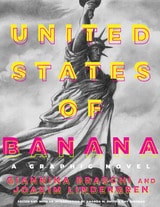
United States of Banana
A Graphic NovelGiannina Braschi and Joakim LindengrenEdited and with an introduction by Amanda M. Smith and Amy Sheeran
The Ohio State University Press, 2021

Unpeopled Eden
Rigoberto González
Four Way Books, 2013
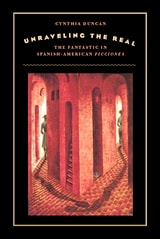
Unraveling the Real
The Fantastic in Spanish-American FiccionesAuthored by Cynthia Duncan
Temple University Press, 2010
In literary and cinematic fictions, the fantastic blurs the lines between reality and fantasy. Lacking a consensus on definition, critics often describe the fantastic as supernatural, or similar to, but quite different from fantasy, science fiction, and magical realism.
In Unraveling the Real Cynthia Duncan provides a new theoretical framework for discussing how the fantastic explores both metaphysical and socially relevant themes in Spanish American fictions. Duncan deftly shows how authors and artists have used this literary genre to convey marginalized voices as well as critique colonialism, racism, sexism, and classism. Selecting examples from the works of such noted writers as Jorge Luis Borges, Julio Cortázar, and Carlos Fuentes, among others, she shows how capacious the concept is, and why it eludes standard definition.
Challenging the notion that the fantastic is escapist in nature, Unraveling the Real shows how the fantastic has been politically engaged throughout the twentieth century, often questioning what is real or unreal. Presenting a mirror image of reality, the fantastic does not promoting a utopian parallel universe but rather challenges the way we think about the world around us and the cultural legacy of colonialism.
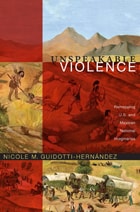
Unspeakable Violence
Remapping U.S. and Mexican National ImaginariesNicole M. Guidotti-Hernández
Duke University Press, 2011
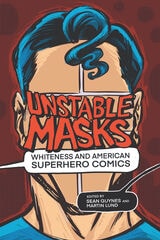
Unstable Masks
Whiteness and American Superhero ComicsEdited by Sean Guynes and Martin Lund
The Ohio State University Press, 2020
In Unstable Masks: Whiteness and American Superhero Comics, Sean Guynes and Martin Lund bring together a series of essays that contextualize the histories and stakes of whiteness studies, superhero comics, and superhero studies for academics, fans, and media-makers alike. The volume illustrates how the American comic book superhero is fundamentally a figure of white power and white supremacy and ultimately calls for diversity in superhero comics as well as a democratized media culture.
Contributors not only examine superhero narratives but also delve into the production, distribution, audience, and reception of those narratives, highlighting the imbrication of forces that have helped to create, normalize, question, and sometimes even subvert American beliefs about whiteness and race. Unstable Masks considers the co-constitutive nature of identity, representation, narrative, production and consumption, and historical and cultural contexts in forging the stereotypes that decide who gets to be a superhero and who gets to be American on the four-color pages of comic books.
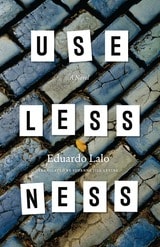
Uselessness
A NovelEduardo Lalo
University of Chicago Press, 2017
Lalo’s first novel, Uselessness is something of a bildungsroman of his own student days in Paris. But more than this, it is a literary précis of his oeuvre—of themes that obsess him still. Told in two parts, Uselessness first follows our narrator through his romantic and intellectual awakenings in Paris, where he elevates his adopted home over the moribund one he has left behind. But as he falls in and out of love he comes to realize that as a Puerto Rican, he will always be apart. Ending the greatest romance of his life—that with the city of Paris itself—he returns to San Juan. And in this new era of his life, he is forced to confront choices made, ambitions lost or unmet—to look upon lives not lived.
A tale of the travails of youthful romance and adult acceptance, of foreignness and isolation both at home and abroad, and of the stultifying power of the desire to belong—and to be moved—Uselessness is here rendered into English by the masterful translator Suzanne Jill Levine. For anyone who has been touched by the disquieting passion of Paris, Uselessness is a stirring saga.