Results by title
260 books match the query 'Human ecology' and 2 start with u
Under Osman's Tree
The Ottoman Empire, Egypt, and Environmental HistoryAlan Mikhail
University of Chicago Press, 2017
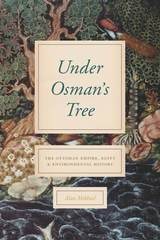
Osman, the founder of the Ottoman Empire, had a dream in which a tree sprouted from his navel. As the tree grew, its shade covered the earth; as Osman’s empire grew, it, too, covered the earth. This is the most widely accepted foundation myth of the longest-lasting empire in the history of Islam, and offers a telling clue to its unique legacy. Underlying every aspect of the Ottoman Empire’s epic history—from its founding around 1300 to its end in the twentieth century—is its successful management of natural resources. Under Osman’s Tree analyzes this rich environmental history to understand the most remarkable qualities of the Ottoman Empire—its longevity, politics, economy, and society.
The early modern Middle East was the world’s most crucial zone of connection and interaction. Accordingly, the Ottoman Empire’s many varied environments affected and were affected by global trade, climate, and disease. From down in the mud of Egypt’s canals to up in the treetops of Anatolia, Alan Mikhail tackles major aspects of the Middle East’s environmental history: natural resource management, climate, human and animal labor, energy, water control, disease, and politics. He also points to some of the ways in which the region’s dominant religious tradition, Islam, has understood and related to the natural world. Marrying environmental and Ottoman history, Under Osman’s Tree offers a bold new interpretation of the past five hundred years of Middle Eastern history.
The early modern Middle East was the world’s most crucial zone of connection and interaction. Accordingly, the Ottoman Empire’s many varied environments affected and were affected by global trade, climate, and disease. From down in the mud of Egypt’s canals to up in the treetops of Anatolia, Alan Mikhail tackles major aspects of the Middle East’s environmental history: natural resource management, climate, human and animal labor, energy, water control, disease, and politics. He also points to some of the ways in which the region’s dominant religious tradition, Islam, has understood and related to the natural world. Marrying environmental and Ottoman history, Under Osman’s Tree offers a bold new interpretation of the past five hundred years of Middle Eastern history.
[more]
Urban Archipelago
An Environmental History of the Boston Harbor IslandsPavla Šimková
University of Massachusetts Press, 2021
The Boston Harbor Islands have been called Boston's "hidden shores." While some are ragged rocks teeming with coastal wildlife, such as oystercatchers and harbor seals, others resemble manicured parks or have the appearance of wooded hills rising gently out of the water. Largely ignored by historians and previously home to prisons, asylums, and sewage treatment plants, this surprisingly diverse ensemble of islands has existed quietly on the urban fringe over the last four centuries. Even their latest incarnation as a national park and recreational hub has emphasized their separation from, rather than their connection to, the city.
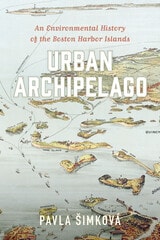
In this book, Pavla Šimková reinterprets the Boston Harbor Islands as an urban archipelago, arguing that they have been an integral part of Boston since colonial days, transformed by the city's changing values and catering to its current needs. Drawing on archival sources, historic maps and photographs, and diaries from island residents, this absorbing study attests that the harbor islands' story is central to understanding the ways in which Boston has both shaped and been shaped by its environment over time.
In this book, Pavla Šimková reinterprets the Boston Harbor Islands as an urban archipelago, arguing that they have been an integral part of Boston since colonial days, transformed by the city's changing values and catering to its current needs. Drawing on archival sources, historic maps and photographs, and diaries from island residents, this absorbing study attests that the harbor islands' story is central to understanding the ways in which Boston has both shaped and been shaped by its environment over time.
[more]