Results by title
85 books match the query 'Humanities' and 2 start with u
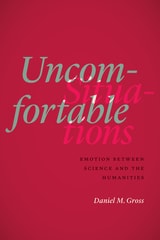
Uncomfortable Situations
Emotion between Science and the HumanitiesDaniel M. Gross
University of Chicago Press, 2017
What is a hostile environment? How exactly can feelings be mixed? What on earth might it mean when someone writes that he was “happily situated” as a slave? The answers, of course, depend upon whom you ask.
Science and the humanities typically offer two different paradigms for thinking about emotion—the first rooted in brain and biology, the second in a social world. With rhetoric as a field guide, Uncomfortable Situations establishes common ground between these two paradigms, focusing on a theory of situated emotion. Daniel M. Gross anchors the argument in Charles Darwin, whose work on emotion has been misunderstood across the disciplines as it has been shoehorned into the perceived science-humanities divide. Then Gross turns to sentimental literature as the single best domain for studying emotional situations. There’s lost composure (Sterne), bearing up (Equiano), environmental hostility (Radcliffe), and feeling mixed (Austen). Rounding out the book, an epilogue written with ecological neuroscientist Stephanie Preston provides a different kind of cross-disciplinary collaboration. Uncomfortable Situations is a conciliatory work across science and the humanities—a groundbreaking model for future studies.
Science and the humanities typically offer two different paradigms for thinking about emotion—the first rooted in brain and biology, the second in a social world. With rhetoric as a field guide, Uncomfortable Situations establishes common ground between these two paradigms, focusing on a theory of situated emotion. Daniel M. Gross anchors the argument in Charles Darwin, whose work on emotion has been misunderstood across the disciplines as it has been shoehorned into the perceived science-humanities divide. Then Gross turns to sentimental literature as the single best domain for studying emotional situations. There’s lost composure (Sterne), bearing up (Equiano), environmental hostility (Radcliffe), and feeling mixed (Austen). Rounding out the book, an epilogue written with ecological neuroscientist Stephanie Preston provides a different kind of cross-disciplinary collaboration. Uncomfortable Situations is a conciliatory work across science and the humanities—a groundbreaking model for future studies.
[more]
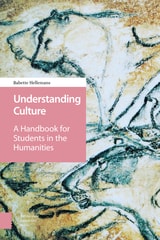
Understanding Culture
A Handbook for Students in the HumanitiesBabette Hellemans
Amsterdam University Press, 2017
This pioneering textbook explores the theoretical background of cultural variety, both in past and present. How is it possible to study 'culture' when the topic covers the arts, literature, movies, history, sociology, anthropology and gender studies? 'Understanding Culture' examines the evolution of a concept with varying meanings depending on changing norms. Offering a long-duration analysis of the relationship between culture and nature, this book looks at the origins of studying culture from an international perspective.
Using examples from the several scholarly traditions in the practice of studying culture, the book is a key introduction to the area. It identifies the history of interpreting culture as a meeting point between the long-standing historical investigation of 'humanism' and 'postmodernism' and is a comprehensive resource for those who wish to further their engagement with culture as both a historical and contemporary phenomenon.
Using examples from the several scholarly traditions in the practice of studying culture, the book is a key introduction to the area. It identifies the history of interpreting culture as a meeting point between the long-standing historical investigation of 'humanism' and 'postmodernism' and is a comprehensive resource for those who wish to further their engagement with culture as both a historical and contemporary phenomenon.
[more]