Results by title
468 books match the query 'Identity' and 7 start with u
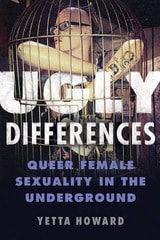
Ugly Differences
Queer Female Sexuality in the UndergroundYetta Howard
University of Illinois Press, 2018
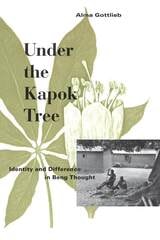
Under the Kapok Tree
Identity and Difference in Beng ThoughtAlma Gottlieb
University of Chicago Press, 1996
explores ideology and social practices among the Beng people of Côte
d'Ivoire. Employing symbolic and postmodern perspectives, she highlights
the dynamically paired notions of identity and difference, symbolized by
the kapok tree planted at the center of every Beng village.
"This book merits a number of readings. . . . An experiment in
ethnography that future projects might well emulate." —Clarke K. Speed,
American Anthropologist
"[An] evocative, rich ethnography. . . . Gottlieb does anthropology a
real service." —Misty L. Bastian, American Ethnologist
"Richly detailed. . . . This book offers a nuanced descriptive analysis
which commands authority." —Elizabeth Tonkin, Man
"Exemplary. . . . Gottlieb's observations on identity and difference are
not confined to rituals or other special occasions; rather she shows
that these principles emerge with equal force during daily social life."
—Monni Adams, Journal of African Religion
"[An] excellent study." —John McCall, Journal of Folklore
Research
Understanding Nationalism
On Narrative, Cognitive Science, and IdentityPatrick Colm Hogan
The Ohio State University Press, 2009

Understanding the Somalia Conflagration
Identity, Political Islam and PeacebuildingAfyare Abdi Elmi
Pluto Press, 2010
Somalia has been devastated by a US-backed Ethiopian invasion and years of civil war, and it has long been without a central government. Against this background of violence, Somali academic Afyare Abdi Elmi, attempts to explain the multiple dimensions of the conflict and find a peace-building consensus.
Somalia is a failed state and a Muslim state. This combination means the West assumes that it will become a breeding ground for extremism. The country regularly hits the headlines as a piracy hotspot. This combination of internal division and outside interference makes for an intensely hostile landscape. Elmi shows that only by addressing the problem of the statelessness in the country can the long process of peace begin. He highlights clan identities, Islam and other countries in the region as the key elements in any peace-building effort.
This unique account from an author who truly understands Somalia should be required reading for students and academics of international relations and peace / conflict studies.
Universal Citizenship
Latina/o Studies at the Limits of IdentityBy R. Andrés Guzmán
University of Texas Press, 2019
Recently, many critics have questioned the idea of universal citizenship by pointing to the racial, class, and gendered exclusions on which the notion of universality rests. Rather than jettison the idea of universal citizenship, however, R. Andrés Guzmán builds on these critiques to reaffirm it especially within the fields of Latina/o and ethnic studies. Beyond conceptualizing citizenship as an outcome of recognition and admittance by the nation-state—in a negotiation for the right to have rights—he asserts that, insofar as universal citizenship entails a forceful entrance into the political from the latter’s foundational exclusions, it emerges at the limits of legality and illegality via a process that exceeds identitarian capture.
Drawing on Lacanian psychoanalysis and philosopher Alain Badiou’s notion of “generic politics,” Guzmán advances his argument through close analyses of various literary, cultural, and legal texts that foreground contention over the limits of political belonging. These include the French Revolution, responses to Arizona’s H.B. 2281, the 2006 immigrant rights protests in the United States, the writings of Oscar “Zeta” Acosta, Frantz Fanon’s account of Algeria’s anticolonial struggle, and more. In each case, Guzmán traces the advent of the “citizen” as a collective subject made up of anyone who seeks to radically transform the organizational coordinates of the place in which she or he lives.
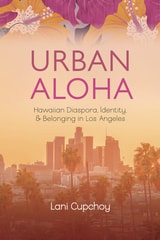
Urban Aloha
Hawaiian Diaspora, Identity, and Belonging in Los AngelesLani Cupchoy
University of Nevada Press, 2027
Urban Aloha reveals the vibrant, little-known story of Kānaka ʻŌiwi (Native Hawaiians) diaspora in Los Angeles, home to the largest Hawaiian community outside Hawai‘i. Moving beyond tourist clichés and the persistent myth that Hawaiian Gardens represents “the” Hawaiian enclave, author Lani Cupchoy traces how a diasporic community took root across the South Bay and San Gabriel Valley. Beginning with the peak migrations of the 1950s and 1960s, and driven by economic recession in the islands, the narrative follows families as they built new lives through civic clubs, newsletters, churches, restaurants, and backyard gatherings.
Drawing on oral histories, archival research, foodways, hula halau, and organizations such as the Hawaiian Inter-Club Council of Southern California, Urban Aloha explores how “Hawaiianness” shifts from identity to lived cultural community. Cupchoy examines how belonging is shaped not only by ancestry but by region, memory, leisure, and everyday practice. At once intimate and intellectually compelling, this book challenges manufactured fantasies of paradise and reveals a dynamic mainland community negotiating authenticity, representation, and cultural resilience. Richly researched and deeply human, Urban Aloha redefines what it means to be Hawaiian—on the continent and beyond.
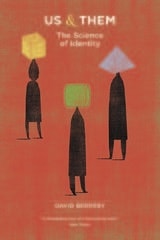
Us and Them
The Science of IdentityDavid Berreby
University of Chicago Press, 2008
In this award-winning book, David Berreby describes how twenty-first-century science is addressing these age-old questions. Ably linking neuroscience, social psychology, anthropology, and other fields, Us and Them investigates humanity’s “tribal mind” and how this alters our thoughts, affects our health, and is manipulated for good and ill. From the medical effects of stress to the rhetoric of politics, our perceptions of group identity affect every part of our lives. Science, Berreby argues, shows how this part of human nature is both unexpectedly important and surprisingly misunderstood.
Humans need our tribal sense—it tells us who we are, how we should behave, and links us to others as well as the past and future. Some condemn this instinct, while others celebrate it. Berreby offers in Us and Them a third alternative: how we can accept and understand our inescapable tribal mind.
“[A] brave book. . . . Berreby’s quest is to understand what he sees as a fundamental human urge to classify and identify with ‘human kinds.’”—Henry Gee, Scientific American