Results by title
752 books match the query 'Illinois' and 6 start with u
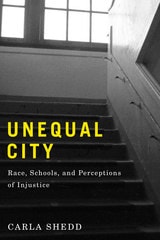
Unequal City
Race, Schools, and Perceptions of InjusticeCarla Shedd is assistant professor of sociology and African American studies at Columbia University.
Russell Sage Foundation, 2015
Chicago has long struggled with racial residential segregation, high rates of poverty, and deepening class stratification, and it can be a challenging place for adolescents to grow up. Unequal City examines the ways in which Chicago’s most vulnerable residents navigate their neighborhoods, life opportunities, and encounters with the law. In this pioneering analysis of the intersection of race, place, and opportunity, sociologist and criminal justice expert Carla Shedd illuminates how schools either reinforce or ameliorate the social inequalities that shape the worlds of these adolescents.
Shedd draws from an array of data and in-depth interviews with Chicago youth to offer new insight into this understudied group. Focusing on four public high schools with differing student bodies, Shedd reveals how the predominantly low-income African American students at one school encounter obstacles their more affluent, white counterparts on the other side of the city do not face. Teens often travel long distances to attend school which, due to Chicago’s segregated and highly unequal neighborhoods, can involve crossing class, race, and gang lines. As Shedd explains, the disadvantaged teens who traverse these boundaries daily develop a keen “perception of injustice,” or the recognition that their economic and educational opportunities are restricted by their place in the social hierarchy.
Adolescents’ worldviews are also influenced by encounters with law enforcement while traveling to school and during school hours. Shedd tracks the rise of metal detectors, surveillance cameras, and pat-downs at certain Chicago schools. Along with police procedures like stop-and-frisk, these prison-like practices lead to distrust of authority and feelings of powerlessness among the adolescents who experience mistreatment either firsthand or vicariously. Shedd finds that the racial composition of the student body profoundly shapes students’ perceptions of injustice. The more diverse a school is, the more likely its students of color will recognize whether they are subject to discriminatory treatment. By contrast, African American and Hispanic youth whose schools and neighborhoods are both highly segregated and highly policed are less likely to understand their individual and group disadvantage due to their lack of exposure to youth of differing backgrounds.
[more]
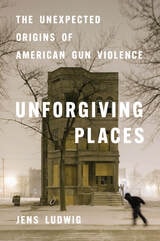
Unforgiving Places
The Unexpected Origins of American Gun ViolenceJens Ludwig
University of Chicago Press, 2025
What if everything we understood about gun violence was wrong?
In 2007, economist Jens Ludwig moved to the South Side of Chicago to research two big questions: Why does gun violence happen, and is there anything we can do about it? Almost two decades later, the answers aren’t what he expected. Unforgiving Places is Ludwig’s revelatory portrait of gun violence in America’s most famously maligned city.
Disproving the popular narrative that shootings are the calculated acts of malicious or desperate people, Ludwig shows how most shootings actually grow out of a more fleeting source: interpersonal conflict, especially arguments. By examining why some arguments turn tragic while others don't, Ludwig shows gun violence to be more circumstantial—and more solvable—than our traditional approaches lead us to believe.
Drawing on decades of research and Ludwig’s immersive fieldwork in Chicago, including “countless hours spent in schools, parks, playgrounds, housing developments, courtrooms, jails, police stations, police cars, and lots and lots of McDonald'ses,” Unforgiving Places is a breakthrough work at the cutting edge of behavioral economics. As Ludwig shows, progress on gun violence doesn’t require America to solve every other social problem first; it only requires that we find ways to intervene in the places and the ten-minute windows where human behaviors predictably go haywire.
[more]
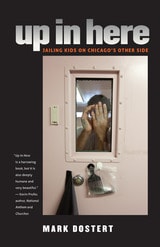
Up in Here
Jailing Kids on Chicago's Other SideMark Dostert
University of Iowa Press, 2014
Raised in a comfortable Dallas suburb, Mark Dostert crossed cultural and socioeconomic boundaries as a college student by volunteering as a counselor at the Cook County Juvenile Temporary Detention Center, Chicago’s infamous 500-cell juvenile jail, known locally as the Audy Home. Inmates there had been indicted on first-degree murder, rape, and carjacking charges, yet some enthusiastically met with him for weekly Bible-based lessons and discussions. Dostert formed friendly relationships with his students and envisioned becoming an even closer mentor to the legally troubled boys when he became an employee there after graduating from college.
The juveniles’ attitudes toward Dostert change, however, once he begins working as a “Children’s Attendant” at the Audy Home, clocking in for eight hours every day to enforce rules and maintain order on the cellblocks. His colorblind, altruistic volunteer world fractures into a full-time, emotionally charged reality of white and black and brown. When the boys change, he must change too. Despite wanting to help them feel human in such a dehumanizing environment, Dostert realizes he needs to make sure his kindness is not perceived as weakness. Dostert learns to march the juveniles through the facility to school, recreation activities, and chapel. He must strip-search them, interrupt their brawls, root through their cells for drugs and handcrafted weapons, and monitor group showers to thwart sexual extortion and the inscription of gang symbols in soap on walls and mirrors. Week after week and month after month, the job exposes hidden views not only of the juveniles and the “system” incarcerating them, but of Children’s Attendant Dostert himself.
From one man’s struggle to reconcile his humanitarian intentions with his actual job responsibilities in what, to him, is a strange new world, emerges a sincere effort to confront the realities of America’s persisting racial tensions and institutionalized poverty. Dostert’s story is an honest and unflinching journey from thinking he has many of the answers for how to change this world to discovering how little he really knows about the world he is trying to change.
[more]
Urban Disorder and the Shape of Belief
The Great Chicago Fire, the Haymarket Bomb, and the Model Town of PullmanCarl Smith
University of Chicago Press, 1994
The Great Chicago Fire of 1871, the Haymarket bombing of 1886, and the making and unmaking of the model town of Pullman—these remarkable events in what many considered the quintessential American city forced people across the country to confront the disorder that seemed inevitably to accompany urban growth and social change. In this book, Carl Smith explores the imaginative dimensions of these events as he traces the evolution of beliefs that increasingly linked city, disorder, and social reality in the minds of Americans. Studying a remarkable range of writings and illustrations, as well as protests, public gatherings, trials, hearings, and urban reform and construction efforts, Smith argues that these three events—and the public awareness of the them—not only informed one another, but collectively shaped how Americans saw, and continue to see, the city.
[more]
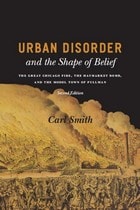
Urban Disorder and the Shape of Belief
The Great Chicago Fire, the Haymarket Bomb, and the Model Town of Pullman, Second EditionCarl Smith
University of Chicago Press, 2007
The Great Chicago Fire of 1871, the Haymarket bombing of 1886, and the making and unmaking of the model town of Pullman—these remarkable events in what many considered the quintessential American city forced people across the country to confront the disorder that seemed inevitably to accompany urban growth and social change.
In Urban Disorder and the Shape of Belief, Carl Smith explores the imaginative dimensions of these events as he traces the evolution of interconnected beliefs and actions that increasingly linked city, disorder, and social reality in the minds of Americans. Examining a remarkable range of writings and illustrations, as well as protests, public gatherings, trials, hearings, and urban reform and construction efforts, Smith argues that these three events—and the public awareness of them—not only informed one another, but collectively shaped how Americans understood, and continue to understand, Chicago and modern urban life.
This classic of urban cultural history is updated with a foreword by the author that expands our understanding of urban disorder to encompass such recent examples as Hurricane Katrina, the Oklahoma City Bombing, and 9/11.
“Cultural history at its finest. By utilizing questions and methodologies of urban studies, social history, and literary history, Smith creates a sophisticated account of changing visions of urban America.”—Robin F. Bachin, Journal of Interdisciplinary History
[more]
Urban Lawyers
The New Social Structure of the BarJohn P. Heinz, Robert L. Nelson, Rebecca L. Sandefur, and Edward O. Laumann
University of Chicago Press, 2005
Over the past several decades, the number of lawyers in large cities has doubled, women have entered the bar at an unprecedented rate, and the scale of firms has greatly expanded. This immense growth has transformed the nature and social structure of the legal profession. In the most comprehensive analysis of the urban bar to date, Urban Lawyers presents a compelling portrait of how these changes continue to shape the field of law today.
Drawing on extensive interviews with Chicago lawyers, the authors demonstrate how developments in the profession have affected virtually every aspect of the work and careers of urban lawyers-their relationships with clients, job tenure and satisfaction, income, social and political values, networks of professional connections, and patterns of participation in the broader community. Yet despite the dramatic changes, much remains the same. Stratification of income and power based on gender, race, and religious background, for instance, still maintains inequality within the bar.
The authors of Urban Lawyers conclude that organizational priorities will likely determine the future direction of the legal profession. And with this landmark study as their guide, readers will be able to make their own informed predictions.
[more]