Results by title
433 books match the query 'Immigrants' and 10 start with u
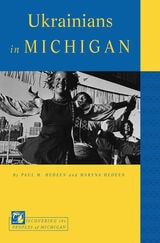
Ukrainians in Michigan
Paul M. Hedeen
Michigan State University Press, 2023
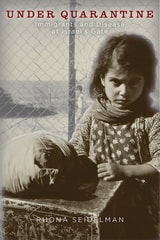
Under Quarantine
Immigrants and Disease at Israel’s GateRhona Seidelman
Rutgers University Press, 2020
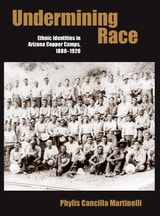
Undermining Race
Ethnic Identities in Arizona Copper Camps, 1880–1920Phylis Cancilla Martinelli
University of Arizona Press, 2009
Phylis Martinelli argues that the case of Italians in Arizona provides insight into “in between” racial and ethnic categories, demonstrating that the categorizing of Italians varied from camp to camp depending on local conditions—such as management practices in structuring labor markets and workers’ housing, and the choices made by immigrants in forging communities of language and mutual support. Italians—even light-skinned northern Italians—were not considered completely “white” in Arizona at this historical moment, yet neither were they consistently racialized as non-white, and tactics used to control them ranged from micro to macro level violence.
To make her argument, Martinelli looks closely at two “white camps” in Globe and Bisbee and at the Mexican camp of Clifton-Morenci. Comparing and contrasting the placement of Italians in these three camps shows how the usual binary system of race relations became complicated, which in turn affected the existing race-based labor hierarchy, especially during strikes. The book provides additional case studies to argue that the biracial stratification system in the United States was in fact triracial at times. According to Martinelli, this system determined the nature of the associations among laborers as well as the way Americans came to construct “whiteness.”
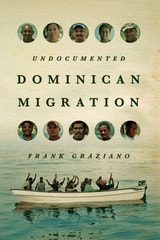
Undocumented Dominican Migration
By Frank Graziano
University of Texas Press, 2013
Undocumented Dominican Migration is the first comprehensive study of boat migration from the Dominican Republic to Puerto Rico. It brings together the interactive global, cultural, and personal factors that induce thousands of Dominicans to journey across the Mona Passage in attempts to escape chronic poverty. The book provides in-depth treatment of decision-making, experiences at sea, migrant smuggling operations, and U.S. border enforcement. It also explores several topics that are rare in migration studies. These include the psychology of migrant motivation, religious beliefs, corruption and impunity, procreation and parenting, compulsive recidivism after failed attempts, social values in relation to law, marriage fraud, and the use of false documents for air travel from Puerto Rico to the mainland United States.
Frank Graziano’s extensive fieldwork among migrants, smugglers, and federal agencies provides an authority and immediacy that brings the reader close to the migrants’ experiences. The exhaustive research and multidisciplinary approach, highly readable narrative, and focus on lesser-known emigrants make Undocumented Dominican Migration an essential addition to public and academic debates about migration.
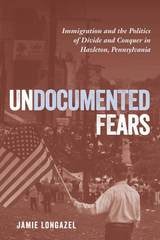
Undocumented Fears
Immigration and the Politics of Divide and Conquer in Hazleton, PennsylvaniaJamie Longazel
Temple University Press, 2016
The Illegal Immigration Relief Act (IIRA), passed in the small Rustbelt city of Hazleton, Pennsylvania in 2006, was a local ordinance that laid out penalties for renting to or hiring undocumented immigrants and declared English the city’s official language. The notorious IIRA gained national prominence and kicked off a parade of local and state-level legislative initiatives designed to crack down on undocumented immigrants.
In his cogent and timely book, UndocumentedFears, Jamie Longazel uses the debate around Hazleton’s controversial ordinance as a case study that reveals the mechanics of contemporary divide and conquer politics. He shows how neoliberal ideology, misconceptions about Latina/o immigrants, and nostalgic imagery of “Small Town, America” led to a racialized account of an undocumented immigrant “invasion,” masking the real story of a city beset by large-scale loss of manufacturing jobs.
Offering an up-close look at how the local debate unfolded in the city that set off this broader trend, Undocumented Fears makes an important connection between immigration politics and the perpetuation of racial and economic inequality.
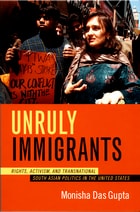
Unruly Immigrants
Rights, Activism, and Transnational South Asian Politics in the United StatesMonisha Das Gupta
Duke University Press, 2006
Das Gupta offers an ethnography of seven South Asian organizations in the northeastern United States, looking at their development and politics as well as the conflicts that have emerged within the groups over questions of sexual, class, and political identities. She examines the ways that women’s organizations have defined and responded to questions of domestic violence as they relate to women’s immigration status; she describes the construction of a transnational South Asian queer identity and culture by people often marginalized by both mainstream South Asian and queer communities in the United States; and she draws attention to the efforts of labor groups who have sought economic justice for taxi drivers and domestic workers by confronting local policies that exploit cheap immigrant labor. Responding to the shortcomings of the state, their communities, and the larger social movements of which they are a part, these groups challenge the assumption that citizenship is the necessary basis of rights claims.
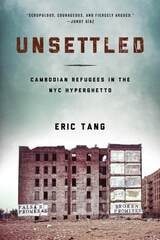
Unsettled
Cambodian Refugees in the New York City HyperghettoEric Tang
Temple University Press, 2015
After surviving the Khmer Rouge genocide, followed by years of confinement to international refugee camps, as many as 10,000 Southeast Asian refugees arrived in the Bronx during the 1980s and ‘90s. Unsettled chronicles the unfinished odyssey of Bronx Cambodians, closely following one woman and her family for several years as they survive yet resist their literal insertion into concentrated Bronx poverty.
Eric Tang tells the harrowing and inspiring stories of these refugees to make sense of how and why the displaced migrants have been resettled in the “hyperghetto.” He argues that refuge is never found, that rescue discourses mask a more profound urban reality characterized by racialized geographic enclosure, economic displacement and unrelenting poverty, and the criminalization of daily life.
Unsettled views the hyperghetto as a site of extreme isolation, punishment, and confinement. The refugees remain captives in late-capitalist urban America. Tang ultimately asks: What does it mean for these Cambodians to resettle into this distinct time and space of slavery’s afterlife?
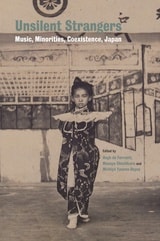
Unsilent Strangers
Music, Minorities, Co-existence, JapanEdited by Hugh de Ferranti, Michiyo Yoneno-Reyes, and Masaya Shishikura
National University of Singapore Press, 2023
This collection of essays on the music of migrant minorities in and from Japan examines the central role music plays in the ongoing adjustment, conciliation, and transformation of newcomers and “hosts” alike. It is the first academic text to address musical activities across a range of migrant groups in Japan––particularly those of Tokyo and its neighboring areas and the first to juxtapose such communities with those of Japanese emigrants as ethnic minorities elsewhere. It presents both archival and fieldwork-based case studies that highlight music in the dynamics of encounter and attempted identity-making, under a unifying framework of migration.
The 2019 introduction of a new “Specified Skilled Worker” visa category marked the beginning of Japan’s “new immigration era,” led by the slogan of tabunka kyosei, or “multicultural coexistence.” The contributors to this volume analyze the concept itself and the many problems around realizing this ideal through ethnographic accounts of current minorities, including South Indians, Brazilians, Nepalis, Filipinos, Iranians, and Ainu domestic migrants. This volume will be of interest to ethnomusicologists, students of the cultures of migrant communities, and those engaged with cultural change and diversity in Japan and East Asia.
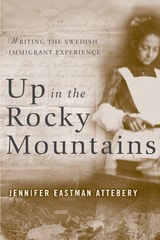
Up in the Rocky Mountains
Writing the Swedish Immigrant ExperienceJennifer Eastman Attebery
University of Minnesota Press, 2007
Before the turn of the twentieth century, many Swedish men emigrated to the American Rockies as itinerant laborers, drawn by the region’s developing industries. Single Swedish women ventured west, too, and whole families migrated, settling into farm communities. By 1920, one-fifth of all Swedish immigrants were living in the West.
In Up in the Rocky Mountains, Jennifer Eastman Attebery offers a new perspective on Swedish immigrants’ experiences in Idaho, Montana, Utah, Wyoming, Colorado, and New Mexico from 1880 to 1917 by interpreting their letters home. Considering more than three hundred letters, Attebery analyzes their storytelling, repetitive language, traditional phrasing, and metaphoric images. Recognizing the letters’ power as a folk form, Attebery sees in them the writers’ relationships back in Sweden as well as their encounters with religious and labor movements, regionalism, and nationalism in their new country.
By defining personal letters as a vernacular genre, Attebery provides a model for discerning immigrants’ shared culture in correspondence collections. By studying their words, she brings to life small Swedish communities throughout the Rocky Mountain region.
Jennifer Eastman Attebery is professor of English and director of American studies at Idaho State University.
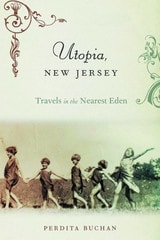
Utopia, New Jersey
Travels in the Nearest EdenBuchan, Perdita
Rutgers University Press, 2007
Winner of the 2008 Honor Book by the New Jersey Council for the Humanities
Utopia. New Jersey. For most people—even the most satisfied New Jersey residents—these words hardly belong in the same sentence. Yet, unbeknown to many, history shows that the state has been a favorite location for utopian experiments for more than a century. Thanks to its location between New York and Philadelphia and its affordable land, it became an ideal proving ground where philosophical and philanthropical organizations and individuals could test their utopian theories.
In this intriguing look at this little-known side of New Jersey, Perdita Buchan explores eight of these communities. Adopting a wide definition of the term utopia—broadening it to include experimental living arrangements with a variety of missions—Buchan explains that what the founders of each of these colonies had in common was the goal of improving life, at least as they saw it.
In every other way, the communities varied greatly, ranging from a cooperative colony in Englewood founded by Upton Sinclair, to an anarchist village in Piscataway centered on an educational experiment, to the fascinating Physical Culture City in Spotswood, where drugs, tobacco, and corsets were banned, but where nudity was widespread.
Despite their grand intentions, all but one of the utopias—a single-tax colony in Berkeley Heights—failed to survive. But Buchan shows how each of them left a legacy of much more than the buildings or street names that remain today—legacies that are inspiring, surprising, and often outright quirky.