Results by title
221 books match the query 'Imperialism' and 3 start with u

Uncertain Dimensions
Western Overseas Empires in the Twentieth CenturyRaymond F. Betts
University of Minnesota Press, 1985
Uncertain Dimensions was first published in 1985. Minnesota Archive Editions uses digital technology to make long-unavailable books once again accessible, and are published unaltered from the original University of Minnesota Press editions.
World War I battered the Western imperial systems and destroyed one, that of Germany, but it did not sound the death knell of an empire. The "scramble" for overseas territory ha reached a virtual conclusion shortly before the war; afterwards, the main business of empire was to ensure a pax colonia: the often contradictory goals of a stable government and economic development. It is with the years between world wars—the brief age of administrative empire — that Raymond Betts is chiefly concerned in this book. An unsettled time, when individuals coped with empire of uncertain dimensions, the interwar years nonetheless left a material legacy—railroads, motor roads, public buildings — and an ideological one—the voices of protest that led to independence after World War II.
Preeminently a cultural history of the era rather than a political narrative, Uncertain Dimensions centers upon the regions we now call the Third World—Subsaharan Africa and Southeast Asia—and the major colonial powers, Great Britain and France. Betts has structured this book as a group of closely linked interpretive essays, each devoted to a specific aspect of the late colonial experience: World War I and the postwar mandates, colonial administration, the European economic imperative and "technology transfer," urbanization, anti-imperial protest, and decolonization. Throughout, he draws upon the work of novelists, poets, and theoreticians—Aime Cesaire, Claude McKay, Leopold Sedar Senghor, Frantz Fanon, and many others—and recognizes the deep irony at the heart of modern imperialism: that contact between Western and Third worlds was mostly confined to two minorities, the alien European and the socially uprooted African or Asian.

Unsafe Haven
The United States, the IRA and Political PrisonersKaren McElrath
Pluto Press, 2000
Karen McElrath questions US government attempts to portray an impartial role in the Irish conflict, arguing that historical and contemporary evidence reveals otherwise. She shows that, far from being a neutral process, the success of bids for political asylum often depends on the relationship between the US and the government of the applicant’s country of origin. Drawing on exclusive interviews with Irish Republicans who have faced deportation or extradition from the United States, or who have been prosecuted in the US for politically-motivated offences, McElrath explores the links between deportation and extradition outcomes and foreign policy issues. The tools of exclusion are defined in their historical context, and the history of US extradition law is described, with particular focus on the treaties with Britain. McElrath also examines the offences for which Irish and Irish-American Republicans have been charged, discusses the various levels of support for Irish political prisoners in the US, and summarises the findings by international human rights organisations.
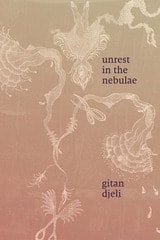
unrest in the nebulae
Gitan Djeli
Duke University Press, 2026