Results by title
366 books match the query 'International' and 5 start with u

U.S. Engineering in a Global Economy
Edited by Richard B. Freeman and Hal Salzman
University of Chicago Press, 2018
The volume provides insights on engineering education, practice, and careers that can inform educational institutions, funding agencies, and policy makers about the challenges facing the United States in developing its engineering workforce in the global economy.

UNCLOS at 40
Essays in Honour of Ambassador Tommy KohEdited by Nilufer Oral and Tara Davenport
National University of Singapore Press, 2024
To commemorate forty years since the 1982 UN Convention on the Law of the Sea (UNCLOS) and in honor of one of the main architects of UNCLOS, Singapore's Ambassador Tommy Koh, UNCLOS at 40 brings together law of the sea judges, scholars, and practitioners to explore a wide range of issues. It explains the reasons for the continuing endurance of UNCLOS as the foundation for the governance of the oceans and looks ahead to new challenges.
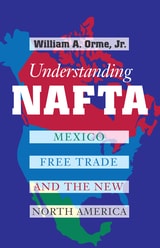
Understanding NAFTA
Mexico, Free Trade, and the New North AmericaBy William A. Orme, Jr.
University of Texas Press, 1996
Understanding NAFTA was first published in 1993 as Continental Shift: Free Trade & the New North America. This edition includes a new introduction that brings the NAFTA story up through 1995.
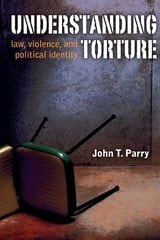
Understanding Torture
Law, Violence, and Political IdentityJohn T. Parry
University of Michigan Press, 2010
"John Parry's Understanding Torture is an important contribution to our understanding of how torture fits within the practices and beliefs of the modern state. His juxtaposition of the often indeterminate nature of the law of torture with the very specific state practices of torture is both startling and revealing."
---Paul W. Kahn is Robert W. Winner Professor of Law and the Humanities at Yale Law School and author of Sacred Violence
"Parry is effective in building, deploying, and supporting his argument . . . that the law does not provide effective protections against torture, but also that the law is in itself constitutive of a political order in which torture is employed to create---and to destroy or re-create---political identities.”
---Margaret Satterthwaite, Faculty Director of the Center for Human Rights and Global Justice and Associate Professor of Clinical Law, NYU School of Law
"A beautifully crafted, convincingly argued book that does not shy away from addressing the legal and ethical complexities of torture in the modern world. In a field that all too often produces simple or superficial responses to what has become an increasingly challenging issue, Understanding Torture stands out as a sophisticated and intellectually responsible work."
---Ruth Miller, Associate Professor of History, University of Massachusetts, Boston
Creating a separate category for an intentionally narrow set of practices labeled and banned as torture, Parry argues, serves to normalize and legitimate the remaining practices that are "not torture." Consequently, we must question the hope that law can play an important role in regulating state violence.
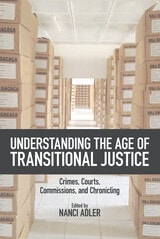
Understanding the Age of Transitional Justice
Crimes, Courts, Commissions, and ChroniclingAdler, Nanci
Rutgers University Press, 2018