356 books match the query 'Jewish Studies' and 4 start with u
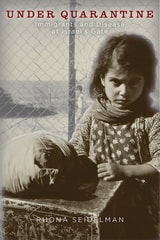
cover of Under Quarantine: Immigrants and Disease at Israel’s Gate

Under Quarantine

Immigrants and Disease at Israel’s Gate

Rhona Seidelman

Rutgers University Press, 2020
Under Quarantine is the riveting story of Shaar Ha’aliya, a central immigrant processing camp opened shortly after Israel became an independent state. This historic gateway for Jewish migration was surrounded by a controversial barbed wire fence. The camp administrators defended this imposing barrier as a necessary quarantine measure - even as detained immigrants regularly defied it by crawling out of the camp and returning at will. Focusing on the conflicts and complications surrounding the medical quarantine, this book brings the history of this place and the remarkable experiences of the immigrants who went through it to life.  Evocative and bold, Under Quarantine shows that we cannot fully understand Israel until we understand Shaar Ha’aliya.  The gate of arrival for nearly half a million immigrants - a space of homecoming, conflict, exclusion and welcoming - here was the country’s crucible.
[more]
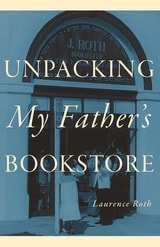
cover of Unpacking My Father's Bookstore

Unpacking My Father's Bookstore

Laurence Roth

Rutgers University Press, 2025

2026 Independent Publisher Book Awards (IPPY) Silver Medal in the West – Pacific Non-Fiction category

Unpacking My Father’s Bookstore brings to life the history of J. Roth / Bookseller of Fine & Scholarly Judaica, which was a microcosm of the Los Angeles Jewish community from 1966 to 1994 and one of the premier Jewish bookstores in the United States. Blending critical analysis with a personal account of growing up in his father’s bookstore, and connecting both to larger forces that helped shape Jewish and American book retailing in the twentieth-century, Laurence Roth crafts a richly felt narrative about his family’s Jewish experience in America. It is a reminder, too, that while most independent bookstores like J. Roth Bookseller disappear from history, these retailers often had outsized effects on their communities. Breaking with conventional modes of scholarship, Unpacking My Father’s Bookstore tells a unique and troubled story that rarely gets told, one that is both personal and analytical, theoretical but rooted in the everyday.
[more]
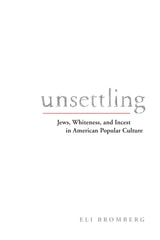
cover of Unsettling: Jews, Whiteness, and Incest in American Popular Culture

Unsettling

Jews, Whiteness, and Incest in American Popular Culture

Eli Bromberg

Rutgers University Press, 2021
By analyzing how various media told stories about Jewish celebrities and incest, Unsettling illustrates how Jewish community protective politics impacted the representation of white male Jewish masculinity in the 1990s. Chapters on Woody Allen, Roseanne Barr, and Henry Roth demonstrate how media coverage of their respective incest denials (Allen), allegations (Barr), and confessions (Roth) intersect with a history of sexual antisemitism, while an introductory chapter on Jewish second-wave feminist criticism of Sigmund Freud considers how Freud became “white” in these discussions. Unsettling reveals how film, TV, and literature have helped displace once prevalent antisemitic stereotypes onto those who are non-Jewish, nonwhite, and poor. In considering how whiteness functions for an ethnoreligious group with historic vulnerability to incest stereotype as well as contemporary white privilege, Unsettling demonstrates how white Jewish men accused of incest, and even those who defiantly confess it, became improbably sympathetic figures representing supposed white male vulnerability.
 
[more]
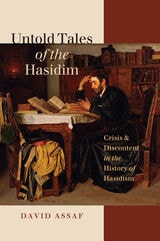
cover of Untold Tales of the Hasidim: Crisis and Discontent in the History of Hasidism

Untold Tales of the Hasidim

Crisis and Discontent in the History of Hasidism

David Assaf

Brandeis University Press, 2011

This fascinating volume reveals some of the dark, dramatic episodes concealed in the folds of the hasidic cloak—shocking events and anomalous figures in the history of Hasidism. Using tools of detection, Assaf extracts historical truth from a variety of sources by examining how the same events are treated in different memory traditions, whether hasidic, maskilic, or modern historical, and tells the stories of individuals from the hasidic elites who found themselves unable to walk the trodden path. By placing these episodes and individuals under his historical lens, Assaf offers a more nuanced historical portrayal of Hasidism in the nineteenth-century context.
[more]