Results by title
486 books match the query 'LGBTQ+' and 6 start with u
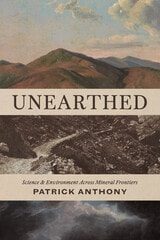
Unearthed
Science and Environment Across Mineral FrontiersPatrick Anthony
University of Chicago Press, 2026
Unearthed depicts a pivotal moment during the nineteenth century: As European and settler schemes to govern ever larger territories intensified, the earth and atmospheric sciences were also becoming more global in scope, assembling models of the planet while making use of militarized or highly industrialized systems. These efforts were informed by the physique du monde, or global physics, of Alexander von Humboldt (1769–1859), a program of vast data collection that spanned four hemispheres that aimed to determine general, scientific laws about the planet and its environments.
Using Humboldt’s itineraries as a frame, Unearthed traces an information order that linked far-flung industrial sites and frontier stations, from Prussian provinces to the Spanish and Russian empires. Humboldt intersected with Saxon miners, Mexican cartographers, and Siberian surveyors, among other itinerant Germans who mobilized the labor and resources of widespread mining operations for global surveys of earth and air. Interweaving the histories of capital and climate, Patrick Anthony takes readers from mines to mountains to show how the sciences of Humboldt’s circuits both measured and made modern natures. These sciences of the mineral frontier, he argues, ultimately laid the groundwork for carbon-intensive economics and a logic of unending extraction. Wide-ranging and ambitious, Unearthed will interest scholars working in the history of science, global history, and the environmental humanities.

Unfolding Corpus
Radical Creativity and Vulnerability in Times of PlagueGeorge Ayala
Rutgers University Press, 2027
UnfoldingCorpus is a carefully curated collection of visual and textual works by artists and writers from past issues of Corpus, a community produced journal, which was originally published between 2003 and 2008 by the AIDS Project Los Angeles (APLA). Corpus was a publication that held open valuable space for Black, Brown, and queer people to see themselves reflected in an honest exploration of HIV and sex, but it was also a celebration of sexuality, connectivity, curiosity, and resilience.
Unfolding Corpus uses contributions from the original journal to draw parallels between HIV, COVID, and monkey pox, all of which have disproportionately affected the queer community. By centering the experiences of communities historically excluded from public health decision-making, the mix of art, poetry, essays, and radical storytelling throughout the collection aims to disrupt and reveal the wrongs waged on low income, Black, Brown, and queer bodies across time and across pandemics. This collection once again confronts a hostile state and cultural environment by celebrating a world in which queer and trans sexuality can flourish, be seen, and be understood as a tool to envision radical futures rooted in equality and unfurling justice.
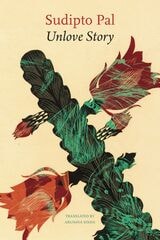
Unlove Story
Sudipto Pal
Seagull Books, 2024
Mallar, a shy and introspective sixteen-year-old, finds himself drawn to Srijan, his classmate’s enigmatic elder cousin, during a fateful summer in a small-town family home. At first, Mallar’s fantasies take shape in secret sketches of Srijan. But soon, their connection becomes a complex play of mutual desire and dominance, which leads to the forging of a unique pact—a promise never to fall in love with each other.
As their lives take them from the serene landscapes of Bengal to the vibrant beaches of Chennai, the mysterious alleys of Paris, and the buzzing streets of Bangalore, the two men’s unconventional companionship deepens. With each meeting comes a new revelation, a fresh twist to their agreement, and a surprising facet of their identities. Mallar, reviving his childhood passion, embarks on a journey to establish himself as an artist. Collaborating on an art project, Mallar transforms Srijan’s body into a living canvas. But what begins as a creative endeavor quickly becomes a voyage into uncharted depths, as the canvas asks questions, challenges their resolve, and unravels hidden truths, culminating in new beginnings.
Delving into the intricate layers of two men’s lives, their fears, insecurities, hopes, and the mosaic of experiences that shape them, this novel is a testament to the complexities of human connection. One of the first openly gay novels written in Bengali, and the first to be translated into English, Sudipto Pal’s Unlove Story is a groundbreaking addition to the canon of queer literature from around the world.
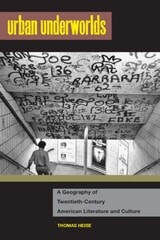
Urban Underworlds
A Geography of Twentieth-Century American Literature and CultureHeise, Thomas
Rutgers University Press, 2010
The quarantining of minority cultures helped to promote white, middle-class privilege. Following a diverse array of literary figures who differ with the assessment of the underworld as the space of the monstrous Other, Heise contends that it is a place where besieged and neglected communities are actively trying to take possession of their own neighborhoods.
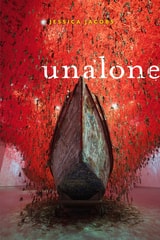
unalone
Jessica Jacobs
Four Way Books, 2024
Deeply personal and yet universal in its truths, unalone draws on the Book of Genesis as a living document whose stories, wisdom, and ethical knots can engage us more fully with our own lives — whatever your religious tradition or spiritual beliefs. In this stunning and ambitious book, Jacobs reminds us that all poetry serves as a kind of prayer – a recognition of beauty, a spoken bid for connection, a yearning toward an understanding that might better guide us through our days. When you “dive / from the twin heights of your eyes,” “that tiny pool below” isn’t God. “Well, not exactly,” Jacobs comforts us. “It’s you. One breath deeper than you’ve / ever been, one breath closer to the heeded, heedful world.”
unalone
Jessica Jacobs
Four Way Books, 2024
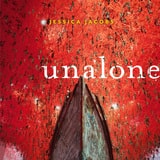
Deeply personal and yet universal in its truths, unalone draws on the Book of Genesis as a living document whose stories, wisdom, and ethical knots can engage us more fully with our own lives — whatever your religious tradition or spiritual beliefs. In this stunning and ambitious book, Jacobs reminds us that all poetry serves as a kind of prayer – a recognition of beauty, a spoken bid for connection, a yearning toward an understanding that might better guide us through our days. When you “dive / from the twin heights of your eyes,” “that tiny pool below” isn’t God. “Well, not exactly,” Jacobs comforts us. “It’s you. One breath deeper than you’ve / ever been, one breath closer to the heeded, heedful world.”