Results by title
98 books match the query 'Law enforcement' and 5 start with u
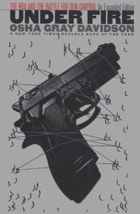
Under Fire
The Nra and the Battle for Gun ControlOsha Gray Davidson
University of Iowa Press, 1998
Originally published in 1993, Under Fire was widely hailed as the first objective examination of the NRA and its efforts to defeat gun control legislation. Now in this expanded edition, Osha Gray Davidson shows how the NRA's extremism has cost the organization both political power and popular support. He offers a well-reasoned and workable approach to gun control, one that will find many supporters even among the NRA membership.
[more]
Under a Bad Sun
Police, Politics, and Corruption in AustraliaPaul Bleakley
Michigan State University Press, 2021
Why do police officers turn against the people they are hired to protect? This question seems all the more urgent in the wake of recent global protests against police brutality. Historical criminologist Paul Bleakley addresses this by examining a series of intersecting cases of police corruption in Queensland, Australia. The protection and extortion of illegal gambling operators and sex workers were only the most visible features of a decades-long, pervasive culture of corruption in the state’s law enforcement agency. Even more dangerous—and far harder to prosecute—was the corrupt bargain between the police and the state’s conservative government, which gave law enforcement free rein to profit from criminalized vice in return for supporting the government’s repression and persecution of its political enemies, from punk music fans to gay men to left-wing protestors. While intimidating members of the political opposition, the police also protected friends and allies from criminal prosecution, even for offenses as serious as child sex abuse. When journalists and investigators revealed this corrupt bargain in 1987, the premier was forced from office and the police commissioner went to prison. But untangling politics from policing proved—and continues to prove—far more difficult in societies around the world. This true crime story goes beyond the everyday violations of law and ethics to underscore how central honest, equitable policing is to a truly democratic society.
[more]
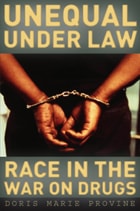
Unequal under Law
Race in the War on DrugsDoris Marie Provine
University of Chicago Press, 2007
Race is clearly a factor in government efforts to control dangerous drugs, but the precise ways that race affects drug laws remain difficult to pinpoint. Illuminating this elusive relationship, Unequal under Law lays out how decades of both manifest and latent racism helped shape a punitive U.S. drug policy whose onerous impact on racial minorities has been willfully ignored by Congress and the courts.
Doris Marie Provine’s engaging analysis traces the history of race in anti-drug efforts from the temperance movement of the early 1900s to the crack scare of the late twentieth century, showing how campaigns to criminalize drug use have always conjured images of feared minorities. Explaining how alarm over a threatening black drug trade fueled support in the 1980s for a mandatory minimum sentencing scheme of unprecedented severity, Provine contends that while our drug laws may no longer be racist by design, they remain racist in design. Moreover, their racial origins have long been ignored by every branch of government. This dangerous denial threatens our constitutional guarantee of equal protection of law and mutes a much-needed national discussion about institutionalized racism—a discussion that Unequal under Law promises to initiate.
Doris Marie Provine’s engaging analysis traces the history of race in anti-drug efforts from the temperance movement of the early 1900s to the crack scare of the late twentieth century, showing how campaigns to criminalize drug use have always conjured images of feared minorities. Explaining how alarm over a threatening black drug trade fueled support in the 1980s for a mandatory minimum sentencing scheme of unprecedented severity, Provine contends that while our drug laws may no longer be racist by design, they remain racist in design. Moreover, their racial origins have long been ignored by every branch of government. This dangerous denial threatens our constitutional guarantee of equal protection of law and mutes a much-needed national discussion about institutionalized racism—a discussion that Unequal under Law promises to initiate.
[more]
Uniform Feelings
Scenes from the Psychic Life of PolicingJessi Lee Jackson
University of Michigan Press, 2022
In Uniform Feelings, American studies scholar and abolitionist psychotherapist Jessi Lee Jackson reads policing as a set of emotional and relational practices in order to shed light on the persistence of police violence. Jackson argues that psychological investments in U.S. police power emerge at various sites: her counseling room, manuals for addressing bias, museum displays, mortality statistics, and memorial walls honoring fallen officers. Drawing on queer, feminist, anticolonial, and Black engagements with psychoanalysis to think through U.S. policing—and bringing together a mix of clinical case studies, autotheory, and ethnographic research—the book moves from the individual to the institutional. Jackson begins with her work as a psychotherapist working across the spectrum of relationships to policing, and then turns to interrogate carceral psychology—the involvement of her profession in ongoing state violence. Jackson orbits around two key questions: how are our relationships shaped by proximity to state violence, and how can our social worlds be transformed to challenge state-sanctioned violence?
[more]
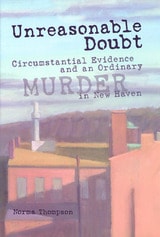
Unreasonable Doubt
Circumstantial Evidence and an Ordinary Murder in New HavenNorma Thompson
University of Missouri Press, 2006
It was to all appearances an ordinary murder—many might have said that it was an open-and-shut case. But some jurors were not convinced, and the taint of reasonable doubt led one of them to question the very future of our legal system.
For many Americans, the civic responsibility of jury duty might seem an inconvenience; for Norma Thompson, it was a unique opportunity to bring her expertise to bear on the state of trial procedures in America today. With a background in political science, literature, and the classics, Thompson served as jury foreman in a trial of an “ordinary” murder in New Haven, Connecticut. Deliberations were buffeted by crosswinds of common sense and strong emotion. The trial ended in a hung jury because of what Thompson calls the “unreasonable doubts” of two fellow jurors concerning circumstantial evidence in an age when DNA testing holds out the promise of irrefutable proof.
In a compelling tale of contrasting rhetoric, Thompson takes readers into the courtroom to hear a streetwise convict verbally sparring with the D.A., then brings us into the confines of the jury room to have us witness nervous chatter over the meaning of evidence. She also contrasts this ordinary murder with the concurrent brutal stabbing of a Yale student, a case that attracted considerably more police and media attention.
Thompson argues that the indeterminate results of the trial are symptomatic of larger problems in the justice system and society and that the reluctance of most people today to be judgmental is damaging the criminal justice system. As an antidote, she suggests that great literary and historical texts can help us develop the capacity for prudential judgment. Gleaning insights from an imaginary jury of Tocqueville and Plato, Jane Austen and William Faulkner, among other writers and thinkers, Thompson shows how confrontation with the works of such authors can help model more proper habits of deliberation.
Blending personal memoir, social analysis, and literary criticism, Unreasonable Doubt is a challenging book that deals squarely with the evasion of judgment in contemporary political, social, and legal affairs. Brimming with brilliant insights, it suggests that the foundations for thought and action in our time have been neglected as a result of the wall erected between the social sciences and the humanities and invites readers to consider jury duty in a new light. Through real-world drama and literary reflection, it shows us that there is more to politics than power—and more of value to be found in the humanities than we may have supposed.
[more]