1445 books match the query 'Life Sciences' and 9 start with u
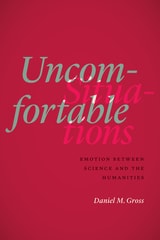
cover of Uncomfortable Situations: Emotion between Science and the Humanities

Uncomfortable Situations

Emotion between Science and the Humanities

Daniel M. Gross

University of Chicago Press, 2017

What is a hostile environment? How exactly can feelings be mixed? What on earth might it mean when someone writes that he was “happily situated” as a slave? The answers, of course, depend upon whom you ask.

Science and the humanities typically offer two different paradigms for thinking about emotion—the first rooted in brain and biology, the second in a social world. With rhetoric as a field guide, Uncomfortable Situations establishes common ground between these two paradigms, focusing on a theory of situated emotion. Daniel M. Gross anchors the argument in Charles Darwin, whose work on emotion has been misunderstood across the disciplines as it has been shoehorned into the perceived science-humanities divide. Then Gross turns to sentimental literature as the single best domain for studying emotional situations. There’s lost composure (Sterne), bearing up (Equiano), environmental hostility (Radcliffe), and feeling mixed (Austen). Rounding out the book, an epilogue written with ecological neuroscientist Stephanie Preston provides a different kind of cross-disciplinary collaboration. Uncomfortable Situations is a conciliatory work across science and the humanities—a groundbreaking model for future studies.
[more]
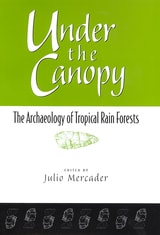
cover of Under the Canopy: The Archaelogy of Tropical Rain Forests

Under the Canopy

The Archaelogy of Tropical Rain Forests

Mercader, Julio

Rutgers University Press, 2002

Did our ancestors live in tropical forests? Although we see the rainforest as a bountiful environment teeming with life forms, most anthropologists and archaeologists have long viewed these areas as too harsh for human occupation during the pre-agricultural stages of hominid development.

Under the Canopy turns conventional wisdom on its head by providing a well-documented, geographically diverse overview of Stone Age sites in the wet tropics. New research indicates that, as humanity and its precursors increased their geographical and ecological ranges, rainforests were settled at a much earlier period than had previously been thought.

Featuring the work of leading scholars from Australia, Brazil, Canada, Colombia, France, Malaysia, Panama, Spain, and the United States, Under the Canopy creates a new niche in paleolithic studies: the archaeology of tropical rainforests. This book provides the first synthesis of archaeological research in early foraging sites across the rainforest zone, and indicates that tropical forests could harbor important clues to human evolution, origins of modern behavior, cultural diversity, and human impact on tropical ecosystems.
[more]
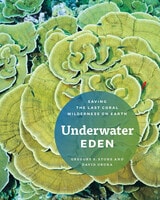
cover of Underwater Eden: Saving the Last Coral Wilderness on Earth

Underwater Eden

Saving the Last Coral Wilderness on Earth

Edited by Gregory S. Stone and David Obura

University of Chicago Press, 2012
“It was the first time I’d seen what the ocean may have looked like thousands of years ago.” That’s conservation scientist Gregory S. Stone talking about his initial dive among the corals and sea life surrounding the Phoenix Islands in the South Pacific. Worldwide, the oceans are suffering. Corals are dying off at an alarming rate, victims of ocean warming and acidification—and their loss threatens more than 25 percent of all fish species, who depend on the food and shelter found in coral habitats. Yet in the waters off the Phoenix Islands, the corals were healthy, the fish populations pristine and abundant—and Stone and his companion on the dive, coral expert David Obura, determined that they were going to try their best to keep it that way.
 
Underwater Eden tells the story of how they succeeded, against great odds, in making that dream come true, with the establishment in 2008 of the Phoenix Islands Protected Area (PIPA). It’s a story of cutting-edge science, fierce commitment, and innovative partnerships rooted in a determination to find common ground among conservationists, business interests, and governments—all backed up by hard-headed economic analysis.
 
Creating the world’s largest (and deepest) UNESCO World Heritage Site was by no means easy or straightforward. Underwater Eden takes us from the initial dive, through four major scientific expeditions and planning meetings over the course of a decade, to high-level negotiations with the government of Kiribati—a small island nation dependent on the revenue from the surrounding fisheries. How could the people of Kiribati, and the fishing industry its waters supported, be compensated for the substantial income they would be giving up in favor of posterity? And how could this previously little-known wilderness be transformed into one of the highest-profile international conservation priorities?
 
Step by step, conservation and its priorities won over the doubters, and Underwater Eden is the stunningly illustrated record of what was saved. Each chapter reveals—with eye-popping photographs—a different aspect of the science and conservation of the underwater and terrestrial life found in and around the Phoenix Islands’ coral reefs. Written by scientists, politicians, and journalists who have been involved in the conservation efforts since the beginning, the chapters brim with excitement, wonder, and confidence—tempered with realism and full of lessons that the success of PIPA offers for other ambitious conservation projects worldwide.
 
Simultaneously a valentine to the diversity, resilience, and importance of the oceans and a riveting account of how conservation really can succeed against the toughest obstacles, Underwater Eden is sure to enchant any ocean lover, whether ecotourist or armchair scuba diver.

[more]
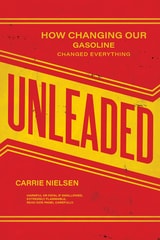
cover of Unleaded: How Changing Our Gasoline Changed Everything

Unleaded

How Changing Our Gasoline Changed Everything

Carrie Nielsen

Rutgers University Press, 2021

When leaded gasoline was first developed in the 1920s, medical experts were quick to warn of the public health catastrophes it would cause. Yet government regulators did not heed their advice, and for more than half a century, nearly all cars used leaded gasoline, which contributed to a nationwide epidemic of lead poisoning. By the 1970s, 99.8% of American children had significantly elevated levels of lead in their blood.
 
Unleaded tells the story of how crusading scientists and activists convinced the U.S. government to ban lead additives in gasoline. It also reveals how, for nearly fifty years, scientific experts paid by the oil and mining industries abused their authority to convince the public that leaded gasoline was perfectly harmless. 
 
Combining environmental history, sociology, and neuroscience, Carrie Nielsen explores how lead exposure affects the developing brains of children and is linked to social problems including academic failure, teen pregnancies, and violent crime. She also shows how, even after the nationwide outrage over Flint’s polluted water, many poor and minority communities and communities of color across the United States still have dangerously high lead levels. Unleaded vividly depicts the importance of sound science and strong environmental regulations to protect our nation’s most vulnerable populations.
[more]
cover of Unmaking Botany: Science and Vernacular Knowledge in the Colonial Philippines

Unmaking Botany

Science and Vernacular Knowledge in the Colonial Philippines

Kathleen Cruz Gutierrez

Duke University Press, 2025
In Anglo-European botany, it is customary to think of the vernacular as that which is not a Latin or Latinized scientific plant name. In Unmaking Botany, Kathleen Cruz Gutierrez traces a history of botany in the Philippines during the last decades of Spanish rule and the first decades of US colonization. Through this history, she redefines the vernacular, expanding it to include embodied, cosmological, artistic, and varied taxonomic practices. From the culinary textures of rice and the lyrics crooned to honor a flower to the touch of a skirt woven from banana fiber, she illuminates how vernaculars of plant knowing in the Philippines exposed the philosophical and practical limits of botany. Such vernaculars remained as sovereign forms of knowledge production. Yet, at the same time, they fueled botany’s dominance over other ways of knowing plants. Revealing this tension allows Gutierrez to theorize “sovereign vernaculars,” or insight into plants that made and unmade the science, which serves as a methodological provocation to examine the interplay of different knowledge systems and to study the history of science from multiple vantage points.
[more]
cover of Unruly Complexity: Ecology, Interpretation, Engagement

Unruly Complexity

Ecology, Interpretation, Engagement

Peter J. Taylor

University of Chicago Press, 2005

Ambitiously identifying fresh issues in the study of complex systems, Peter J. Taylor, in a model of interdisciplinary exploration, makes these concerns accessible to scholars in the fields of ecology, environmental science, and science studies. Unruly Complexity explores concepts used to deal with complexity in three realms: ecology and socio-environmental change; the collective constitution of knowledge; and the interpretations of science as they influence subsequent research.

For each realm Taylor shows that unruly complexity-situations that lack definite boundaries, where what goes on "outside" continually restructures what is "inside," and where diverse processes come together to produce change-should not be suppressed by partitioning complexity into well-bounded systems that can be studied or managed from an outside vantage point. Using case studies from Australia, North America, and Africa, he encourages readers to be troubled by conventional boundaries-especially between science and the interpretation of science-and to reflect more self-consciously on the conceptual and practical choices researchers make.
[more]
cover of Untangling Ecological Complexity: The Macroscopic Perspective

Untangling Ecological Complexity

The Macroscopic Perspective

Brian A. Maurer

University of Chicago Press, 1998

Ecologists increasingly find themselves called upon to address the impacts of global change on biodiversity. Yet most studies of biodiversity focus solely on intensive, experimental analyses of localized ecological communities. In Untangling Ecological Complexity, Brian A. Maurer argues for a more pluralistic approach, showing how ecologists might enhance their ability to tackle global problems by incorporating broader spatial and temporal perspectives into their research.

Maurer begins by reviewing the strengths and limitations of reductionist experimental approaches. Although these studies have produced much valuable data, their small scale restricts the kinds of inferences that can be drawn from them. Maurer then demonstrates how statistical methods can be used to identify processes (such as dispersal or nonrandom extinction) that operate across broad geographic scales, yet which also have profound impacts on local ecosystems. This macroscopic perspective, Maurer suggests, provides a powerful tool for untangling ecological complexity.
[more]
cover of Us and Them: The Science of Identity

Us and Them

The Science of Identity

David Berreby

University of Chicago Press, 2008

Democrat and Republican. Meat Eaters and Vegetarians. Black and White. As human beings we sort ourselves into groups. And once we identify ourselves as a member of a particular group—say, Red Sox fans—we tend to feel more comfortable with others of our own kind, rather than, say, Yankees fans. Yet we all belong to multiple groups at the same time—one might be a woman, a mother, an American, a violinist. How do we decide which identities matter and why they matter so much? And what makes us willing to die for, or to kill for, a religion, a nation, or a race?
            In this award-winning book, David Berreby describes how twenty-first-century science is addressing these age-old questions. Ably linking neuroscience, social psychology, anthropology, and other fields, Us and Them investigates humanity’s “tribal mind” and how this alters our thoughts, affects our health, and is manipulated for good and ill. From the medical effects of stress to the rhetoric of politics, our perceptions of group identity affect every part of our lives. Science, Berreby argues, shows how this part of human nature is both unexpectedly important and surprisingly misunderstood.
            Humans need our tribal sense—it tells us who we are, how we should behave, and links us to others as well as the past and future. Some condemn this instinct, while others celebrate it. Berreby offers in Us and Them a third alternative: how we can accept and understand our inescapable tribal mind.
“[A] brave book. . . . Berreby’s quest is to understand what he sees as a fundamental human urge to classify and identify with ‘human kinds.’”—Henry Gee, Scientific American
[more]
cover of Utah Wildflowers: A Field Guide to Northern and Central Mountains and Valleys

Utah Wildflowers

A Field Guide to Northern and Central Mountains and Valleys

Richard Shaw

Utah State University Press, 1999

 A visual guide to the wildflowers that inhabit the mountains and valleys of northern and central Utah every spring and summer. A must for the hiker, biker, or lover of the outdoors. Includes over 100 full-color photographs.

[more]