Results by title
905 books match the query 'Literary' and 6 start with u
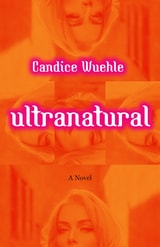
Ultranatural
Candice Wuehle
University of Iowa Press, 2026
Before Love became a household name, she was Lacey Dove Bart, a determined teen with dreams of stardom. Desperate to escape her bleak small-town life, Lacey dazzles at an audition for the prestigious Newland Academy, catching the eye of mega producer Jimmy Coins. Lacey’s friend and co-performer, Carrie-Anne, believes they’re on the brink of achieving their shared dream of escaping Appalachia. But a betrayal by Lacey leaves them both reeling.
As Lacey is transformed into “Love,” the carefully controlled idol of a generation, she loses piece after piece of herself. She’s contracted for stints on Christian variety shows, toured through malls and state fairs, and even locked in a fortress-like mansion between recording sessions. With her life spiraling out of control and younger, hungrier replacements waiting in the wings, Love’s only chance at freedom is to reconnect with Carrie-Anne and seek redemption in the one authentic bond she has left. Part pop elegy, part horror story, part radical reimagining of female celebrity, Ultranatural autotunes the static of fame until it sounds like prophecy.
Under
StoriesGlen Pourciau
Four Way Books, 2025
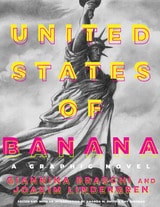
United States of Banana
A Graphic NovelGiannina Braschi and Joakim LindengrenEdited and with an introduction by Amanda M. Smith and Amy Sheeran
The Ohio State University Press, 2021
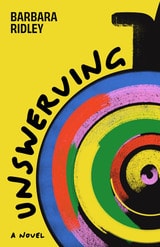
Unswerving
Barbara Ridley
University of Wisconsin Press, 2024
In rehab, Tave relearns life skills and comes to recognize that her future will be completely different than she’d imagined. Where will she live? How will she find the help she needs? Can her friends rise to the occasion? Or will she be forced to move back in with her mother, putting up with endless talk of faith healers? Her one beacon of hope is Beth, her physical therapist. But Beth’s relationship problems with her own girlfriend push her toward overinvolvement—and risk damaging both her career and Tave’s recovery.
A story of courage, resilience, and love, Unswerving challenges readers’ preconceived notions of disability, of limitations, and of the inevitability of fate.
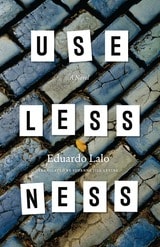
Uselessness
A NovelEduardo Lalo
University of Chicago Press, 2017
Lalo’s first novel, Uselessness is something of a bildungsroman of his own student days in Paris. But more than this, it is a literary précis of his oeuvre—of themes that obsess him still. Told in two parts, Uselessness first follows our narrator through his romantic and intellectual awakenings in Paris, where he elevates his adopted home over the moribund one he has left behind. But as he falls in and out of love he comes to realize that as a Puerto Rican, he will always be apart. Ending the greatest romance of his life—that with the city of Paris itself—he returns to San Juan. And in this new era of his life, he is forced to confront choices made, ambitions lost or unmet—to look upon lives not lived.
A tale of the travails of youthful romance and adult acceptance, of foreignness and isolation both at home and abroad, and of the stultifying power of the desire to belong—and to be moved—Uselessness is here rendered into English by the masterful translator Suzanne Jill Levine. For anyone who has been touched by the disquieting passion of Paris, Uselessness is a stirring saga.
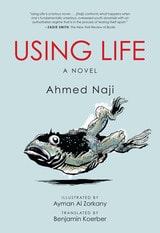
Using Life
By Ahmed Naji, Illustrations by Ayman Al Zorkany, Translated by Benjamin Koerber
University of Texas Press, 2017
Upon its initial release in Arabic in the fall of 2014, Using Life received acclaim in Egypt and the wider Arab world. But in 2016, Ahmed Naji was sentenced to two years in prison after a reader complained that an excerpt published in a literary journal harmed public morality. His imprisonment marks the first time in modern Egypt that an author has been jailed for a work of literature. Writers and literary organizations around the world rallied to support Naji, and he was released in December 2016. His original conviction was overturned in May 2017 but, at the time of printing, he is awaiting retrial and banned from leaving Egypt.
Set in modern-day Cairo, Using Life follows a young filmmaker, Bassam Bahgat, after a secret society hires him to create a series of documentary films about the urban planning and architecture of Cairo. The plot in which Bassam finds himself ensnared unfolds in the novel’s unique mix of text and black-and-white illustrations.
The Society of Urbanists, Bassam discovers, is responsible for centuries of world-wide conspiracies that have shaped political regimes, geographical boundaries, reigning ideologies, and religions. It is responsible for today’s Cairo, and for everywhere else, too. Yet its methods are subtle and indirect: it operates primarily through manipulating urban architecture, rather than brute force. As Bassam immerses himself in the Society and its shadowy figures, he finds Cairo on the brink of a planned apocalypse, designed to wipe out the whole city and rebuild anew.