Results by title
225 books match the query 'Modernism' and 3 start with u
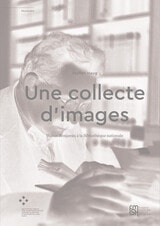
Une collecte d’images
Walter Benjamin à la Bibliothèque nationaleSteffen Haug
Diaphanes, 2022
Au fil de ses recherches, Benjamin se rend à l’évidence : il faudra que son Livre des passages soit enrichi par des images. Une « documentation visuelle » se constitue bientôt, écrit-il, glanée pour l’essentiel dans les recueils du Cabinet des estampes de la Bibliothèque nationale où il travaille pendant son exil parisien. Une centaine de notes témoignent de cette collecte et conservent, enfermée dans leurs plis, la mention d’une ou de plusieurs images qui sont restées pour la plupart inconnues jusqu’ici.
Steffen Haug a voulu retrouver cette réserve enfouie. Gravures et dessins de presse, tracts, réclames, affiches et photographies, de Meryon et Grandville à Daumier, en passant par l’infinie cohorte anonyme et le tout-venant de la production visuelle à grand tirage du XIXe siècle : la moisson rapportée ici est surprenante. Elle invite à lire ou relire les Passages en faisant à l’image toute la place qu’elle occupe dans la pensée du dernier Benjamin, à l’heure où s’élaborent, sous la menace de temps assombris, son essai « L’œuvre d’art à l’époque de sa reproductibilité technique », le projet de livre sur Baudelaire ou ses « Thèses sur le concept d’histoire ».
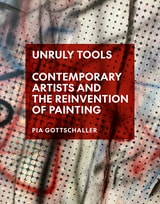
Unruly Tools
Contemporary Artists and the Reinvention of PaintingPia Gottschaller
J. Paul Getty Trust, The, 0
The first book to examine the role of unconventional tools in contemporary painting is required reading for anyone interested in painting’s recent past and future.
Painting, often regarded as the oldest of art forms, has been repeatedly declared “dead.” In this original and compelling study, technical art historian Pia Gottschaller thoroughly dismantles that notion, revealing how painters radically reimagined the medium in the years following World War II. No longer confined to the paintbrush, artists began to experiment with new methods, employing found, fabricated, and repurposed objects—as varied as an Afro comb, the human body, and a robotic airbrush—to create paintings unlike any seen before, revolutionizing the course of art history.
- Begins in 1945 with Jackson Pollock and the Gutai Art Association in Japan and traces the transformation of painting across the globe from the post-war period to the present.
- Explores the work of thirty-eight contemporary painters, including Amoako Boafo, Helen Frankenthaler, Yves Klein, Julie Mehretu, Beatriz Milhazes, Howardena Pindell, Kazuo Shiraga, and Andy Warhol.
- Richly illustrated with over 240 images of artists and their creations.
Unruly Tools is the first study of this kind and offers essential testimony to painting’s continued vitality and reinvention.
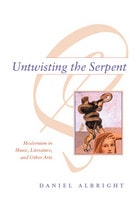
Untwisting the Serpent
Modernism in Music, Literature, and Other ArtsDaniel Albright
University of Chicago Press, 2000
Focusing on collaborations with a musical component, Albright views these works as either figures of dissonance that try to retain the distinctness of their various media (e.g. Guillaume Apollinaire's Les Mamelles de Tirésias) or figures of consonance that try to lose themselves in some total effect (e.g. Arnold Schoenberg's Erwartung). In so doing he offers a fresh picture of Modernism, and provides a compelling model for the analysis of all artistic collaborations.
Untwisting the Serpent is the recipient of the 2001 Susanne M. Glasscock Humanities Book Prize for Interdisciplinary Scholarship of the Center for Humanities Research at Texas A&M University.