Results by title
405 books match the query 'Natural history' and 5 start with u
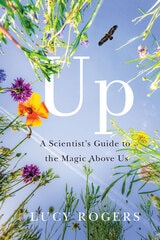
UP
A Scientist's Guide to the Magic Above UsLucy Rogers
Michigan State University Press, 2027
Engineer and bubble scientist Lucy Rogers invites us to explore the wonders of the air, sky, and space; understand the science; and appreciate the insights this offers about life on Earth. The sky is a world of endless wonder. From the intricate dance of clouds and the vibrant hues of the aurora borealis to the marvel of effortless soaring birds and the silent majesty of the stars, it is a living storybook. Join Rogers on a marvelous adventure through a kite market in India, creep through the Borneo jungle to witness millions of bats pour out of a cave at dusk, venture to Tornado Alley to chase the raw power of storms, and journey to Mexico to stand in awe of a total solar eclipse. Up is for anyone who has ever looked up at the sky in awe and needs to know the science behind its never-ending phenomena.

Under the Devil's Thumb
David Gessner
University of Arizona Press, 1999
In the West Gessner began to rewrite his life. Under the Devil's Thumb is a story of rugged determination and sweat, as well as humor, adventure and hope. In and around his new hometown of Boulder, Colorado, Gessner hiked hard and ran alongside flooded creeks. He found that the West was a place of stories—stories that grow out of the ground, flow out of the dirt, work their way through one's limbs, and drive people to push their physical limits. Hiking up scree slopes toward the Devil's Thumb, a massive outcrop of orange rock that attracts climbers, hikers, and contemplaters, Gessner reflects on the illness he has so recently survived. He pushes his physical limits, hoping to outrun death, to outrun dread. He finds momentary transcendence in the joys and self-inflicted pain of mountain biking. "Nothing but the hardest ride has the power to flush out worry, mind clutter, and dread." In tranquil moments he seeks a chance to recover an animal self that is strong and powerful enough to conquer mountains, but also still and quiet enough to see things human beings ignore.
In the mountain West, Gessner finds what Wallace Stegner called "the geography of hope." He finds within himself an interior landscape that is healthy and strong. Combining memoir, nature writing, and travel writing, Under the Devil's Thumb is one man's journey deep into a place of healing.
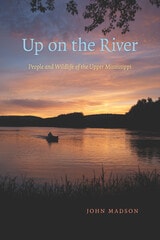
Up on the River
People and Wildlife of the Upper MississippiMadson, John
University of Iowa Press, 1985
@font-face { font-family: "Times";}@font-face { font-family: "Verdana";}@font-face { font-family: "Palatino";}p.MsoNormal, li.MsoNormal, div.MsoNormal { margin: 0in 0in 0.0001pt; font-size: 12pt; font-family: "Times New Roman"; }div.Section1 { page: Section1; }
Up on the River is John Madson’s loving and often hilarious tribute to the people, animal life, and places of the Upper Mississippi. Madson’s Upper Mississippi is the part “between the saints,” from St. Louis to St. Paul, where for thirty years he explored the bright waters of the upper reaches of the mighty river itself as well as the tangled multitude of sloughs, cuts, and side channels that wander through its wooded islands and floodplain forests.
“Some of my best time on the River has been in the company of game wardens, biologists, commercial fishermen, clammers, trappers, hunters, and a smelly, mud-smeared coterie of river rats in general, and my views of the River are far more likely to reflect theirs than those of the transportation industry,” Madson writes of his thirty-year acquaintance with the Mississippi. Traveling mainly by canoe and johnboat, he tells of encounters between archetypal commercial fishermen and archetypal game wardens over hot fish chowder, fishing for crappies in the tops of submerged trees and for walleyes amid gale force winds, nesting and migrating herons and ducks and eagles, the histories of river logging and pearling and button making, and towboats and barges and the lives of the “ramstugenous” people who move freight on the river.
Learning about the Upper Mississippi via the wry tutelage of John Madson, who discovered that “whenever I am out on a river some of its freeness rubs off on me,” readers of this classic book will also come under the spell of this freeness.

Urban Archipelago
An Environmental History of the Boston Harbor IslandsPavla Šimková
University of Massachusetts Press, 2021
In this book, Pavla Šimková reinterprets the Boston Harbor Islands as an urban archipelago, arguing that they have been an integral part of Boston since colonial days, transformed by the city's changing values and catering to its current needs. Drawing on archival sources, historic maps and photographs, and diaries from island residents, this absorbing study attests that the harbor islands' story is central to understanding the ways in which Boston has both shaped and been shaped by its environment over time.

Utopia's Garden
French Natural History from Old Regime to RevolutionE. C. Spary
University of Chicago Press, 2000
E. C. Spary traces the scientific, administrative, and political strategies that enabled the foundation of the Muséum, arguing that agriculture and animal breeding rank alongside classification and collections in explaining why natural history was important for French rulers. But the Muséum's success was also a consequence of its employees' Revolutionary rhetoric: by displaying the natural order, they suggested, the institution could assist in fashioning a self-educating, self-policing Republican people. Natural history was presented as an indispensable source of national prosperity and individual virtue.
Spary's fascinating account opens a new chapter in the history of France, science, and the Enlightenment.