Results by title
413 books match the query 'New York' and 12 start with u
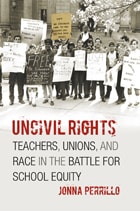
Uncivil Rights
Teachers, Unions, and Race in the Battle for School EquityJonna Perrillo
University of Chicago Press, 2012
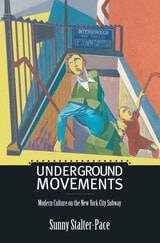
Underground Movements
Modern Culture on the New York City SubwaySunny Stalter-Pace
University of Massachusetts Press, 2013
Writers and artists took up questions that originated in the sphere of urban planning to explore how underground movement changed the ways people understand the city. Modern poets envisioned the subway as a space of literary innovation; playwrights and fiction writers used it to gauge the consequences of migration and immigration; and essayists found that it underscored the fragile relationship between urban development and memory. Even today, the symbolic associations forged by these early texts continue to influence understanding of the cultural significance of the subway and the city it connects.
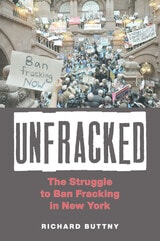
Unfracked
The Struggle to Ban Fracking in New YorkRichard Buttny
University of Massachusetts Press, 2024
Since fracking emerged as a way of extracting natural gas, through intense deep drilling and the use of millions of gallons of water and chemicals to fracture shale, it has been controversial. It is perceived in different ways by different people—by some as an opportunity for increased resources and possibly jobs and other income; by others as a public health and environmental threat; and for many, an unknown. Richard Buttny, a scholar who works on rhetoric and discursive practices, read a story in his local paper in New York about hydrofracking coming to his area and had to research what it was, and what it could mean for his community. Soon he joined neighbors in fighting to have the practice banned state-wide. At the same time, he turned his scholarly eye to the messaging from both sides of the fight, using first-person accounts, interviews, and media coverage.
The activists fighting fracking won. New York is now the only state in the US with sizable deposits of natural gas that has banned hydraulic fracturing, or fracking. Unfracked explains the competing rhetoric and discourses on fracking among New York-based advocates, experts, the grassroots, and political officials. Buttny examines how these positions evolved over time and how eventually the state arrived at a decision to ban this extractive technology. His accessible approach provides both a historical recounting of the key events of this seven-year conflict, along with four in-depth case studies: a grassroots citizen group, a public hearing with medical physicians, a key intergovernmental hearing, and a formal debate among experts. The result is a look at a very recent, important historical moment and a useful examination of environmental activist and fossil fuel advocate rhetoric around an issue that continues to cause debate nationwide.
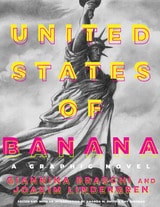
United States of Banana
A Graphic NovelGiannina Braschi and Joakim LindengrenEdited and with an introduction by Amanda M. Smith and Amy Sheeran
The Ohio State University Press, 2021
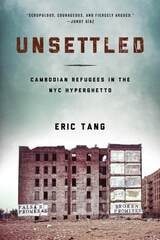
Unsettled
Cambodian Refugees in the New York City HyperghettoEric Tang
Temple University Press, 2015
After surviving the Khmer Rouge genocide, followed by years of confinement to international refugee camps, as many as 10,000 Southeast Asian refugees arrived in the Bronx during the 1980s and ‘90s. Unsettled chronicles the unfinished odyssey of Bronx Cambodians, closely following one woman and her family for several years as they survive yet resist their literal insertion into concentrated Bronx poverty.
Eric Tang tells the harrowing and inspiring stories of these refugees to make sense of how and why the displaced migrants have been resettled in the “hyperghetto.” He argues that refuge is never found, that rescue discourses mask a more profound urban reality characterized by racialized geographic enclosure, economic displacement and unrelenting poverty, and the criminalization of daily life.
Unsettled views the hyperghetto as a site of extreme isolation, punishment, and confinement. The refugees remain captives in late-capitalist urban America. Tang ultimately asks: What does it mean for these Cambodians to resettle into this distinct time and space of slavery’s afterlife?
Unsettling Choice
Race, Rights, and the Partitioning of Public EducationUjju Aggarwal
University of Minnesota Press, 2024
How the Great Recession revealed a system of school choice built on crisis, precarity, and exclusion
What do universal rights to public goods like education mean when codified as individual, private choices? Is the “problem” of school choice actually not about better choices for all but, rather, about the competition and exclusion that choice engenders—guaranteeing a system of winners and losers? Unsettling Choice addresses such questions through a compelling ethnography that illuminates how one path of neoliberal restructuring in the United States emerged in tandem with, and in response to, the Civil Rights movement.
Drawing on ethnographic research in one New York City school district, Unsettling Choice traces the contestations that surfaced when, in the wake of the 2007–2009 Great Recession, public schools navigated austerity by expanding choice-based programs. Ujju Aggarwal argues that this strategy, positioned as “saving public schools,” mobilized mechanisms rooted in market logics to recruit families with economic capital on their side, thereby solidifying a public sphere that increasingly resembled the private—where contingency was anticipated and rights for some were marked by intensified precarity for poor and working-class Black and Latinx families.
As Unsettling Choice shows, these struggles over public schools—one of the last remaining universal public goods in the United States—were entrapped within neoliberal regimes that exceeded privatization and ensured exclusion even as they were couched in language of equity, diversity, care, and rights. And yet this richly detailed and engaging book also tracks an architecture of expansive rights, care, and belonging built among poor and working-class parents at a Head Start center, whose critique of choice helps us understand how we might struggle for—and reimagine—justice, and a public that remains to be won.
Retail e-book files for this title are screen-reader friendly with images accompanied by short alt text and/or extended descriptions.
Up Against the Real
Black Mask from Art to ActionNadja Millner-Larsen
University of Chicago Press, 2023
With Up Against the Real, Nadja Millner-Larsen offers the first comprehensive study of the group Black Mask and its acrimonious relationship to the New York art world of the 1960s. Cited as pioneers of now-common protest aesthetics, the group’s members employed incendiary modes of direct action against racism, colonialism, and the museum system. They shut down the Museum of Modern Art, fired blanks during a poetry reading, stormed the Pentagon in an antiwar protest, sprayed cow’s blood at the secretary of state, and dumped garbage into the fountain at Lincoln Center. Black Mask published a Dadaist broadside until 1968, when it changed its name to Up Against the Wall Motherfucker (after line in a poem by Amiri Baraka) and came to classify itself as “a street gang with analysis.” American activist Abbie Hoffman described the group as “the middle-class nightmare . . . an anti-media phenomenon simply because their name could not be printed.”
Up Against the Real examines how and why the group ultimately rejected art in favor of what its members deemed “real” political action. Exploring this notorious example of cultural activism that rose from the ruins of the avant-garde, Millner-Larsen makes a critical intervention in our understanding of political art.
Upsold
Real Estate Agents, Prices, and Neighborhood InequalityMax Besbris
University of Chicago Press, 2020
Stratification defines cities in the contemporary United States. In an era marked by increasing income segregation, one of the main sources of this inequality is housing prices. A crucial part of wealth inequality, housing prices are also directly linked to the uneven distribution of resources across neighborhoods and to racial and ethnic segregation. Upsold shows how the interactions between real estate agents and buyers make or break neighborhood reputations and construct neighborhoods by price.
Employing revealing ethnographic and quantitative housing data, Besbris outlines precisely how social influences come together during the sales process. In Upsold, we get a deep dive into the role that the interactions with sales agents play in buyers’ decision-making and how neighborhoods are differentiated, valorized, and deemed to be worthy of a certain price.
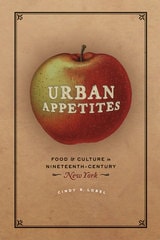
Urban Appetites
Food and Culture in Nineteenth-Century New YorkCindy R. Lobel
University of Chicago Press, 2014
Historians, sociologists, and foodies alike will devour the story of the origins of New York City’s food industry in Urban Appetites. Cindy R. Lobel focuses on the rise of New York as both a metropolis and a food capital, opening a new window onto the intersection of the cultural, social, political, and economic transformations of the nineteenth century. She offers wonderfully detailed accounts of public markets and private food shops; basement restaurants and immigrant diners serving favorites from the old country; cake and coffee shops; and high-end, French-inspired eating houses made for being seen in society as much as for dining. But as the food and the population became increasingly cosmopolitan, corruption, contamination, and undeniably inequitable conditions escalated. Urban Appetites serves up a complete picture of the evolution of the city, its politics, and its foodways.
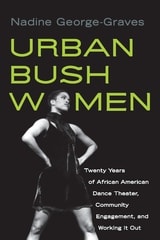
Urban Bush Women
Twenty Years of African American Dance Theater, Community Engagement, and Working It OutNadine George-Graves
University of Wisconsin Press, 2010
Nadine George-Graves presents a comprehensive history of Urban Bush Women since their founding in 1984. She analyzes their complex work, drawing on interviews with current and former dancers and her own observation of and participation in Urban Bush Women rehearsals. This illustrated book captures the grace and power of the dancers in motion and provides an absorbing look at an innovative company that continues to raise the bar for socially conscious dance.
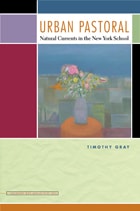
Urban Pastoral
Natural Currents in the New York SchoolTimothy Gray
University of Iowa Press, 2010
Were the urbane, avant-garde poets of the New York School secretly nature lovers like Edward Abbey, Wendell Berry, and Annie Dillard? In Urban Pastoral, Timothy Gray urges us to reconsider our long-held appraisals of Frank O’Hara, John Ashbery, Barbara Guest, and their peers as celebrants of cosmopolitan culture and to think of their more pastoral impulses. As Gray argues, flowers are more beautiful in the New York School’s garden of verse because no one expects them to bloom there.
Along with the poets whose careers he chronicles, Gray shows us that startlingly new approaches to New York City art and literature emerge when natural and artificial elements collide kaleidoscopically, as when O’Hara likens blinking stars to a hairnet, when painter Jane Freilicher places a jar of irises in her studio window to mirror purple plumes rising from Consolidated Edison smokestacks, or when poet Kathleen Norris equates rooftop water towers with grain silos as she plans her escape route to the Great Plains.
The New York School poets and their coterie have become a staple of poetics, literary criticism and biography, cultural studies, and art criticism, but Urban Pastoral is the first study of the original New York School poets to offer sustained discussion of the pastoral and natural imagery within the work of these renowned “city poets” and also consider poets from the second generation of the New York School—Diane di Prima, Jim Carroll, and Kathleen Norris.
Moving beyond the traditional boundaries of literary criticism to embrace the creative spirit of New York poets and artists, Gray’s accessible, lively, and blithely experimental book will shape future discussions of contemporary urban literature and literary nature writing, offering new evidence of avant-garde poetry’s role within those realms.
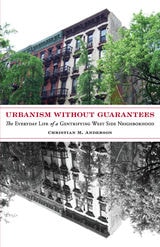
Urbanism without Guarantees
The Everyday Life of a Gentrifying West Side NeighborhoodChristian M. Anderson
University of Minnesota Press, 2020
A unique more-than-capitalist take on urban dynamics
Vigilante action. Renegades. Human intrigue and the future at stake in New York City. In Urbanism without Guarantees, Christian M. Anderson offers a new perspective on urban dynamics and urban structural inequality based on an intimate ethnography of on-the-ground gentrification.
The book is centered on ethnographic work undertaken on a single street in Clinton/Hell’s Kitchen in New York City—once a site of disinvestment, but now rapidly gentrifying. Anderson examines the everyday strategies of residents to preserve the quality of life of their neighborhood and to define and maintain their values of urban living—from picking up litter and reporting minor concerns on the 311 hotline to hiring a private security firm to monitor the local public park. Anderson demonstrates how processes such as investment and gentrification are constructed out of the collective actions of ordinary people, and challenges prevalent understandings of how place-based civic actions connect with dominant forms of political economy and repressive governance in urban space.
Examining how residents are pulled into these systems of gentrification, Anderson proposes new ways to think and act critically and organize for transformation of a place—in actions that local residents can start to do wherever they are.