Results by title
68 books match the query 'Philosophical anthropology' and 2 start with u
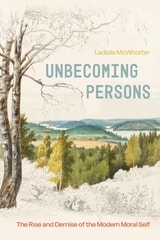
Unbecoming Persons
The Rise and Demise of the Modern Moral SelfLadelle McWhorter
University of Chicago Press, 2025
A damning genealogy of modern personhood and a bold vision for a new ethics rooted in belonging rather than individuality.
In the face of ecological crisis, economic injustice, and political violence, the moral demands of being a good person are almost too much to bear. In Unbecoming Persons, Ladelle McWhorter argues that this strain is by design. Our ideas about personhood, she shows, emerged to sustain centuries of colonialism, slavery, and environmental destruction. We must look elsewhere to find our way out.
This history raises a hard question: Should we be persons at all, or might we live a good life without the constraints of individualism or the illusion of autonomy? In seeking an answer, McWhorter pushes back on the notion of our own personhood—our obsession with identity, self-improvement, and salvation—in search of a better way to live together in this world. Although she finds no easy answers, McWhorter ultimately proposes a new ethics that rejects both self-interest and self-sacrifice and embraces perpetual dependence, community, and the Earth
[more]
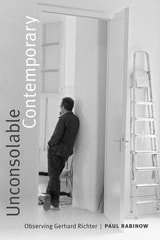
Unconsolable Contemporary
Observing Gerhard RichterPaul Rabinow
Duke University Press, 2017
In Unconsolable Contemporary Paul Rabinow continues his explorations of "a philosophic anthropology of the contemporary." Defining the contemporary as a moving ratio in which the modern becomes historical, Rabinow shows how an anthropological ethos of the contemporary can be realized by drawing on the work of art historians, cultural critics, social theorists, and others, thereby inventing a methodology he calls anthropological assemblage. He focuses on the work and persona of German painter Gerhard Richter, demonstrating how reflecting on Richter's work provides rich insights into the practices and stylization of what, following Aby Warburg, one might call "the afterlife of the modern." Rabinow opens with analyses of Richter's recent Birkenau exhibit: both the artwork and its critical framing. He then chronicles Richter's experiments in image-making as well as his subtle inclusion of art historical and critical discourses about the modern. This, Rabinow contends, enables Richter to signal his awareness of the stakes of such theorizing while refusing the positioning of his work by modernist critical theorists. In this innovative work, Rabinow elucidates the ways meaning is created within the contemporary.
[more]