Results by title
637 books match the query 'Political activity' and 11 start with u
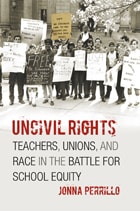
Uncivil Rights
Teachers, Unions, and Race in the Battle for School EquityJonna Perrillo
University of Chicago Press, 2012
Uncivil Youth
Race, Activism, and Affirmative GovernmentalitySoo Ah Kwon
Duke University Press, 2013
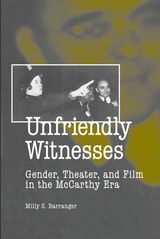
Unfriendly Witnesses
Gender, Theater, and Film in the McCarthy EraMilly S. Barranger
Southern Illinois University Press, 2008
Unfriendly Witnesses: Gender, Theater, and Film in the McCarthy Era examines the experiences of seven prominent women of stage and screen whose lives and careers were damaged by the McCarthy-era “witch hunts” for Communists and Communist sympathizers in the entertainment industry: Judy Holliday, Anne Revere, Lillian Hellman, Dorothy Parker, Margaret Webster, Mady Christians, and Kim Hunter.
The effects on women of the anti-Communist crusades that swept the nation between 1947 and 1962 have been largely overlooked by cultural critics and historians, who have instead focused their attention on the men of the period. Author Milly S. Barranger looks at the gender issues inherent in the investigations and at the destructive impact the investigations had on the lives and careers of these seven women—and on American film and theater and culture in general.
Issues of gender and politics surface in the women’s testimony before the committeemen, labeled “unfriendly” because the women refused to name names. Unfriendly Witnesses redresses the absence of women’s histories during this era of modern political history and identifies the enduring strains of McCarthyism in postmillennial America.
Barranger recreates the congressional and state hearings that addressed the alleged Communist influence in the entertainment industry and examines in detail the cases of these seven women, including the appearance of actress Judy Holliday before the committee of Senator Pat McCarran, who aimed to limit the immigration of Eastern Europeans; actress Anne Revere and playwright Lillian Hellman, appearing before the House Un-American Activities Committee, sought the protections of the Fifth Amendment with different outcomes; of writer Dorothy Parker, who testified before a New York state legislative committee investigating contributions to “front” groups; and of director Margaret Webster, before Senator Joseph McCarthy’s subcommittee, whose aim was the indictment of Senator J. William Fulbright and the U.S. State Department. None escaped subsequent blacklisting, denial of employment, and notations in FBI files that they were threats to national security.
Unfriendly Witnesses is enhanced by nine illustrations and extensive excerpts from Red Channels: The Report of Communist Influence in Radio and Television, originally published in 1950 at the height of the Red Scare, and which listed 151 allegedly subversive writers, directors, and performers. Barranger includes the complete entries from Red Channels for the seven women she discusses, which include the “subversive” affiliations that prompted the women’s interrogation by the government.
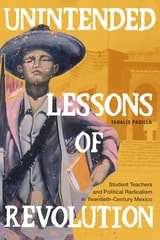
Unintended Lessons of Revolution
Student Teachers and Political Radicalism in Twentieth-Century MexicoTanalís Padilla
Duke University Press, 2021
Union Power and American Democracy
The UAW and the Democratic Party, 1972-83Dudley W. Buffa
University of Michigan Press, 1984
Union by Law
Filipino American Labor Activists, Rights Radicalism, and Racial CapitalismMichael W. McCann with George I. Lovell
University of Chicago Press, 2020
Union by Law analyzes the broader social and legal history of Filipino American workers’ rights-based struggles, culminating in the devastating landmark Supreme Court ruling, Wards Cove Packing Co. v. Atonio (1989). Organized chronologically, the book begins with the US invasion of the Philippines and the imposition of colonial rule at the dawn of the twentieth century. The narrative then follows the migration of Filipino workers to the United States, where they mobilized for many decades within and against the injustices of American racial capitalist empire that the Wards Cove majority willfully ignored in rejecting their longstanding claims. This racial innocence in turn rationalized judicial reconstruction of official civil rights law in ways that significantly increased the obstacles for all workers seeking remedies for institutionalized racism and sexism. A reclamation of a long legacy of racial capitalist domination over Filipinos and other low-wage or unpaid migrant workers, Union by Law also tells a story of noble aspirational struggles for human rights over several generations and of the many ways that law was mobilized both to enforce and to challenge race, class, and gender hierarchy at work.
Unknown Tongues
Black Women's Political Activism in the Antebellum Era, 1830-1860Gayle T. Tate
Michigan State University Press, 2003
Unknown Tongues examines the social and economic factors of northern industrialization, social reform, and black nationalism, all of which undergirded black women’s political consciousness during the decades before the American Civil War. The linkages between black women’s roles in the “culture of resistance” in slave communities and their transformations in the urban market economy fueled the development of black women’s political consciousness. As community activists and then as abolitionists, black urban women organized and protested against slavery, racism, sexism, and its attendant ills. Driven by market forces of nascent capitalism, black women created broad- based protest responses to the white power structure. Unknown Tongues explores the material realities that underpinned black women’s political development as well as the transformative stages of their political consciousness and activity.
Unrest in Brazil
Political-Military Crises 1955-1964By John W. F. Dulles
University of Texas Press, 1970
… I offer my life in a holocaust … This people whose slave I was will no longer be slave to anyone. My sacrifice will remain forever in their souls and my blood will be the price of their ransom.
President Getulio Vargas' testament—written shortly before his suicide on August 24, 1954—was prophetic, for the Vargas legacy was to cast a shadow on political-military events of the next decade.
With news of Vargas' suicide, opponents of the late President, who were usually out of power, tried to organize. The military itself was split, but those favoring Kubitschek, apparent winner of the 1955 presidential election on a ticket of Vargas-created parties, gained control. To assure Kubitschek's inauguration Army leaders deposed two acting Presidents in 1955.
During Kubitschek's presidency (1956–1961 ) there were manifestations of discontent by military and political groups who ascribed numerous evils to Vargas and his followers.
In 1961, when Kubitschek's successor, Jânio Quadros, resigned after six months in office, the unrest intensified. Vice President Jango Goulart assumed the presidency and sought unsuccessfully to conciliate contending forces; his battle for reform seemed to make him an ally of "far leftists." Feeling that discipline was being undermined by men close to the President and that only military action could save Brazil from following the path favored by influential Communist labor leaders, a majority of the Army officers agreed to overthrow Goulart's administration in 1964.
Unrest in Brazil describes in exciting detail the government crises and resulting military interventions that punctuated the power struggle between supporters and opponents of Vargas in the decade following his death.
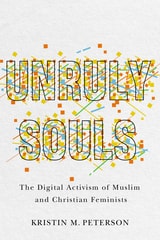
Unruly Souls
The Digital Activism of Muslim and Christian FeministsKristin M. Peterson
Rutgers University Press, 2022
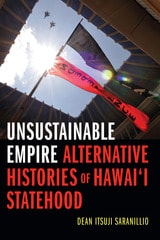
Unsustainable Empire
Alternative Histories of Hawai‘i StatehoodDean Itsuji Saranillio
Duke University Press, 2018
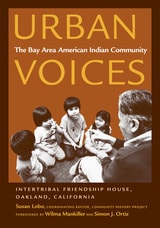
Urban Voices
The Bay Area American Indian CommunitySusan Lobo, Coordinating Editor, Community History Project; Forewords by Wilma Mankiller and Simon J. Ortiz
University of Arizona Press, 2002