93 books match the query 'Political violence' and 3 start with u
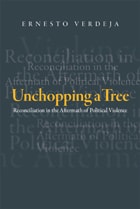
cover of Unchopping a Tree: Reconciliation in the Aftermath of Political Violence

Unchopping a Tree

Reconciliation in the Aftermath of Political Violence

Ernesto Verdeja

Temple University Press, 2009

Political violence does not end with the last death. A common feature of mass murder has been the attempt at destroying any memory of victims, with the aim of eliminating them from history. Perpetrators seek not only to eliminate a perceived threat, but also to eradicate any possibility of alternate, competing social and national histories. In his timely and important book, Unchopping a Tree, Ernesto Verdeja develops a critical justification for why transitional justice works. He asks, “What is the balance between punishment and forgiveness?  And, “What are the stakes in reconciling?” 

Employing a normative theory of reconciliation that differs from prevailing approaches, Verdeja outlines a concept that emphasizes the importance of shared notions of moral respect and tolerance among adversaries in transitional societies. Drawing heavily from cases such as reconciliation efforts in Latin America and Africa—and interviews with people involved in such efforts—Verdeja debates how best to envision reconciliation while remaining realistic about the very significant practical obstacles such efforts face

Unchopping a Tree addresses the core concept of respect across four different social levels—political, institutional, civil society, and interpersonal—to explain the promise and challenges to securing reconciliation and broader social regeneration.
[more]
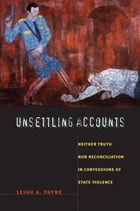
cover of Unsettling Accounts: Neither Truth nor Reconciliation in Confessions of State Violence

Unsettling Accounts

Neither Truth nor Reconciliation in Confessions of State Violence

Leigh A. Payne

Duke University Press, 2008

An Argentine naval officer remorsefully admits that he killed thirty people during Argentina’s Dirty War. A member of General Augusto Pinochet’s intelligence service reveals on a television show that he took sadistic pleasure in the sexual torture of women in clandestine prisons. A Brazilian military officer draws on his own experiences to write a novel describing the military’s involvement in a massacre during the 1970s. The head of a police death squad refuses to become the scapegoat for apartheid-era violence in South Africa; he begins to name names and provide details of past atrocities to the Truth Commission. Focusing on these and other confessions to acts of authoritarian state violence, Leigh A. Payne asks what happens when perpetrators publicly admit or discuss their actions. While mechanisms such as South Africa’s Truth and Reconciliation Commission are touted as means of settling accounts with the past, Payne contends that public confessions do not settle the past. They are unsettling by nature. Rather than reconcile past violence, they catalyze contentious debate. She argues that this debate—and the public confessions that trigger it—are healthy for democratic processes of political participation, freedom of expression, and the contestation of political ideas.

Payne draws on interviews, unedited television film, newspaper archives, and books written by perpetrators to analyze confessions of state violence in Argentina, Chile, Brazil, and South Africa. Each of these four countries addressed its past through a different institutional form—from blanket amnesty, to conditional amnesty based on confessions, to judicial trials. Payne considers perpetrators’ confessions as performance, examining what they say and what they communicate nonverbally; the timing, setting, and reception of their confessions; and the different ways that they portray their pasts, whether in terms of remorse, heroism, denial, or sadism, or through lies or betrayal.
[more]
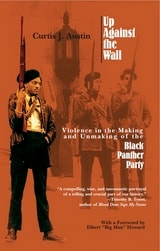
cover of Up Against the Wall: Violence in the Making and Unmaking of the Black Panther Party

Up Against the Wall

Violence in the Making and Unmaking of the Black Panther Party

Curtis J. Austin

University of Arkansas Press, 2008

Curtis J. Austin’s Up Against the Wall chronicles how violence brought about the founding of the Black Panther Party in 1966 by Huey P. Newton and Bobby Seale, dominated its policies, and finally destroyed the party as one member after another—Eldridge Cleaver, Fred Hampton, Alex Rackley—left the party, was killed, or was imprisoned. Austin shows how the party’s early emphasis in the 1960s on self-defense, though sorely needed in black communities at the time, left it open to mischaracterization, infiltration, and devastation by local, state, and federal police forces and government agencies. Austin carefully highlights the internal tension between advocates of a more radical position than the Panthers took, who insisted on military confrontation with the state, and those such as Newton and David Hilliard, who believed in community organizing and alliance building as first priorities. Austin interviewed a number of party members who had heretofore remained silent. With the help of these stories, Austin is able to put the violent history of the party in perspective and show that the “survival” programs, such as the Free Breakfast for Children program and Free Health Clinics, helped the black communities they served to recognize their own bases of power and ability to save themselves.
[more]