Results by title
1325 books match the query 'Psychology' and 21 start with u
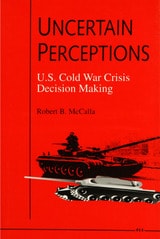
Uncertain Perceptions
U.S. Cold War Crisis Decision MakingRobert B. McCalla
University of Michigan Press, 1992
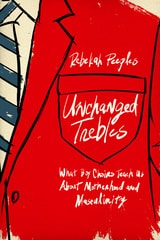
Unchanged Trebles
What Boy Choirs Teach Us About Motherhood and MasculinityRebekah Peeples
Rutgers University Press, 2026
In Unchanged Trebles, Rebekah Peeples charts an unexpected, thought-provoking, and deeply personal journey into the peculiar world of contemporary boy choirs, where boys learn to do something together that they’re often embarrassed to do alone: sing in their soprano voices. Considering her experience as the unlikely mother of a boy soprano alongside dozens of interviews with current directors and former choristers, she argues that some of the tools for creating a more gender-inclusive future can be found in an ancient tradition that has long recognized gender fluidity within the pre-pubescent male body. With humor, insight, and the voice of a gifted storyteller, Unchanged Trebles explores a cultural tradition in which singing and expressing emotion are encouraged for boys, showing them a more expansive form of masculinity as they transition from boyhood to manhood.

Unclenching Our Fists
Abusive Men on the Journey to NonviolenceSara Elinoff Acker
Vanderbilt University Press, 2013
Surrounding this material are chapters that provide context about the disputes among researchers about whether batterer intervention programs work (only a small number of batterers renounce their abuse) and chapters that address the reactions of partners to these stories. "When the Man You Love is Abusive" is designed to caution women not to be manipulated by accounts of change and to outline the stages men need to pass through in the long process of becoming accountable. "The Last Word: Voices of Survivors" ends the book with a focus group discussion in which former abuse victims and advocates respond candidly to the men's stories.
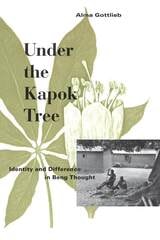
Under the Kapok Tree
Identity and Difference in Beng ThoughtAlma Gottlieb
University of Chicago Press, 1996
explores ideology and social practices among the Beng people of Côte
d'Ivoire. Employing symbolic and postmodern perspectives, she highlights
the dynamically paired notions of identity and difference, symbolized by
the kapok tree planted at the center of every Beng village.
"This book merits a number of readings. . . . An experiment in
ethnography that future projects might well emulate." —Clarke K. Speed,
American Anthropologist
"[An] evocative, rich ethnography. . . . Gottlieb does anthropology a
real service." —Misty L. Bastian, American Ethnologist
"Richly detailed. . . . This book offers a nuanced descriptive analysis
which commands authority." —Elizabeth Tonkin, Man
"Exemplary. . . . Gottlieb's observations on identity and difference are
not confined to rituals or other special occasions; rather she shows
that these principles emerge with equal force during daily social life."
—Monni Adams, Journal of African Religion
"[An] excellent study." —John McCall, Journal of Folklore
Research
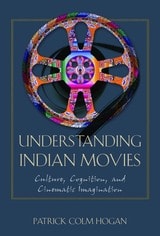
Understanding Indian Movies
Culture, Cognition, and Cinematic ImaginationBy Patrick Colm Hogan
University of Texas Press, 2008
Indian movies are among the most popular in the world. However, despite increased availability and study, these films remain misunderstood and underappreciated in much of the English-speaking world, in part for cultural reasons.
In this book, Patrick Colm Hogan sets out through close analysis and explication of culturally particular information about Indian history, Hindu metaphysics, Islamic spirituality, Sanskrit aesthetics, and other Indian traditions to provide necessary cultural contexts for understanding Indian films. Hogan analyzes eleven important films, using them as the focus to explore the topics of plot, theme, emotion, sound, and visual style in Indian cinema. These films draw on a wide range of South Asian cultural traditions and are representative of the greater whole of Indian cinema. By learning to interpret these examples with the tools Hogan provides, the reader will be able to take these skills and apply them to other Indian films.
But this study is not simply culturalist. Hogan also takes up key principles from cognitive neuroscience to illustrate that all cultures share perceptual, cognitive, and emotional elements that, when properly interpreted, can help to bridge gaps between seemingly disparate societies. Hogan locates the specificity of Indian culture in relation to human universals, and illustrates this cultural-cognitive synthesis through his detailed interpretations of these films. This book will help both scholars and general readers to better understand and appreciate Indian cinema.
Understanding Wisdom
Sources & Science Spiritual PrinciplesWarren, Jr. Brown
Templeton Press, 2000
Undoing Suicidism
A Trans, Queer, Crip Approach to Rethinking (Assisted) SuicideAlexandre Baril
Temple University Press, 2023
Undoing Suicidism questions the belief that the best way to help suicidal people is through the logic of prevention. Alexandre Baril presents the thought-provoking argument that supporting assisted suicide for suicidal people could better prevent unnecessary deaths. Offering a new queercrip model of (assisted) suicide, he invites us to imagine what could happen if we started thinking about (assisted) suicide from an anti-suicidist and intersectional framework.
Baril provides a radical reconceptualization of (assisted) suicide and invaluable reflections for academics, activists, practitioners, and policymakers.
Uneasy Virtue
The Politics of Prostitution and the American Reform TraditionBarbara Meil Hobson
University of Chicago Press, 1990
Uniform Feelings
Scenes from the Psychic Life of PolicingJessi Lee Jackson
University of Michigan Press, 2022
Universalism without Uniformity
Explorations in Mind and CultureEdited by Julia L. Cassaniti and Usha Menon
University of Chicago Press, 2017
The contributors to Universalism without Uniformity offer tools for bridging silos that have historically separated anthropology’s attention to culture and psychology’s interest in universal mental processes. Throughout, they seek to answer intricate yet fundamental questions about why we are motivated to find meaning in everything around us and, in turn, how we constitute the cultural worlds we inhabit through our intentional involvement in them. Laying bare entrenched disciplinary blind spots, this book offers a trove of insights on issues such as morality, emotional functioning, and conceptions of the self across cultures. Filled with impeccable empirical research coupled with broadly applicable theoretical reflections on taking psychological diversity seriously, Universalism without Uniformity breaks new ground in the study of mind and culture.
Unlimited Intimacy
Reflections on the Subculture of BarebackingTim Dean
University of Chicago Press, 2009
Barebacking—when gay men deliberately abandon condoms and embrace unprotected sex—has incited a great deal of shock, outrage, anger, and even disgust, but very little contemplation. Purposely flying in the face of decades of safe-sex campaigning and HIV/AIDS awareness initiatives, barebacking is unquestionably radical behavior, behavior that most people would rather condemn than understand. Thus the time is ripe for Unlimited Intimacy, Tim Dean’s riveting investigation into barebacking and the distinctive subculture that has grown around it.
Audacious and undeniably provocative, Dean’s profoundly reflective account is neither a manifesto nor an apology; instead, it is a searching analysis that tests the very limits of the study of sex in the twenty-first century. Dean’s extensive research into the subculture provides a tour of the scene’s bars, sex clubs, and Web sites; offers an explicit but sophisticated analysis of its pornography; and documents his own personal experiences in the culture. But ultimately, it is HIV that animates the controversy around barebacking, and Unlimited Intimacy explores how barebackers think about transmitting the virus—especially the idea that deliberately sharing it establishes a new network of kinship among the infected. According to Dean, intimacy makes us vulnerable, exposes us to emotional risk, and forces us to drop our psychological barriers. As a committed experiment in intimacy without limits—one that makes those metaphors of intimacy quite literal—barebacking thus says a great deal about how intimacy works.
Written with a fierce intelligence and uncompromising nerve, Unlimited Intimacy will prove to be a milestone in our understanding of sexual behavior.
Unnatural Emotions
Everyday Sentiments on a Micronesian Atoll and Their Challenge to Western TheoryCatherine A. Lutz
University of Chicago Press, 1988
Unraveling
Remaking Personhood in a Neurodiverse AgeMatthew J. Wolf-Meyer
University of Minnesota Press, 2020
Developing a cybernetic model of subjectivity and personhood that honors disability experiences to reconceptualize the category of the human
Twentieth-century neuroscience fixed the brain as the basis of consciousness, the self, identity, individuality, even life itself, obscuring the fundamental relationships between bodies and the worlds that they inhabit. In Unraveling, Matthew J. Wolf-Meyer draws on narratives of family and individual experiences with neurological disorders, paired with texts by neuroscientists and psychiatrists, to decenter the brain and expose the ableist biases in the dominant thinking about personhood.
Unraveling articulates a novel cybernetic theory of subjectivity in which the nervous system is connected to the world it inhabits rather than being walled off inside the body, moving beyond neuroscientific, symbolic, and materialist approaches to the self to focus instead on such concepts as animation, modularity, and facilitation. It does so through close readings of memoirs by individuals who lost their hearing or developed trauma-induced aphasia, as well as family members of people diagnosed as autistic—texts that rethink modes of subjectivity through experiences with communication, caregiving, and the demands of everyday life.
Arguing for a radical antinormative bioethics, Unraveling shifts the discourse on neurological disorders from such value-laden concepts as “quality of life” to develop an inclusive model of personhood that honors disability experiences and reconceptualizes the category of the human in all of its social, technological, and environmental contexts.
Unruly Spirits
The Science of Psychic Phenomena in Modern FranceM. Brady Brower
University of Illinois Press, 2010
Unsafe Words
Queering Consent in the #MeToo EraShantel Gabrieal Buggs
Rutgers University Press, 2023
Telling a queerer side of the #MeToo story, Unsafe Words dares to challenge dogmatic assumptions about sex and consent while developing tools and language to promote more ethical and more pleasurable sex for everyone.
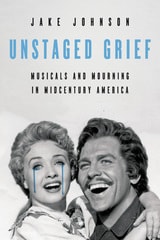
Unstaged Grief
Musicals and Mourning in Midcentury AmericaJake Johnson
University of Illinois Press, 2025
Often dismissed as escapism, screen musicals of the 1960s in fact tapped into unspoken sadness about an America that was slipping away. Jake Johnson delves into film and television musicals of the era to examine their place in networks of grieving in America, for America, and about America.
The Golden Age of musical theater ended just as Elisabeth Kübler-Ross’s On Death and Dying debuted, and Johnson uses Kübler-Ross’s five stages to frame the intertwining of musicals and grief. He analyzes films like Seven Brides for Seven Brothers and State Fair alongside paintings, poetry, and other images and texts to reveal how the musical theater engine built in the first half of the century broke down just as a new language emerged to describe the melancholy felt by people facing the end of the world they had known.
Nuanced and original, Unstaged Grief plumbs the grief, loss, and hope behind the Technicolor spectacle and rousing showstoppers.
Untying Things Together
Philosophy, Literature, and a Life in TheoryEric L. Santner
University of Chicago Press, 2022
In 1905, Freud published his Three Essays on the Theory of Sexuality, the book that established the core psychoanalytic thesis that sexuality is central to formations of the unconscious. With this book, Eric L. Santner inverts Freud’s title to take up the sexuality of theory—or, more exactly, the modes of enjoyment to be found in the kinds of critical thinking that, since the 1960s, have laid claim to that ancient word, “theory.” Santner unfolds his argument by tracking his own relationship with this tradition and the ways his intellectual and spiritual development has been informed by it.
Untying Things Together is both an intellectual history of major theoretical paradigms and a call for their reexamination and renewal. Revisiting many of the topics he has addressed in previous work, Santner proposes a new way of conceptualizing the eros of thinking, attuned to how our minds and bodies individually and collectively incorporate or “encyst” on a void at the heart of things. Rather than proposing a “return to theory,” Santner’s book simply employs theory as a way of further “(un)tying together” the resources of philosophy, art and literature, theology, psychoanalysis, political thought, and more.

Unwilling Germans
The Goldhagen DebateRobert R. Shandley
University of Minnesota Press, 1998
A comprehensive overview of the controversy surrounding Hitler’s Willing Executioners.
Few if any books of the past fifty years have moved a broad section of the German public to think about their country’s Nazi past as has Daniel Jonah Goldhagen’s Hitler’s Willing Executioners. The main argument of his book is that Germans committed the unthinkable acts of the Holocaust not because they were forced to but out of a deeply held conviction that killing Jews was morally just. Unwilling Germans? traces the intense and varied reception of a book that has created more heated debate than any other treatment of Germany’s genocidal past.
When Goldhagen’s book first appeared, it was almost universally dismissed by journalists and historians alike. However, following a book tour in Germany, Goldhagen started winning over many of his ardent detractors and finding a young, receptive audience. Although German scholars reacted to Goldhagen and his argument with outrage and dismissal, ironically the German public was mesmerized by both the book and Goldhagen himself.Unwilling Germans? reprints articles that originally appeared in German newspapers, the popular press, and journals, as well as offering original essays. Among the writers whose work is represented are historians, journalists, political scientists, and literary critics, including Jürgen Habermas and Klaus Theweleit. The book traces the initial reactions in Germany to the debate surrounding the U.S. publication of the book, the subsequent reviews and reactions upon the publication of the German translation, and recent commentary by Goldhagen and the American historian Christopher Browning. A unique and fascinating collection, Unwilling Germans? will help to sort out the confusing nature of the response to the “Goldhagen Debate,” and shed light on both Germany’s continuing process of coming to terms with its Nazi past and the resonances of that debate in the United States.ISBN 0-8166-3100-X Cloth $44.95xxISBN 0-8166-3101-8 Paper $17.95224 pages 5 7/8 x 9 JuneTranslation inquiries: University of Minnesota Press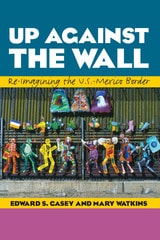
Up Against the Wall
Re-Imagining the U.S.-Mexico BorderBy Edward S. Casey and Mary Watkins
University of Texas Press, 2014
Using the U.S. wall at the border with Mexico as a focal point, two experts examine the global surge of economic and environmental refugees, presenting a new vision of the relationships between citizen and migrant in an era of “Juan Crow,” which systematically creates a perpetual undercaste.
Winner, National Association for Ethnic Studies (NAES) Outstanding Book Award, 2017
As increasing global economic disparities, violence, and climate change provoke a rising tide of forced migration, many countries and local communities are responding by building walls—literal and metaphorical—between citizens and newcomers. Up Against the Wall: Re-imagining the U.S.-Mexico Border examines the temptation to construct such walls through a penetrating analysis of the U.S. wall at the U.S.-Mexico border, as well as investigating the walling out of Mexicans in local communities. Calling into question the building of a wall against a friendly neighboring nation, Up Against the Wall offers an analysis of the differences between borders and boundaries. This analysis opens the way to envisioning alternatives to the stark and policed divisions that are imposed by walls of all kinds. Tracing the consequences of imperialism and colonization as citizens grapple with new migrant neighbors, the book paints compelling examples from key locales affected by the wall—Nogales, Arizona vs. Nogales, Sonora; Tijuana/San Diego; and the lower Rio Grande Valley of Texas. An extended case study of Santa Barbara describes the creation of an internal colony in the aftermath of the U.S. conquest of Mexican land, a history that is relevant to many U.S. cities and towns.
Ranging from human rights issues in the wake of massive global migration to the role of national restorative shame in the United States for the treatment of Mexicans since 1848, the authors delve into the broad repercussions of the unjust and often tragic consequences of excluding others through walled structures along with the withholding of citizenship and full societal inclusion. Through the lens of a detailed examination of forced migration from Mexico to the United States, this transdisciplinary text, drawing on philosophy, psychology, and political theory, opens up multiple insights into how nations and communities can coexist with more justice and more compassion.
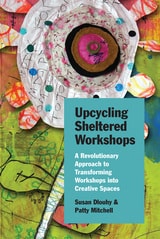
Upcycling Sheltered Workshops
A Revolutionary Approach to Transforming Workshops into Creative SpacesSusan Dlouhy
Ohio University Press, 2015
At a time when the traditional sheltered workshop model has fallen under rightful criticism, and a new paradigm for disability programming is not yet in place, Upcycling Sheltered Workshops offers a revolutionary alternative. As many push to dismantle sheltered workshops, Susan Dlouhy and Patty Mitchell present the Creative Abundance Model, a proven method that redirects sheltered workshops from routine to creativity, putting participants in the driver’s seat.
The Creative Abundance Model does away with the repetitive tasks that characterize traditional workshops. Instead, it is a structured but more open program that incorporates art, music, and other creative pursuits, freeing participants to discover their individual skills and talents. The authors both advocate for the model and provide instructions for implementing it, outlining such steps as obtaining funding, gaining the support and participation of the surrounding community, and preparing studios. Case studies from around the nation and inspiring photographs illustrate Dlouhy and Mitchell’s methods and document the many ways in which participants in Creative Abundance thrive.
Usage Based Models of Language
Edited by Michael Barlow and Suzanne Kemmer
CSLI, 2000
Deviating from traditional methods, the contributions presented in this volume are among the first works to approach linguistic theory by developing and utilizing usage-based models. The contributing authors were among the principal leaders in their fields to leave behind rule-based linguistic representations in favor of constraint-based systems whose structural properties actually emerge from usage. The volume begins with an introductory chapter that defines contributors' interpretations of usage-based models and theories of language. The reason for the shift from formal linguistic theories to the gradual acceptance of usage-based models is also examined. Using methods such as Cognitive Grammar, the Lexical Network Model, Competition Model, Relational Network Theory, and Accessibility Theory, the selected works demonstrate how usage-based models evince far greater cognitive and neurological plausibility than algorithmic, generative models.