Results by title
201 books match the query 'Regional Studies' and 3 start with u
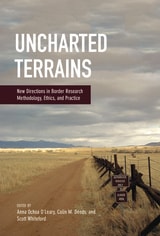
Uncharted Terrains
New Directions in Border Research Methodology, Ethics, and PracticeEdited by Anna Ochoa O’Leary, Colin M. Deeds, and Scott Whiteford
University of Arizona Press, 2013
“We must secure our borders” has become an increasingly common refrain in the United States since 2001. Most of the “securing” has focused on the US–Mexico border. In the process, immigrants have become stigmatized, if not criminalized. This has had significant implications for social scientists who study the lives and needs of immigrants, as well as the effectiveness of programs and policies designed to help them. In this groundbreaking book, researchers describe their experiences in conducting field research along the southern US border and draw larger conclusions about the challenges of contemporary border research.
Each chapter raises methodological and ethical questions relevant to conducting research in transnational contexts, which can frequently be unpredictable or even volatile. The volume addresses the central question of how can scholars work with vulnerable migrant populations along the perilous US–Mexico border and maintain ethical and methodological standards, while also providing useful knowledge to stakeholders? Not only may immigrants be afraid to provide information that could be incriminating, but researchers may also be reluctant to allow their findings to become the basis of harsher law enforcement, unjustly penalize the subjects of their research, and inhibit the formulation of humane and effective immigration policy based on scholarly research.
All of these concerns, which are perfectly legitimate from the social scientists’ point of view, can put researchers into conflict with legal authorities. Contributors acknowledge their quandaries and explain how they have dealt with them. They use specific topics—reproductive health issues and sexually transmitted diseases among immigrant women, a study of undocumented business owners, and the administration of the Mexican Household Survey in Phoenix, among others—to outline research methodology that will be useful for generations of border researchers.
[more]
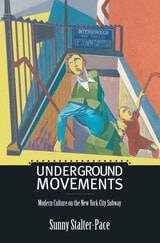
Underground Movements
Modern Culture on the New York City SubwaySunny Stalter-Pace
University of Massachusetts Press, 2013
For more than a century the New York City subway system has been a vital part of the city's identity, even as judgments of its value have varied. It has been celebrated as the technological embodiment of the American melting pot and reviled as a blighted urban netherworld. Underground Movements explores the many meanings of the subway by looking back at the era when it first ascended to cultural prominence, from its opening in 1904 through the mid-1960s. Sunny Stalter-Pace analyzes a broad range of texts written during this period—news articles, modernist poetry, ethnic plays, migration narratives, as well as canonical works by authors such as Hart Crane, William Carlos Williams, and Ralph Ellison—to illustrate the subway's central importance as a site of abstract connection, both between different parts of the city and between city dwellers who ride the train together.
Writers and artists took up questions that originated in the sphere of urban planning to explore how underground movement changed the ways people understand the city. Modern poets envisioned the subway as a space of literary innovation; playwrights and fiction writers used it to gauge the consequences of migration and immigration; and essayists found that it underscored the fragile relationship between urban development and memory. Even today, the symbolic associations forged by these early texts continue to influence understanding of the cultural significance of the subway and the city it connects.
Writers and artists took up questions that originated in the sphere of urban planning to explore how underground movement changed the ways people understand the city. Modern poets envisioned the subway as a space of literary innovation; playwrights and fiction writers used it to gauge the consequences of migration and immigration; and essayists found that it underscored the fragile relationship between urban development and memory. Even today, the symbolic associations forged by these early texts continue to influence understanding of the cultural significance of the subway and the city it connects.
[more]
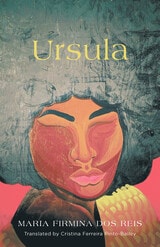
Ursula
Maria Firmina dos Reis, Translated by Cristina Ferreira Pinto-Bailey
Tagus Press, 2021
Written within the literary conventions of the Romantic movement and published decades before other Brazilian abolitionist novels, Ursula (1859) offers a sensitive and nuanced portrayal of enslaved African and Afro-Brazilian characters. While readers follow the story of the plantation owner's daughter Ursula, her doomed romance with Tancredo, and her uncle's diabolical schemes to entrap her in marriage, the novel's power lies in Reis's characterization of the enslaved Africans Tulio, Susana, and Antero. Shown in all their humanity as they narrate their personal histories and give voice to the abuse and injustices they have endured, these characters tell of the horrors of the Middle Passage, the daily indignities they face, and the brutality of their masters.
[more]