Results by title
436 books match the query 'Renaissance' and 4 start with u
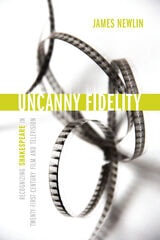
Uncanny Fidelity
Recognizing Shakespeare in Twenty-First-Century Film and TelevisionJames Newlin
University of Alabama Press, 2024
How the study of Shakespeare’s legacy, specifically in film and television, can radically challenge what we consider to be authentically Shakespearean
In the field of adaptation studies today, the idea of reading an adapted text as “faithful” or “unfaithful” to its original source strikes many scholars as too simplistic, too conservative, and too moralizing. In Uncanny Fidelity: Recognizing Shakespeare in Twenty-First Century Film and Television, James Newlin challenges these critical orthodoxies. Instead, recognizing how a film or television series closely recalls Shakespeare’s drama encourages an interrogation of what we consider to be “Shakespeare” in the first place.
Drawing upon Sigmund Freud’s model of the uncanny—the sudden sensation of peculiar, discomforting familiarity—this book focuses on films and television series that were not marketed as adaptations of Shakespeare. Yet these works unexpectedly invoke lost, even troubling aspects of Shakespeare’s original playtexts, their performance history, or their reception. Broadening the scope of fidelity readings beyond familiar concerns like plot and language, Newlin demonstrates how the study of Shakespeare’s afterlife can clarify both the historical context of his drama and its relevance for the current political moment. Engaging contemporary debates in literary and psychoanalytic theory, this book features provocative close readings of The Tempest, Othello, and The Winter’s Tale alongside recent films and television series, from art-house movies such as The Master and Manchester by the Sea to the cult favorites Brigsby Bear and Vice Principals. These works conjure widely overlooked qualities of Shakespeare’s drama by recalling the casting practices or the generic contexts of the early modern stage or by making a meaningful intervention in the plays’ critical reception. Closely examining these surprisingly faithful adaptations of Shakespeare’s drama helps us to articulate the original experience of the early modern stage and better consider its resonance in the present.
This book will benefit students and scholars of Shakespeare on film and psychoanalytic theory. Yet Uncanny Fidelity will also be of interest to scholars of performance history, source studies, and early modern discourses of race and gender—as well as anyone interested in the unexpected connections between canonical literature and contemporary culture. By examining adaptation as an instance of uncanny return, Newlin demonstrates how the study of Shakespeare’s afterlife can radically challenge what we consider to be authentically Shakespearean.
University of Chicago Readings in Western Civilization, Volume 5
The RenaissanceEdited by Eric Cochrane and Julius Kirshner
University of Chicago Press, 1986
Individual volumes provide essential background reading for courses covering specific eras and periods. The complete nine-volume series is ideal for general courses in history and Western civilization sequences.
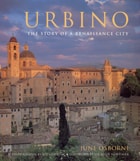
Urbino
The Story of a Renaissance CityJune Osborne
University of Chicago Press, 2003
With Urbino: The Story of a Renaissance City, art historian June Osborne brings to life not only the great city and its art but also its turbulent history and the intrigue surrounding its ruling family. First settled by the ancient Umbrians, Urbino reached its zenith during the fifteenth century under the rule of Duke Federico da Montefeltro and his son Guidobaldo. Federico may have been a usurper and a fierce, opportunistic warlord, but his lust for power was more than matched by his passion for great art. Indeed it was under his direct guidance that the magnificent Ducal Palace was built—its perfectly proportioned courtyard a wonder of early Renaissance architecture.
Today the Ducal Palace hosts the National Gallery of the Marches, one of the most important art galleries in Italy, featuring works by no lesser lights than Raphael, Uccello, Piero della Francesca, and Titian. Exploring such sites as the fourteenth-century Oratorio di San Giovanni Battista and the Gothic Church of San Domenico, Osborne captures not only the startling beauty of Urbino and the Apennine foothills but also the tumultuous legacy of Frederico and his son (and their many wives and courtiers).
With over a hundred lavish color photographs, many by renowned landscape photographer Joe Cornish, Urbino is the best—and the only—guide to this gem of the Italian Marches.

Utter Antiquity
Perceptions of Prehistory in Renaissance EnglandArthur B. Ferguson
Duke University Press, 1993
Since the Bible left little room for speculation on prehistory—in fact no room at all for the concept itself—Utter Antiquity concentrates on myth and legend outside of the biblical context and on those who conjured prehistory out of these sources. A subtle conflict between belief and skepticism emerges from these pages, as Ferguson reveals how some Renaissance writers struggled with ancient explanations that flouted reason and experience, while others sidestepped such doubts by relating prehistory to man's social evolution. By isolating and analyzing topics such as skepticism, rationalism, and poetic history, Ferguson illuminates the development of historical consciousness in early modern England. His accessible and eloquent study contributes significantly to an understanding of the Renaissance mind and intellectual history in general.