Results by title
424 books match the query 'Russian & Soviet' and 10 start with u
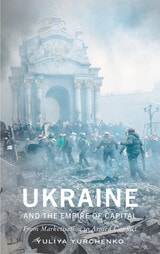
Ukraine and the Empire of Capital
From Marketisation to Armed ConflictYuliya Yurchenko
Pluto Press, 2017
Providing distinctive and unexplored reflections on the origins of the conflict, Yurchenko unpacks the four central myths that underlie Ukraine's post-Soviet reality: the myth of transition, the myth of democracy, the myth of two Ukraines, and the myth of 'the other'. In doing so, she sheds light on the current intensification of class rivalries in Ukraine, the kleptocracy, resource wars and analyses existing and potential dangers of the rightwing shift in Ukraine's polity, stressing a historic opportunity for change.
Critiquing the concept of Ukraine as ‘transition space’, she provides a sweeping analysis which includes the wider neoliberal restructuring of global political economy since the 1970s, with particular focus on Ukraine's relations with the US, the EU and Russia. This is a book for those wanting to understand the current conflict as a dangerous product of neoliberalism, of the empire of capital.
Ukraine's Patronal Democracy and the Russian Invasion
The Russia-Ukraine War, Volume OneBálint Madlovics
Central European University Press, 2023
The Russian invasion of Ukraine in 2022 jeopardizes the country's independence and its chances for Western-style development. However, the heroic attitude of the Ukrainian people, combined with a solidifying national identity, makes the domestic foundations for a western turn stronger than ever. After the invasion, building strong foundations of liberal democracy will be a top priority. In addition to alleviating immediate problems, the country must also address its post-communist legacy and address the constraints of patronalism.
The authors of this edited volume, leading Ukrainian scholars supplemented by colleagues from Hungary, examine the chances of an anti-patronal transformation after the war. The book provides an overview of the development of Ukraine's political-economic system: color revolutions in 2004 and 2014 brought democratic transformation, but no change in the patronage system The result was patronal regime cycles instead of the emergence of a Western-type liberal democracy in the country. Building on the conceptual framework of the editors' The Anatomy of Post-Communist Regimes (CEU Press, 2020), the 12 chapters examine the impact of the war on patronal democracy, the relational economy, clientelist society, and the international environment in which Ukraine operates.
This collection is complemented by the book entitled Russia. Imperial Endeavor and Geopolitical Consequences.
Unattainable Bride Russia
Gendering Nation, State, and Intelligentsia in Russian Intellectual CultureEllen Rutten
Northwestern University Press, 2010
Throughout the twentieth century and continuing today, personifications of Russia as a bride occur in a wide range of Russian texts and visual representations, from literature and political and philosophical treatises to cartoons and tattoos. Invariably, this metaphor functions in the context of a political gender allegory, which represents the relationships between Russia, the intelligentsia, and the Russian state, as a competition of two male suitors for the former’s love.
In Unattainable Bride Russia, Ellen Rutten focuses on the metaphorical role the intelligentsia plays as Russia’s rejected or ineffectual suitor. Rutten finds that this metaphor, which she covers from its prehistory in folklore to present-day pop culture references to Vladimir Putin, is still powerful, but has generated scarce scholarly consideration. Unattainable Bride Russia locates the cultural thread and places the political metaphor in a broad contemporary and social context, thus paying it the attention to which it is entitled as one of Russia’s modern cultural myths.
Uncensored
Samizdat Novels and the Quest for Autonomy in Soviet DissidenceAnn Komaromi
Northwestern University Press, 2015
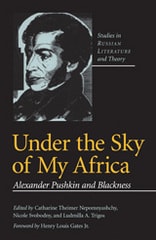
Under the Sky of My Africa
Alexander Pushkin and BlacknessCatherine Nepomnyashchy
Northwestern University Press, 2006
Roughly in the year 1705, a young African boy, acquired from the seraglio of the Turkish sultan, was transported to Russia as a gift to Peter the Great. This child, later known as Abram Petrovich Gannibal, was to become Peter's godson and to live to a ripe old age, having attained the rank of general and the status of Russian nobility. More important, he was to become the great-grandfather of Russia's greatest national poet, Alexander Pushkin. It is the contention of the editors of this book, borne out by the essays in the collection, that Pushkin's African ancestry has played the role of a "wild card" of sorts as a formative element in Russian cultural mythology; and that the ways in which Gannibal's legacy has been included in or excluded from Pushkin's biography over the last two hundred years can serve as a shifting marker of Russia's self-definition.
The first single volume in English on this rich topic, Under the Sky of My Africa addresses the wide variety of interests implicated in the question of Pushkin's blackness-race studies, politics, American studies, music, mythopoetic criticism, mainstream Pushkin studies. In essays that are by turns biographical, iconographical, cultural, and sociological in focus, the authors-representing a broad range of disciplines and perspectives-take us from the complex attitudes toward race in Russia during Pushkin's era to the surge of racism in late Soviet and post-Soviet contemporary Russia. In sum, Under the Sky of My Africa provides a wealth of basic material on the subject as well as a series of provocative readings and interpretations that will influence future considerations of Pushkin and race in Russian culture.
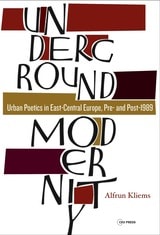
Underground Modernity
Urban Poetics in East-Central Europe, Pre- and Post-1989Alfrun Kliems
Central European University Press, 2021
The literary scholar Alfrun Kliems explores the aesthetic strategies of Eastern European underground literature, art, film and music in the decades before and after the fall of communism, ranging from the ‘father’ of Prague Underground, Egon Bondy, to the neo-Dada Club of Polish Losers in Berlin.
The works she considers are "underground" in the sense that they were produced illegally, or were received as subversive after the regimes had fallen. Her study challenges common notions of ‘Underground’ as an umbrella term for nonconformism. Rather, it depicts it as a sociopoetic reflection of modernity, intimately linked to urban settings, with tropes and aesthetic procedures related to Surrealism, Dadaism, Expressionism, and, above all, pop and counterculture.
The author discusses these commonalities and distinctions in Czech, Polish, Slovak, Ukrainian, Russian, and German authors, musicians, and filmmakers. She identifies intertextual relations across languages and generations, and situates her findings in a transatlantic context (including the Beat Generation, Susan Sontag, Neil Young) and the historical framework of Romanticism and modernity (including Baudelaire and Brecht).
Despite this wide brief, the book never loses sight of its core message: Underground is no arbitrary expression of discontent, but rather the result of a fundamental conflict at the socio-philosophical roots of modernity.
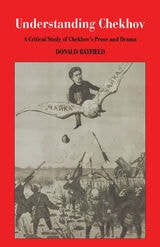
Understanding Chekhov
A Critical Study Of Chekhov'S Prose And DramaDonald Rayfield
University of Wisconsin Press, 1999
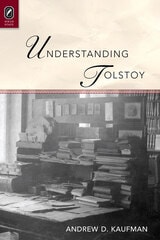
Understanding Tolstoy
Andrew D. Kaufman
The Ohio State University Press, 2010
Understanding Tolstoy recreates Tolstoy’s lifelong artistic and spiritual journey, taking readers to the core of the writer’s world through nuanced close readings of his major novels and novellas. Andrew D. Kaufman’s broad and accessible analysis of Tolstoy’s work speaks to the ways in which Tolstoy, despite living in a manner far removed from the experiences of most modern-day Americans, is still applicable and contemporary.
From a reconstruction of Olenin’s search for truth in The Cossacks to an illuminating analysis of Hadji-Murat’s tragic last stand, Understanding Tolstoy brings to life the fascinating parallels between Tolstoy’s personal quest and his characters’ journeys. Whether writing about the ballrooms and battlefields of War and Peace or the spectrum of sexual and spiritual attachments in Anna Karenina, Tolstoy emerges as a vital, searching artist who continually grows and surprises us, yet is driven by a single, unchanging belief in universal human truths.
Understanding Tolstoy is a treasure trove of critical and philosophical insights that will appeal to Tolstoy aficionados of all kinds, from advanced scholars to undergraduate students. The book offers an eminently readable guide to those entering Tolstoy’s world for the first time or the tenth, and it invites them to grapple alongside the writer and his characters with the most urgent existential questions of our time, and all times.
Unorthodox Beauty
Russian Modernism and Its New Religious AestheticMartha M. F. Kelly
Northwestern University Press, 2016
Unorthodox Beauty shows how Russian poets of the early twentieth century consciously adapted Russian Orthodox culture in order to create a distinctly religious modernism. Martha M. F. Kelly contends that, beyond mere themes, these writers developed an entire poetics that drew on liturgical tradition. Specifically, Russian Orthodoxy held out the possibility of unifying spirit and matter, as well as a host of other dichotomies—subject and object, empirical and irrational, noumena and phenomena. The artist could produce a work of transformative and regenerative power. Using a range of crossdisciplinary tools, Kelly reads key works by Blok, Kuzmin, Akhmatova, and Pasternak in ways that illustrate how profoundly religious traditions and ideas shaped Russian modernist literature.
Up from Bondage
The Literatures of Russian and African American SoulDale E. Peterson
Duke University Press, 2000
Illuminating a remarkably widespread cross-pollination between the two cultural and intellectual traditions, Dale E. Peterson frames much of his argument around W. E. B. DuBois’s concept of “double-consciousness,” wherein members of an oppressed section of society view themselves simultaneously through their own self-awareness and through the internalized standards of the dominant culture. He shows how the writings of Dostoevsky, Hurston, Chesnutt, Turgenev, Ellison, Wright, Gorky, and Naylor—texts that enacted and described this sense of double awareness—were used both to perform and to contest the established genres of Western literacy. Woven through Peterson’s textual analyses is his consideration of cultural hybridism and its effects: The writers he examines find multiple ways to testify to and challenge the symptoms of postcolonial trauma. After discussing the strong and significant affinity expressed by contemporary African American cultural theorists for the dialogic thought of Russian linguist Mikhail Bakhtin, Peterson argues that a fuller appreciation of the historic connection between the two cultures will enrich the complicated meanings of being black or Russian in a world that has traditionally avoided acknowledging pluralistic standards of civilization and cultural excellence.
This investigation of comparable moments in the development of Russian and African American ethnic self-consciousness will be valuable to students and scholars of comparative literature, philosophy, cultural theory, ethnicity, linguistics, and postcolonialism, in addition to Slavic and African American studies.