584 books match the query 'Short Stories (single author)' and 8 start with u
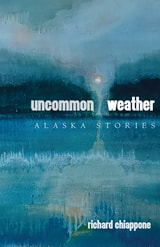
cover of Uncommon Weather: Alaska Stories

Uncommon Weather

Alaska Stories

Richard Chiappone

University of Alaska Press, 2024

Uncommon Weather is an eclectic mix of character-driven stories that delivers a panoramic picture of Alaska— from the cold city streets of Anchorage to picturesque but emotionally treacherous small Alaska towns; from the rough-and-tumble commercial fishing world of the distant Aleutian Islands to a remote river in the Brooks Range, where the vast and unforgiving Arctic wilderness puts romance to a severe test.
 
Richard Chiappone’s characters hail from a wide range of socioeconomic strata, each one attempting to figure out the difficult question of how best to live among others. Odd connections abound. In the seriocomic title story, a lonely middle-aged woman, weary of her austere Alaskan life and her crumbling marriage, picks up a hockey stick and a younger man and tries to brawl her way to some better future. A man diagnosed with an apparently terminal illness is caught up in a catastrophic criminal undertaking masterminded by a precocious seventeen-year-old girl. A young boy, determined to fit in with his edgier peers, goes through a metamorphosis, becoming a strange new creature he’s never seen before. With sometimes hilarious missteps, each character stumbles in and out of predicaments that are by turns tender, heartbreaking, dangerous, and even violent.
 
Told with great empathy and often deeply ironic, wry, and sardonic humor, these stories are a counterpoint to the usual mythos, illuminating an Alaska not usually portrayed in books, on TV, or in movies.

[more]
cover of Under a Glass Bell

Under a Glass Bell

Anaïs Nin

Ohio University Press, 2013
Although Under a Glass Bell is now considered one of Anaïs Nin’s finest collections of stories, it was initially deemed unpublishable. Refusing to give up on her vision, in 1944 Nin founded her own press and brought out the first edition, illustrated with striking black-and-white engravings by her husband, Hugh Guiler. Shortly thereafter, it caught the attention of literary critic Edmund Wilson, who reviewed the collection in the New Yorker. The first printing sold out in three weeks. This new Swallow Press edition includes an introduction by noted modernist scholar Elizabeth Podnieks, as well as editor Gunther Stuhlmann’s erudite but controversial foreword to the 1995 edition. Together, they place the collection in its historical context and sort out the individuals and events recorded in the diary that served as its inspiration. The new Swallow Press edition also restores the thirteen stories to the order Nin specified for the first commercial edition in 1948.
[more]
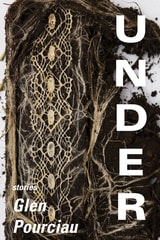
cover of Under: Stories

Under

Stories

Glen Pourciau

Four Way Books, 2025

As wryly profound as ever, Glen Pourciau solidifies his reputation as a master of American short fiction with Under, a collection of brief yet meticulously elaborated stories that deconstruct daily living as his characters see it by diving beneath their skin and surveying the electric heat bristling below. He scours their interiors for the granular details of consciousness that accrue to a person's singular point of view, shape patterns of behavior, and culminate in consequential decisions (or equally meaningful inaction). Pourciau's writing thrums with claustrophobic intelligence, untangling the knots of eccentric personalities by observing the trajectory of his subjects' thoughts and tracing them back to the source. Rarely is the root an inciting incident or narrative catalyst, but rather the self-propagating algorithm of paranoia that proves to us we have something to fear precisely because we are afraid. Pourciau's titular story begins with the narrator confessing, "A voice from within is telling me this story. It rises like protruding lumps from nowhere." More often than not, plots that start inside one's head refuse to stay there; soon, psychological disruption asserts itself in the material world, determining a character's lived experience as tangibly as an external force or outside actor. "I've been watching a patch of ground in my backyard that has been upset by something moving up from below," the narrator continues. It's no comfort, actually, that what is emerging never actually emerges; a lack of conclusive evidence means never fully disproving the possibility of the thing, either. "Nothing is buried or rising from below in my backyard. My conscience is clear, guided only by its own instinct," the narrator assures himself to no avail. "This story should be rooted out, destroyed, but talking to it doesn't make it go away. Even when silent, something insidious gnaws within it." Pourciau's ability to illuminate that something insidious is what makes his writing something marvelous. No less instructive or revelatory for their internal accelerants, these stories spotlight the small conflagrations that punctuate even our most ordinary days. In delineating the invisible machinations of each person's mind, they reveal the flammable borders of personal boundaries and the conflicts with colleagues, neighbors, and long-time friends that cast off sparks and set our small lives ablaze.
[more]
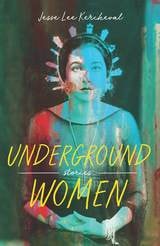
cover of Underground Women

Underground Women

Jesse Lee Kercheval

University of Wisconsin Press, 2019
A newlywed gazes upon the wreckage of the Titanic. A young woman becomes the protégé of a Parisian hotelier. An old woman meets an angel in a ghost town. Underground Women is a compilation of short stories by multitalented writer Jesse Lee Kercheval. The heart of the volume is a reissue of narratives first published as the The Dogeater, winner of the AWP Short Fiction Award in 1987. With arresting imagery and heart-wrenching storylines, Kercheval’s work uses humor and imagination to weave together themes of loss, dignity, tenacity, and acceptance. These surreal and powerful vignettes will resonate with readers today as much as they did when first published.
[more]
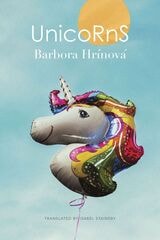
cover of Unicorns

Unicorns

Barbora Hrínová

Seagull Books, 2026

A humorous and deeply human short story collection that celebrates outsiders, dreamers, and the queer.
 
The award-winning Slovak writer Barbora Hrínová’s short stories paint an intimate portrait of people searching for happiness in a world that feels increasingly unstable and uncertain. Across the eight stories in this volume, we meet a rich cast of ordinary yet unconventional people trying to find their place in a society that often prefers conformity over authenticity. Taking us to such settings as a bustling cafe, a small village shack, a rental flat, or a psychiatric ward, Hrínová captures the texture of everyday life with piercing accuracy and a fresh, original voice.
 
Unicorns is a remarkable debut that resonates across generations. With compassion, wit, and an eye for detail, it shows us that weirdness isn’t rare—it’s a universal human experience.
[more]
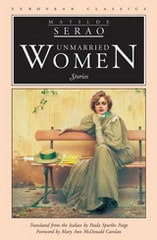
cover of Unmarried Women: Stories

Unmarried Women

Stories

Matilde Serao

Northwestern University Press, 2007

Matilde Serao is widely regarded as the most successful Italian woman journalist of the nineteenth century as well as being an important writer of fiction. A great observer of life, Serao focused her writing directly on the most pressing problems of a newly unified Italy, urban poverty, and the North/South divide. Historian and critic Benedetto Croce said of her that she had an "imagination that is limpid and alive"; Nobel Laureate Giosuè Carducci called her the greatest woman writer in Italy; and Gabriele D'Annunzio dedicated a novel to her. She was apparently on the short list for the Nobel Prize in 1926, which ultimately went to the Sardinian writer Grazia Deledda.

This collection, the first to make Serao’s short stories available in English translation, reflects this naturalistic writer’s interest in the everyday drama of the lives of women in the Italy of her day.  In Serao’s spare and simple prose, the young women of turn-of-the-century Naples come to life, negotiating the details of school and work, church and marriage, in a world circumscribed by fathers and chaperones, fiancés and bosses.  Infused with the writer’s deep sense of humanity, their quietly involving stories—at once so poetic and so ordinary—attest to the transformative power of literature, and to the promise that even the most humble life holds.
 
[more]
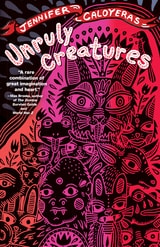
cover of Unruly Creatures: Stories

Unruly Creatures

Stories

Jennifer Caloyeras

West Virginia University Press, 2017

Independent Publisher’s Book Awards, Silver Medal, Short Story Fiction

In this collection rife with humor and pathos, alienated characters struggle to subvert, contain, control, and even escape their bodies. A teenage girl grapples with pubic hair grown wild, a biologist finds herself in love with a gorilla, a prisoner yearns to escape her biological destiny.
 
 In some stories, the bodies have surrogates: a high-school girl babysits an elderly woman’s plastic doll while negotiating her own sexual awakening, and a young man finds that he can only receive affection from his father when he is in costume. Dark humor and magical realism put in sharp relief the everyday trials of Americans in a story collection that asks, in what way are we more than the sum of our parts?  
 
[more]
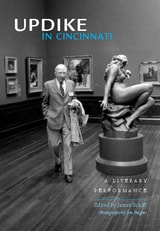
cover of Updike in Cincinnati: A Literary Performance

Updike in Cincinnati

A Literary Performance

James Schiff

Ohio University Press, 2007

For two spring days in 2001, John Updike visited Cincinnati, Ohio, engaging and charming his audiences, reading from his fiction, fielding questions, sitting for an interview, participating in a panel discussion, and touring the Queen City.

Successful writers typically spend a portion of their lives traveling the country to give readings and lectures. While a significant experience for author and audience alike, this public spectacle, once covered in detailed newspaper accounts, now is barely noticed by the media. Updike in Cincinnati—composed of a wealth of materials, including session transcripts, short stories discussed and read by the author, photographs, and anecdotal observations about Updike's performance and personal interactions--is unique in its comprehensive coverage of a literary visit by a major American author.

Updike's eloquence, intelligence, improvisational skills, and gift for comedy are all on display. With natural grace, he discusses a range of topics, including his novels and short stories, his mother and oldest son as writers, Pete Rose and Shoeless Joe Jackson, the Nobel Prize, his appearance on The Simpsons, the Cold War, and Hamlet.

Augmented with commentary by critics W. H. Pritchard and Donald Greiner, and an introduction and interview by James Schiff, Updike in Cincinnati provides an engaging and detailed portrait of one of America's contemporary literary giants.

[more]