206 books match the query 'Study & Teaching' and 11 start with u
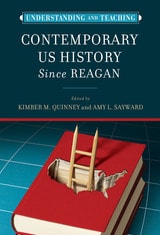
cover of Understanding and Teaching Contemporary US History since Reagan

Understanding and Teaching Contemporary US History since Reagan

Kimber M. Quinney Amy L. Sayward

University of Wisconsin Press, 2022

Understanding and Teaching Contemporary US History since Reagan is designed for teachers looking for new perspectives on teaching the recent past, the period of US history often given the least attention in classrooms. Less of a traditional textbook than a pedagogical Swiss Army knife, the volume offers a diversity of voices and approaches to teaching a field that, by its very nature, invites vigorous debate and puts generational differences in stark relief. Older history is likely to feel removed from the lived experiences of both teachers and students, allowing for a certain dispassion of perspective. By contrast, contemporary history creates unique challenges, as individual teachers and students may think they know “what really happened” by virtue of their personal experiences.

The volume addresses a wide swath of topics, from social movements around identity and representation to the Supreme Court, law enforcement, migration, climate change, and international relations. Emphasizing critical thinking and primary-source analysis, it will aid teachers in creating an invigorating and democratizing classroom experience. Intended for use in both secondary and postsecondary classrooms, the book’s structure allows for a variety of applications and invites a broad audience.
[more]
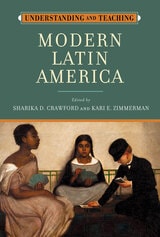
cover of Understanding and Teaching Modern Latin America

Understanding and Teaching Modern Latin America

Edited by Sharika D. Crawford and Kari E. Zimmerman

University of Wisconsin Press, 2026
Understanding and Teaching Modern Latin America combines engaging, clearly written overviews of key themes with fresh and well-tested classroom approaches for teaching today’s students about a complex historical subject. This volume comprises an introduction and sixteen chapters divided into three parts, including a reflection from a senior professor about the ways in which teaching Latin American history have changed over the past few decades, as public calls to internationalize high school and college students have led to the growth of world history courses. Chapters explore a wide range of themes—including slavery, revolution, race, labor, gender, and the environment. This volume also offers innovative and practical teaching strategies, from using maps to incorporating food, to enrich any K–16 curriculum. By presenting multiple viewpoints, this book functions as a springboard for instructors hoping to encourage students to negotiate the various contradictions in historical study.
[more]
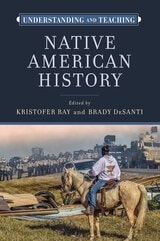
cover of Understanding and Teaching Native American History

Understanding and Teaching Native American History

Edited by Kristofer Ray and Brady DeSanti

University of Wisconsin Press, 2023

Understanding and Teaching Native American History is a timely and urgently needed remedy to a long-standing gap in history instruction. While the past three decades have seen burgeoning scholarship in Indigenous studies, comparatively little of that has trickled into classrooms. This volume is designed to help teachers effectively integrate Indigenous history and culture into their lessons, providing richly researched content and resources across the chronological and geographical landscape of what is now known as North America.
 
Despite the availability of new scholarship, many teachers struggle with contextualizing Indigenous history and experience. Native peoples frequently find themselves relegated to historical descriptions, merely a foil to the European settlers who are the protagonists in the dominant North American narrative. This book offers a way forward, an alternative framing of the story that highlights the ongoing integral role of Native peoples via broad coverage in a variety of topics including the historical, political, and cultural.
 
With its scope and clarity of vision, suggestions for navigating sensitive topics, and a multitude of innovative approaches authored by contributors from multidisciplinary backgrounds, Understanding and Teaching Native American History will also find use in methods and other graduate courses. Nearly a decade in the conception and making, this is a groundbreaking source for both beginning and veteran instructors.
[more]
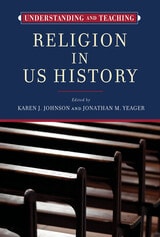
cover of Understanding and Teaching Religion in US History

Understanding and Teaching Religion in US History

Edited by Karen J. Johnson and Jonathan M. Yeager

University of Wisconsin Press, 2024

Religion is deeply embedded in American history, and one cannot understand American history’s broad dynamics without accounting for it. Without detailing the history of religions, teachers cannot properly explain key themes in US survey courses, such as politics, social dynamics, immigration and colonization, gender, race, or class. From early Native American beliefs and practices, to European explorations of the New World, to the most recent presidential elections, religion has been a significant feature of the American story. In Understanding and Teaching Religion in US History, a diverse group of eminent historians and history teachers provide a practical tool for teachers looking to improve history instruction at the upper-level secondary and undergraduate level. 

This book offers a breadth of voices and approaches to teaching this crucial part of US history. Religion can be a delicate topic, especially in public education, and many students and teachers bring strongly held views and identities to their understanding of the past. The editors and contributors aim to help the reader see religion in fresh ways, to present sources and perspectives that may be unfamiliar, and to suggest practical interventions in the classroom that teachers can use immediately.
[more]
cover of Understanding and Teaching U.S. Lesbian, Gay, Bisexual, and Transgender History

Understanding and Teaching U.S. Lesbian, Gay, Bisexual, and Transgender History

Edited by Leila J. Rupp and Susan K. Freeman

University of Wisconsin Press, 2017
Taking into account recent historic changes, this second edition updates the essays on the Supreme Court, same-sex marriage, the Right, and trans history. Authors of several other essays have taken the opportunity to add new material and references where warranted.
[more]
cover of Understanding and Teaching the Age of Revolutions

Understanding and Teaching the Age of Revolutions

Edited by Ben Marsh and Mike Rapport

University of Wisconsin Press, 2017

To learn about the "Age of Revolutions" in Europe and the Americas is to engage with the emergence of the modern world. In the late eighteenth and early nineteenth centuries, nations were founded, old empires collapsed, and new ones arose. Struggles for emancipation—whether from royal authority, colonial rule, slavery, or patriarchy—inspired both hopes and fears. This book, designed for university and secondary school teachers, provides up-to-date content and perspectives, classroom-tested techniques, innovative ideas, and an exciting variety of pathways to introduce students to this complex era of history.

The volume includes chapters on sources and methods for stimulating student debate and learning, including Tom Paine's Common Sense, the Haitian Declaration of Independence, and other key documents; role-playing games; visual arts and culture; and music, including opera and popular songs. Other chapters delve into specific themes, including revolution and riot, revolutionary terror, enlightenment, gender, slavery, nationalism, environment and climate, and the roles of politically excluded groups. Collectively, the contributions ensure a broad Atlantic scope, discussing the revolutions in Britain's North American colonies, Haiti, and Latin America, and European revolutions including France, Belgium, and the Netherlands.
[more]
cover of Understanding and Teaching the Civil Rights Movement

Understanding and Teaching the Civil Rights Movement

Hasan Kwame Jeffries

University of Wisconsin Press, 2019

The civil rights movement transformed the United States in such fundamental ways that exploring it in the classroom can pose real challenges for instructors and students alike. Speaking to the critical pedagogical need to teach civil rights history accurately and effectively, this volume goes beyond the usual focus on iconic leaders of the 1950s and 1960s to examine the broadly configured origins, evolution, and outcomes of African Americans' struggle for freedom. Essays provide strategies for teaching famous and forgotten civil rights people and places, suggestions for using music and movies, frameworks for teaching self-defense and activism outside the South, a curriculum guide for examining the Black Panther Party, and more.
Books in the popular Harvey Goldberg Series provide high school and introductory college-level instructors with ample resources and strategies for better engaging students in critical, thought-provoking topics. By allowing for the implementation of a more nuanced curriculum, this is history instruction at its best. Understanding and Teaching the Civil Rights Movement will transform how the United States civil rights movement is taught.
[more]
cover of Understanding and Teaching the Cold War

Understanding and Teaching the Cold War

Edited by Matthew Masur

University of Wisconsin Press, 2016

For nearly a half century, from 1945 to 1991, the United States and the Soviet Union maneuvered to achieve global hegemony. Each forged political alliances, doled out foreign aid, mounted cultural campaigns, and launched covert operations. The Cold War also deeply affected the domestic politics, cultures, and economic policies of the two superpowers, their client states, and other nations throughout the world.
            Teaching the Cold War is both necessary and challenging. Understanding and Teaching the Cold War is designed to help collegiate and high school teachers navigate the complexity of the topic, integrate up-to-date research and concepts into their classes, and use strategies and tools that make this important history meaningful to students.
            The volume opens with Matthew Masur’s overview of models for approaching the subject, whether in survey courses or seminars. Two prominent historians, Carole Fink and Warren Cohen, offer accounts of their experience as longtime scholars and teachers of the Cold War from European and Asian perspectives. Sixteen essays dig into themes including the origins and end of the conflict, nuclear weapons, diplomacy, propaganda, fear, popular culture, and civil rights, as well as the Cold War in Eastern Europe, Western Europe, East Asia, Africa, Latin America, and the nonaligned nations. A final section provides practical advice for using relevant, accessible primary sources to implement the teaching ideas suggested in this book.
[more]
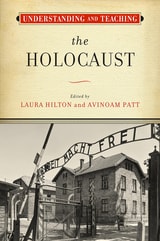
cover of Understanding and Teaching the Holocaust

Understanding and Teaching the Holocaust

Edited by Laura Hilton and Avinoam Patt

University of Wisconsin Press, 2022

Few topics in modern history draw the attention that the Holocaust does. The Shoah has become synonymous with unspeakable atrocity and unbearable suffering. Yet it has also been used to teach tolerance, empathy, resistance, and hope. Understanding and Teaching the Holocaust provides a starting point for teachers in many disciplines to illuminate this crucial event in world history for students. Using a vast array of source materials—from literature and film to survivor testimonies and interviews—the contributors demonstrate how to guide students through these sensitive and painful subjects within their specific historical and social contexts.
Each chapter provides pedagogical case studies for teaching content such as antisemitism, resistance and rescue, and the postwar lives of displaced persons. It will transform how students learn about the Holocaust and the circumstances surrounding it.
[more]
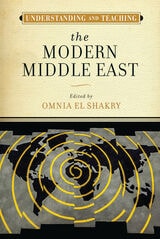
cover of Understanding and Teaching the Modern Middle East

Understanding and Teaching the Modern Middle East

Edited by Omnia El Shakry

University of Wisconsin Press, 2020
Many students learn about the Middle East through a sprinkling of information and generalizations deriving largely from media treatments of current events. This scattershot approach can propagate bias and misconceptions that inhibit students’ abilities to examine this vitally important part of the world. Understanding and Teaching the Modern Middle East moves away from the Orientalist frameworks that have dominated the West’s understanding of the region, offering a range of fresh interpretations and approaches for teachers. The volume brings together experts on the rich intellectual, cultural, social, and political history of the Middle East, providing necessary historical context to familiarize teachers with the latest scholarship. Each chapter includes easy- to-explore sources to supplement any curriculum, focusing on valuable and controversial themes that may prove pedagogically challenging, including colonization and decolonization, the 1979 Iranian revolution, and the US-led “war on terror.” By presenting multiple viewpoints, the book will function as a springboard for instructors hoping to encourage students to negotiate the various contradictions in historical study.
[more]
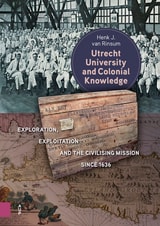
cover of Utrecht University and Colonial Knowledge: Exploration, Exploitation and the Civilising Mission since 1636

Utrecht University and Colonial Knowledge

Exploration, Exploitation and the Civilising Mission since 1636

Henk van Rinsum

Amsterdam University Press, 2025

In this book, Henk van Rinsum provides an in-depth description of the colonial past of Utrecht University in the Netherlands, from its foundation in 1636. He describes the development of (scientific) knowledge and knowledge transfer about and in the Dutch colonies, especially in the Dutch East Indies. The central theme of his book is the idea of Western superiority – the assumption that we are ‘developed’ and therefore modern, while those in the colonies are ‘not (yet) developed’ and therefore primitive or traditional. This colonial past is also the framework in which Utrecht University became involved in slavery and its abolition.
Henk van Rinsum shows how the knowledge acquired in the colony also contributed significantly to the scientific development of the university, especially towards the end of the nineteenth century. Utrecht University and Colonial Knowledge is therefore an important contribution to both colonial and intellectual history.
[more]