Results by title
1214 books match the query 'Subjects & Themes' and 20 start with u

Ulysses S. Grant
A Photographic HistoryJames Bultema, with a Foreword by Frank J. Willilams
Southern Illinois University Press, 2022
As Grant battled relentlessly down the Tennessee River and across Tennessee, defending Shiloh, he was followed by an enterprising group of studio photographers hoping to profit from the public’s demand for images of the rising general from the West. They never stopped because Grant never stopped. Thus far, 307 distinct photographs have been found of Ulysses S. Grant, revealing him to be the most photographed American of the nineteenth century.
Readers of Ulysses S. Grant: A Photographic History travel alongside Grant through the Civil War and his two terms as president, on his unusual two-year journey around the world, and to his final days on Mount McGregor. The sheer volume of exposure shows the toll of duty, war, and command. From every angle, this collection captures Grant’s regard for soldier and family, his disregard of uniform, and his disheveled appearance that reflected his resilience. The reader will look into the eyes of a man who saw the worst and labored for the best.
This curated volume opens the largest collection of Grant photos to the public for the first time. Excerpts from Grant’s personal writings divulge his candid thoughts about the people he posed with and the situations he faced around the time the photographs were taken. An extraordinary addition to Grant scholarship, Ulysses S. Grant: A Photographic History will be the photographic reference work on Grant for decades to come as the simple man from Ohio continues to astonish the world.
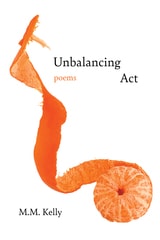
Unbalancing Act
M.M. Kelly
Four Way Books, 2026
Unbalancing Act is a haunting collection of poems about the particular physics of loving and losing—about the way grief, desire, memory, and awe can tip a life off its axis, and right it again. The speaker moves through fire and water, childhood, intimacy and abandonment, always with one eye on the natural world: bears, whales, rivers, storms, animals sleeping in impossible ways. The poems are lyric but narrative-driven, often darkly funny, and fascinated—bordering on obsessed—with the strange facts and small surrealities that make ordinary life feel mythic.
At its heart, the book is about imbalance as a kind of truth: the way trauma warps time, the way love can feel like weather, the way the body keeps trying to survive even when the mind wants to disappear. It's a collection for readers who like their beauty a little feral—poems that are tender but not precious, intelligent but not academic, and emotionally sharp without ever losing their sense of wonder.
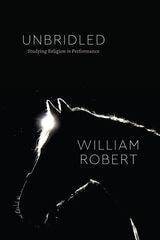
Unbridled
Studying Religion in PerformanceWilliam Robert
University of Chicago Press, 2022
In Unbridled, William Robert uses Equus, Peter Shaffer’s enigmatic play about a boy passionately devoted to horses, to think differently about religion. For several years, Robert has used Equus to introduce students to the study of religion, provoking them to conceive of religion in unfamiliar, even uncomfortable ways. In Unbridled, he is inviting readers to do the same.
A play like Equus tangles together text, performance, practice, embodiment, and reception. Studying a play involves us in playing different roles, as ourselves and others, and those roles, as well as the imaginative work they require, are critical to the study of religion. By approaching Equus with the reader, turning the play around and upside-down, Unbridled transforms standard approaches to the study of religion, engaging with themes including ritual, sacrifice, worship, power, desire, violence, and sexuality, as well as thinkers including Judith Butler, Sigmund Freud, Karl Marx, Friedrich Nietzsche, and Jonathan Z. Smith. As Unbridled shows, the way themes and theories play out in Equus challenges us to reimagine the study of religion through open questions, contrasting perspectives, and alternative modes of interpretation and appreciation.
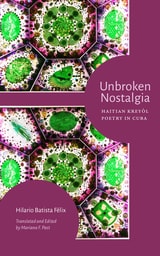
Unbroken Nostalgia
Haitian Kreyòl Poetry in CubaWritten by Hilario Batista Félix, edited and translated by Mariana F. Past
Amherst College Press, 2026
Unbroken Nostalgia: Haitian Kreyòl Poetry in Cuba is the first English translation and scholarly edition of the collection Nostalji san pwen ni vigil: pwezi kreyòl nan peyi Kiba (2016) by Hilario Batista Félix. A poet, journalist, and language activist, Batista (1955– ) embodies and expresses Cuba’s cultural and linguistic diversity as a descendant of Haitian migrant workers to Eastern Cuba during the mid-twentieth century; his poems bridge regions usually separated by language—the Spanish and Creolophone/Francophone Caribbean—and vividly depict the distinct heritage of Haitian Cubans and their shared dreams and challenges. A scholarly introduction by translator and editor Mariana F. Past provides biographical information about the author, situates his work within Haitian diasporic literature, and addresses patterns of Haitian migration to Cuba. Batista’s original poems appear alongside facing-page English translations with annotations that clarify historical figures and events, geographical features, and Haitian cultural and religious practices. Grounded in oral storytelling traditions, Unbroken Nostalgia brings to light the collective memory and complicated hybridity of the Haitian community in Cuba and upholds Haitian Kreyòl as a language of resistance.
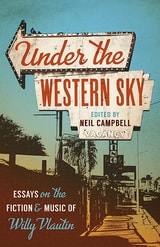
Under the Western Sky
Essays on the Fiction and Music of Willy VlautinNeil Campbell
University of Nevada Press, 2018
Brutally honest, raw, gritty, down to earth, compassionate and affecting, Willy Vlautin’s writing evokes a power in not only theme, but in methodology. Vlautin’s novels, The Motel Life, Northline, Lean on Pete and The Free (2006-2014) chart the dispossessed lives of young people struggling to survive in difficult economic times and in regions of the U.S. West and Pacific Northwest traditionally viewed as affluent and abundant. Yet as his work shows, are actually highly stratified and deprived.
Likewise, Vlauntin’s songs, penned as lead singer of the Americana band Richmond Fontaine chart a related territory of blue-collar landscapes of the American West and Northwest with a strong emphasis on narrative and affective soundscapes evocative of the similar worlds defined in his novels.
Featuring an interview with Vlautin himself, this edited collection aims to develop the first serious, critical consideration of the important novels and songs of Willy Vlautin by exploring relations between region, music, and writing through the lens of critical regionality and other interdisciplinary, cultural, and theoretical methodologies. In so doing, it will situate his work within its regional frame of the American New West, and particularly the city of Reno, Nevada and the Pacific Northwest, whilst showing how he addresses wider cultural and global issues such as economic change, immigration shifts, gender inequality, and the loss of traditional mythic identities.
The essays take different positions in relation to considerations of both novels and music, looking for links and relations across genres, always mindful of their specificity. Under the Western Sky shows how although apparently rooted in place, Vlautin’s work traces diverse lines of contemporary cultural enquiry, engaging in an effective and troubling examination of regional haunting.
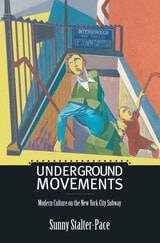
Underground Movements
Modern Culture on the New York City SubwaySunny Stalter-Pace
University of Massachusetts Press, 2013
Writers and artists took up questions that originated in the sphere of urban planning to explore how underground movement changed the ways people understand the city. Modern poets envisioned the subway as a space of literary innovation; playwrights and fiction writers used it to gauge the consequences of migration and immigration; and essayists found that it underscored the fragile relationship between urban development and memory. Even today, the symbolic associations forged by these early texts continue to influence understanding of the cultural significance of the subway and the city it connects.
Underscore
Julie Carr
Omnidawn, 2024
Julie Carr’s most intimate book to date, Underscore, is dedicated to two of Carr’s foundational teachers, the dancer Nancy Stark Smith and the poet Jean Valentine, both of whom died in 2020. Elegiac and tender—at times erotic at other times bitter—these poems remain deeply invested in human relationships amid a life whose backdrop is human suffering.
Reaching toward the “ghost companions in the thicket” and to the beloveds who still “pulse with activity,” Underscore’s sonically intricate poems express a longing for dynamic forces of intra-action, a sense of expanded encounter, and what Stark Smith called “overlapping kinespheres.”
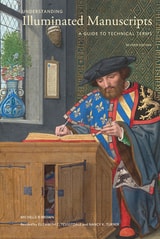
Understanding Illuminated Manuscripts
A Guide to Technical Terms, Revised EditionMichelle Brown
J. Paul Getty Trust, The, 2018
Updated to reflect current research and technologies, this beautifully illustrated guide includes images of important manuscript illuminations from the collection of the J. Paul Getty Museum and beyond. Concise, readable explanations of the technical terms most frequently encountered in manuscript studies make this portable volume an essential resource for students, scholars, and readers who wish a deeper understanding and enjoyment of illuminated manuscripts and medieval book production.
Undocuments
John-Michael Rivera
University of Arizona Press, 2021
How do you document the undocumented? UNDOCUMENTS both poses and attempts to answer this complex question by remixing the forms and styles of the first encyclopedia of the New World, the Florentine Codex, in order to tell a modern story of Greater Mexico. Employing a broad range of writing genres and scholarly approaches, UNDOCUMENTS catalogs, recovers, and erases documents and images by and about peoples of Greater Mexico from roughly the first colonial moment. This brave and bracing volume organizes and documents ancient New World Mexican peoples from the Florentine Codex (1592) to our current technology-heavy age, wherein modern lawmakers and powerful global figures desire to classify, deport, and erase immigrants and their experiences.
While grappling with anxiety and the physical and mental health consequences of the way the United States treats immigrant bodies, John-Michael Rivera documents and scrutinizes what it means to seek opportunities in America. With a focus on the poetics of Latinx documentality itself, this book is concerned with the complicated and at times contradictory ways peoples of Greater Mexico have been documented and undocumented within systems of colonial knowledges, and how these peoples have been rendered as specters of the bureaucratic state. Rivera takes us through the painful, anxiety-ridden, and complex nature of what it means to be documented or undocumented, and the cruelty married to each of these states of being.
Undress, She Said
Doug Anderson
Four Way Books, 2022
Unfathoming
Andrea Cohen
Four Way Books, 2017
Unguessed Kinships
Naturalism and the Geography of Hope in Cormac McCarthySteven Frye
University of Alabama Press, 2023
Literary naturalism at play in one of America’s most visionary novelists: Cormac McCarthy
It took six novels and nearly thirty years for Cormac McCarthy to find commercial success with the National Book Award–winning All the Pretty Horses, followed by major prizes, more best sellers, and Hollywood adaptations of his work. Those successes, though, have obscured McCarthy’s commitment to an older form of literary expression: naturalism.
It is hardly a secret that McCarthy’s work tends to darker themes: violence, brutality, the cruel indifference of nature, themes which would not be out of place in the writing of Jack London or Stephen Crane. But literary naturalism is more than the oversimplified Darwinism that many think of. Nature may be red in tooth and claw, and humans are part of nature, but the humanity depicted in naturalist literature is capable of love, selflessness, and spirituality, as well.
In Unguessed Kinships, Steven Frye illuminates all these dimensions of McCarthy’s work. In his novels and plays, McCarthy engages both explicitly and obliquely with the project of manifest destiny, in the western drama Blood Meridian, the Tennessee Valley Authority-era Tennessee novels, and the atomic frontier of Alamogordo in Cities of the Plain. McCarthy’s concerns are deeply religious and philosophical, drawing on ancient Greek philosophy, Gnosticism, and Nietzsche, among other sources. Frye argues for McCarthy not merely as a naturalist writer but as a naturalist in the most expansive sense. Unguessed Kinships includes biographical and historical context in each chapter, widening the appeal of the text to not just naturalists or McCarthy scholars but anyone studying the literature of the South or the West.
Unnatural Ecopoetics
Unlikely Spaces in Contemporary PoetrySarah Nolan
University of Nevada Press, 2017
By approaching environments in a new way, Nolan closes this gap and recognizes how contemporary poets employ self-reflexive commentary and formal experimentation in order to create new natural/cultural environments on the page. She proposes a radical new direction for ecopoetics and deploys it in relation to four major American poets. Working from literal to textual spaces through the contemporary poetry of A.R. Ammons’s Garbage, Lyn Hejinian’s My Life, Susan Howe’s The Midnight, and Kenneth Goldsmith’s Seven American Deaths and Disasters, the book presents applications of unnatural ecopoetics in poetic environments, ones that do not engage with traditional ideas of nature and would otherwise remain outside the scope of ecocritical and ecopoetic studies.
Nolan proposes a new practical approach for reading poetic language. Ecocriticism is a very fluid and evolving discipline, and Nolan’s pioneering new book pushes the boundaries of second-wave ecopoetics—the fundamental issue being what is nature/natural, and how does poetic language, particularly self-conscious contemporary poetic agency, contribute to and complicate that question.
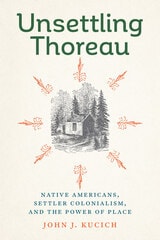
Unsettling Thoreau
Native Americans, Settler Colonialism, and the Power of PlaceJohn J. Kucich
University of Massachusetts Press, 2024
A CHOICE 2025 Outstanding Academic Title
Finalist for the 2025 New England Society Book Awards
Henry David Thoreau’s life-long fascination with Native Americans is widely known and a recurring topic of interest, and it is also a source of modern debate. This is a figure who both had a deep interest in Native American history and culture and was seen by many of his contemporaries, including Ralph Waldo Emerson and Nathaniel Hawthorne, as “more like an Indian” than his white neighbors. At the same time, Thoreau did little to protest the systematic dispossession of Indigenous people across the country in his lifetime. John J. Kucich charges into this contradiction, considering how Thoreau could demonstrate deep respect for Native American beliefs on one hand and remain largely silent about their genocide, actively happening throughout his life, on the other. Thoreau’s long study of Native peoples, as reflected in so much of his writing, allowed him to glimpse an Indigenous worldview, but it never fully freed him from the blind spots of settler colonialism.
Drawing on Indigenous studies and critiques of settler colonialism, as well as new materialist approaches that illustrate Thoreau’s radical reimagining of the relationship between humans and the natural world, Unsettling Thoreau explores the stakes of Thoreau’s effort to live mindfully and ethically in place when living alongside, or replacing marginalized peoples. By examining the whole scope of his writings, including the unpublished Indian Notebooks, and placing them alongside Native writers and communities in and beyond New England, this book gauges Thoreau’s effort to use Indigenous knowledge to reimagine a settler colonial world, without removing him from its trappings.
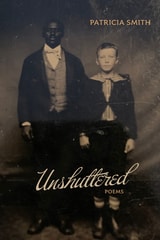
Unshuttered
PoemsPatricia Smith
Northwestern University Press, 2023
National Book Award winner Patricia Smith presents a portrait of Black America in the nineteenth century
Over the course of two decades, Patricia Smith has amassed a collection of rare nineteenth-century photographs of Black men, women, and children who, in these pages, regard us from the staggering distance of time.
Unshuttered is a vessel for the voices of their incendiary and critical era. Smith’s searing stanzas and revelatory language imbue the subjects of the photos with dynamism and revived urgency while she explores how her own past of triumphs and losses is linked inextricably to their long-ago lives:
We ache for fiction etched in black and white. Our eyes never touch. These tragic grays and bustles, mourners’
hats plopped high upon our tamed but tangled crowns, strain to disguise what yearning does with us.
Unveiling Desire
Fallen Women in Literature, Culture, and Films of the EastDas, Devaleena
Rutgers University Press, 2018
Up Jump the Boogie
John Murillo
Four Way Books, 2020
"The feel of now lives in John Murillo's UP JUMP THE BOOGIE, but it's tempered by bows to the tradition of soulful music and oral poetry. The lived dimensions embodied in this collection say that here's an earned street knowledge and a measured intellectual inquiry that dare to live side by side, in one unique voice. The pages of UP JUMP THE BOOGIE breathe and sing; the tributes and cultural nods are heartfelt, and in these honest poems no one gets off the hook."—Yusef Komunyakaa
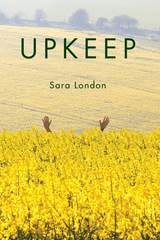
Upkeep
Sara London
Four Way Books, 2019
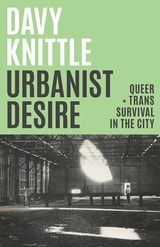
Urbanist Desire
Queer and Trans Survival in the CityDavy Knittle
University of Minnesota Press, 2026
How writers and artists have used city planning strategies to push back against harm
Black queer feminist thinker Audre Lorde famously declared that “the master’s tools will never dismantle the master’s house.” This language is normally understood as a metaphor, but as author Davy Knittle argues in this provocative book, queer and trans activists have long used the tools of city planning and urban design to create written and visual art that critiques those in power and offers points of resilience to their own communities.
A close look at the ways queer and trans writers and artists resisted predatory redevelopment in New York City from 1950 to 2020, Urbanist Desire draws on the work of James Schuyler, June Jordan, David Wojnarowicz, Julian Talamantez Brolaski, and Zeyn Joukhadar, exploring how they intervened in major political flashpoints like the War on Poverty, the AIDS-era housing crisis, and gentrification in Brooklyn and Queens. Presenting a new cultural history of New York City, Knittle explains how urban change and the more-than-human life of cities have been foundational concerns for queer and trans cultural production since the 1950s.
Ending with analysis of the 2022 speculative novel Everything for Everyone: An Oral History of the New York Commune, 2052–2072, Urbanist Desire looks to the past to imagine a better future for New York City and for all marginalized people. Knittle demonstrates how to move past a recuperative response to harm and toward one that can change the structure of society by documenting how queer and trans activists have engaged the strategies of planning and design to address spatial, social, and economic inequality.
Retail e-book files for this title are screen-reader friendly with images accompanied by short alt text and/or extended descriptions.
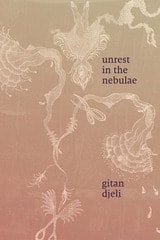
unrest in the nebulae
Gitan Djeli
Duke University Press, 2026