Results by title
102 books match the query 'Teachers' and 2 start with u
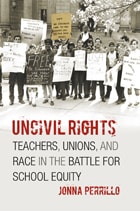
Uncivil Rights
Teachers, Unions, and Race in the Battle for School EquityJonna Perrillo
University of Chicago Press, 2012
Almost fifty years after Brown v. Board of Education, a wealth of research shows that minority students continue to receive an unequal education. At the heart of this inequality is a complex and often conflicted relationship between teachers and civil rights activists, examined fully for the first time in Jonna Perrillo’s Uncivil Rights, which traces the tensions between the two groups in New York City from the Great Depression to the present.
While movements for teachers’ rights and civil rights were not always in conflict, Perrillo uncovers the ways they have become so, brought about both by teachers who have come to see civil rights efforts as detracting from or competing with their own goals and by civil rights activists whose aims have de-professionalized the role of the educator. Focusing in particular on unionized teachers, Perrillo finds a new vantage point from which to examine the relationship between school and community, showing how in this struggle, educators, activists, and especially our students have lost out.
[more]
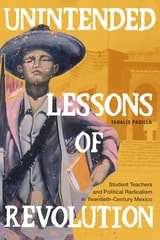
Unintended Lessons of Revolution
Student Teachers and Political Radicalism in Twentieth-Century MexicoTanalís Padilla
Duke University Press, 2021
In the 1920s, Mexico established rural normales—boarding schools that trained teachers in a new nation-building project. Drawn from campesino ranks and meant to cultivate state allegiance, their graduates would facilitate land distribution, organize civic festivals, and promote hygiene campaigns. In Unintended Lessons of Revolution, Tanalís Padilla traces the history of the rural normales, showing how they became sites of radical politics. As Padilla demonstrates, the popular longings that drove the Mexican Revolution permeated these schools. By the 1930s, ideas about land reform, education for the poor, community leadership, and socialism shaped their institutional logic. Over the coming decades, the tensions between state consolidation and revolutionary justice produced a telling contradiction: the very schools meant to constitute a loyal citizenry became hubs of radicalization against a government that increasingly abandoned its commitment to social justice. Crafting a story of struggle and state repression, Padilla illuminates education's radical possibilities and the nature of political consciousness for youths whose changing identity—from campesinos, to students, to teachers—speaks to Mexico’s twentieth-century transformations.
[more]