Results by title
1295 books match the query 'Women authors' and 19 start with u
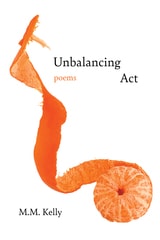
Unbalancing Act
M.M. Kelly
Four Way Books, 2026
Unbalancing Act is a haunting collection of poems about the particular physics of loving and losing—about the way grief, desire, memory, and awe can tip a life off its axis, and right it again. The speaker moves through fire and water, childhood, intimacy and abandonment, always with one eye on the natural world: bears, whales, rivers, storms, animals sleeping in impossible ways. The poems are lyric but narrative-driven, often darkly funny, and fascinated—bordering on obsessed—with the strange facts and small surrealities that make ordinary life feel mythic.
At its heart, the book is about imbalance as a kind of truth: the way trauma warps time, the way love can feel like weather, the way the body keeps trying to survive even when the mind wants to disappear. It's a collection for readers who like their beauty a little feral—poems that are tender but not precious, intelligent but not academic, and emotionally sharp without ever losing their sense of wonder.
Unbecoming Language
Anti-Identitarian French Feminist FictionsAnnabel L. Kim
The Ohio State University Press, 2018
Kim’s close readings ultimately enliven the current conversation in French studies by serving as a provocation to return to reading literary texts deeply and closely, without subordinating literature to a pre-existing ideological framework—to let literature speak, to let it theorize. Tracking the influence of these writers on each other, Kim provides a new, original French feminist poetics and demonstrates that Sarraute, Wittig, and Garréta’s work allows for a hollowing out of difference from within, allowing writers and readers to unbecome—to break free of identity and exist as subjectivities without subjecthood. In looking at these writers together, Kim provides a defense of literature as liberatory— capable of effecting personal and political change—and gives readers an experience of literature’s revolutionary possibilities.
Unbecoming Language
Anti-Identitarian French Feminist FictionsAnnabel L. Kim
The Ohio State University Press, 2018
Kim’s close readings ultimately enliven the current conversation in French studies by serving as a provocation to return to reading literary texts deeply and closely, without subordinating literature to a pre-existing ideological framework—to let literature speak, to let it theorize. Tracking the influence of these writers on each other, Kim provides a new, original French feminist poetics and demonstrates that Sarraute, Wittig, and Garréta’s work allows for a hollowing out of difference from within, allowing writers and readers to unbecome—to break free of identity and exist as subjectivities without subjecthood. In looking at these writers together, Kim provides a defense of literature as liberatory— capable of effecting personal and political change—and gives readers an experience of literature’s revolutionary possibilities.
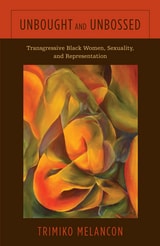
Unbought and Unbossed
Transgressive Black Women, Sexuality, and RepresentationTrimiko Melancon
Temple University Press, 2014
Drawing from black feminist and critical race theories, historical discourses on gender and sexuality, and literary criticism, Melancon explores the variety and complexity of black female identity. She illuminates how authors including Ann Allen Shockley, Alice Walker, and Gayl Jones engage issues of desire, intimacy, and independence to shed light on a more complex black identity, one ungoverned by rigid politics over-determined by race, gender and sexuality.
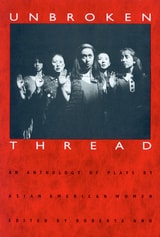
Unbroken Thread
An Anthology of Plays by Asian American WomenRoberta Uno
University of Massachusetts Press, 1993
This book contains plays by Genny Lim (Paper Angels), Wakako Yamauchi (The MusicLessons), Momoko Iko (Gold Watch),Velina Hasu Houston (Tea), Jeannie Barroga (Walls), and Elizabeth Wong (Letters to a Student Revolutionary). The volume includes an extended introduction, a profile of each playwright, and an appendix. The six plays of this anthology represent some of the best dramatic literature written by Asian American women since the 1970s. Each is a groundbreaking work and addresses in its own way the experiences of Asians in America. All six playwrights are American-born daughters of Asian immigrants, and their voices span the genres of naturalism, impressionism, ritual drama, postmodern collage, and media-influenced episodic drama.
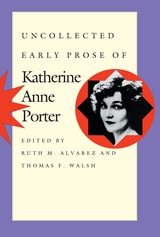
Uncollected Early Prose of Katherine Anne Porter
Edited by Ruth Moore Alvarez and Thomas F. Walsh
University of Texas Press, 1993
This volume brings together twenty-nine pieces dating from before 1932, none of which appeared in Porter's collected works and many of which are published here for the first time. Both fiction and essays are covered. All these pieces belong to Porter's apprenticeship as a creative writer. Thus, they offer new insights into her artistic development and her relationship with Mexico, a place that, as she later said, "influenced everything I did afterward."
Uncommon Women
Gender and Representation in Nineteenth-Century U.S. Women's WritingLaura Laffrado
The Ohio State University Press, 2009
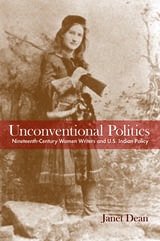
Unconventional Politics
Nineteenth-Century Women Writers and U.S. Indian PolicyJanet Dean
University of Massachusetts Press, 2016
Dean argues that in protesting U.S. Indian policy through popular genres, Wakefield, Sigourney, Callahan, and Eddleman also critiqued cultural protocols and stretched the contours of accepted modes of feminine discourse. Their acts of improvisation and reinvention tell a new story about the development of American women's writing and political expression.
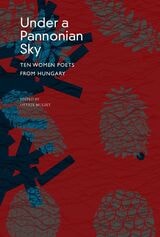
Under a Pannonian Sky
Ten Women Poets from HungaryEdited by Ottilie Mulzet
Seagull Books, 2025
Under a Pannonian Sky is a landmark anthology that brings the voices of ten extraordinary Hungarian women poets to English readers. Edited by award-winning translator Ottilie Mulzet, this collection spans generations, offering a rare glimpse into the rich and complex world of Hungarian poetry. The anthology features renowned poets like Ágnes Nemes Nagy and Zsuzsa Rakovszky, whose works have been celebrated internationally, alongside voices such as Gizella Hervay and Magda Székely, who are introduced in-depth to English readers for the first time. Through original and lyrical language, these poets chronicle the traumas of World War II, the Hungarian Holocaust, and the societal upheavals of the 1989 regime change, exploring themes of identity and resilience. Their poems reflect deeply personal confrontations with their roles as citizens, daughters, mothers, and witnesses to turbulent and often disorienting historical epochs.
Under a Pannonian Sky is an essential collection for readers seeking to discover the richness of Hungarian poetry and its profound engagement with the personal and political landscapes of the twentieth century and beyond.

Underneath the Palm Trees
EssaysEva Recinos
Northwestern University Press, 2027
A raw and captivating exploration of what it means to live in the in-betweens of the American dream
Arts and culture writer Eva Recinos came of age in the towering city of Los Angeles, fed the story of the American dream. A daughter of immigrants, Recinos grew up facing the dichotomy of that dream: experiencing what it was like to live in South Central LA right next door to one of the wealthiest private universities in America—which Recinos herself would eventually attend. Navigating depression, anxiety, grief, sexuality, and the pressures of being a first-generation daughter and student, Underneath the Palm Trees examines the dissonant effects of straddling two disparate worlds. Recinos’s is an emerging and powerful Latinx voice that uses this engaging collection of essays to capture America’s idiosyncrasies, the complexities of girlhood, and how we find ourselves in art.
Underscore
Julie Carr
Omnidawn, 2024
Julie Carr’s most intimate book to date, Underscore, is dedicated to two of Carr’s foundational teachers, the dancer Nancy Stark Smith and the poet Jean Valentine, both of whom died in 2020. Elegiac and tender—at times erotic at other times bitter—these poems remain deeply invested in human relationships amid a life whose backdrop is human suffering.
Reaching toward the “ghost companions in the thicket” and to the beloveds who still “pulse with activity,” Underscore’s sonically intricate poems express a longing for dynamic forces of intra-action, a sense of expanded encounter, and what Stark Smith called “overlapping kinespheres.”
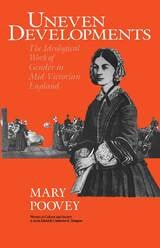
Uneven Developments
The Ideological Work of Gender in Mid-Victorian EnglandMary Poovey
University of Chicago Press, 1988
Asserting that the organization of sexual difference is a social, not natural, phenomenon, Poovey shows how representations of gender took the form of a binary opposition in mid-Victorian culture. She then reveals the role of this opposition in various discourses and institutions—medical, legal, moral, and literary. The resulting oppositions, partly because they depended on the subordination of one term to another, were always unstable. Poovey contends that this instability helps explain why various institutional versions of binary logic developed unevenly. This unevenness, in turn, helped to account for the emergence in the 1850s of a genuine oppositional voice: the voice of an organized, politicized feminist movement.
Drawing on a wide range of sources—parliamentary debates, novels, medical lectures, feminist analyses of work, middle-class periodicals on demesticity—Poovey examines various controversies that provide glimpses of the ways in which representations of gender were simultaneously constructed, deployed, and contested. These include debates about the use of chloroform in childbirth, the first divorce law, the professional status of writers, the plight of governesses, and the nature of the nursing corps. Uneven Developments is a contribution to the feminist analysis of culture and ideology that challenges the isolation of literary texts from other kinds of writing and the isolation of women's issues from economic and political histories.
Unfolding the City
Women Write the City in Latin AmericaAnne Lambright
University of Minnesota Press, 2007
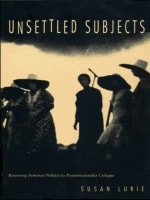
Unsettled Subjects
Restoring Feminist Politics to Poststructuralist CritiqueSusan Lurie
Duke University Press, 1997
In her analysis, Lurie traces each author’s strategies for revealing and challenging the ways that patriarchal gender ideology profits from what is always plural and contested female subjectivity. Only such an inquiry, Lurie demonstrates, can explain the impasses that have steered poststructuralist feminism away from gender as a category of analysis and can point toward the models necessary for a more complete feminist critique of patriarchal power.
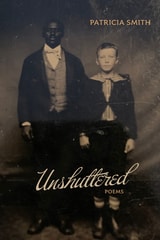
Unshuttered
PoemsPatricia Smith
Northwestern University Press, 2023
National Book Award winner Patricia Smith presents a portrait of Black America in the nineteenth century
Over the course of two decades, Patricia Smith has amassed a collection of rare nineteenth-century photographs of Black men, women, and children who, in these pages, regard us from the staggering distance of time.
Unshuttered is a vessel for the voices of their incendiary and critical era. Smith’s searing stanzas and revelatory language imbue the subjects of the photos with dynamism and revived urgency while she explores how her own past of triumphs and losses is linked inextricably to their long-ago lives:
We ache for fiction etched in black and white. Our eyes never touch. These tragic grays and bustles, mourners’
hats plopped high upon our tamed but tangled crowns, strain to disguise what yearning does with us.
Upkeep
Sara London
Four Way Books, 2019

u&i
Cassandra Smith
Omnidawn, 2015

unalone
Jessica Jacobs
Four Way Books, 2024
Deeply personal and yet universal in its truths, unalone draws on the Book of Genesis as a living document whose stories, wisdom, and ethical knots can engage us more fully with our own lives — whatever your religious tradition or spiritual beliefs. In this stunning and ambitious book, Jacobs reminds us that all poetry serves as a kind of prayer – a recognition of beauty, a spoken bid for connection, a yearning toward an understanding that might better guide us through our days. When you “dive / from the twin heights of your eyes,” “that tiny pool below” isn’t God. “Well, not exactly,” Jacobs comforts us. “It’s you. One breath deeper than you’ve / ever been, one breath closer to the heeded, heedful world.”
unalone
Jessica Jacobs
Four Way Books, 2024
Deeply personal and yet universal in its truths, unalone draws on the Book of Genesis as a living document whose stories, wisdom, and ethical knots can engage us more fully with our own lives — whatever your religious tradition or spiritual beliefs. In this stunning and ambitious book, Jacobs reminds us that all poetry serves as a kind of prayer – a recognition of beauty, a spoken bid for connection, a yearning toward an understanding that might better guide us through our days. When you “dive / from the twin heights of your eyes,” “that tiny pool below” isn’t God. “Well, not exactly,” Jacobs comforts us. “It’s you. One breath deeper than you’ve / ever been, one breath closer to the heeded, heedful world.”