Results by title
127 books match the query 'World politics' and 3 start with u

Un-American
W.E.B. Du Bois and the Century of World RevolutionBill V Mullen
Temple University Press, 2015
Un-American is Bill Mullen’s revisionist account of renowned author and activist W.E.B. Du Bois’s political thought toward the end of his life, a period largely dismissed and neglected by scholars. He describes Du Bois’s support for what the Communist International called “world revolution” as the primary objective of this aged radical’s activism. Du Bois was a champion of the world’s laboring millions and critic of the Cold War, a man dedicated to animating global political revolution.
Mullen argues that Du Bois believed that the Cold War stalemate could create the conditions in which the world powers could achieve not only peace but workers’ democracy. Un-American shows Du Bois to be deeply engaged in international networks and personal relationships with revolutionaries in India, China, and Africa. Mullen explores how thinkers like Karl Marx, Jawaharlal Nehru, Mohandas Gandhi, and C.L.R. James helped him develop a theory of world revolution at a stage in his life when most commentators regard him as marginalized. This original political biography also challenges assessments of Du Bois as an American “race man.”

Understanding and Teaching the Cold War
Edited by Matthew Masur
University of Wisconsin Press, 2016
Teaching the Cold War is both necessary and challenging. Understanding and Teaching the Cold War is designed to help collegiate and high school teachers navigate the complexity of the topic, integrate up-to-date research and concepts into their classes, and use strategies and tools that make this important history meaningful to students.
The volume opens with Matthew Masur’s overview of models for approaching the subject, whether in survey courses or seminars. Two prominent historians, Carole Fink and Warren Cohen, offer accounts of their experience as longtime scholars and teachers of the Cold War from European and Asian perspectives. Sixteen essays dig into themes including the origins and end of the conflict, nuclear weapons, diplomacy, propaganda, fear, popular culture, and civil rights, as well as the Cold War in Eastern Europe, Western Europe, East Asia, Africa, Latin America, and the nonaligned nations. A final section provides practical advice for using relevant, accessible primary sources to implement the teaching ideas suggested in this book.
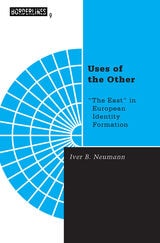
Uses Of The Other
“The East” in European Identity FormationIver B. Neumann
University of Minnesota Press, 1998
Examines identity politics in the context of international relations.
The field of international relations has recently witnessed a tremendous growth of interest in the theme of identity and its formation, construction, and deconstruction. In Uses of the Other, Iver B. Neumann demonstrates how thinking about identity in terms of the self and other may prove highly useful in the study of world politics.
Neumann begins by tracing the four different paths along which this thinking has developed during this century-ethnographic, psychological, Continental philosophical, and “Eastern excursion”-and he shows how these blended at the margins of the discipline of international relations at the end of the 1980s. There follow several incisive readings of European identity formations on the all-European, regional, and national levels. The theme that draws these readings together is how “the East” is used as a sign of otherness at all three levels. Whereas previous studies framed this process as part of colonial and postcolonial developments, this book suggests that “Easternness” is also present as a marker in contemporary discourses about Russia, Turkey, Central Europe, and Bashkortostan, among others. Situating his work in contemporary critical debates, Neumann argues that, while the self/other perspective is always of relevance, it is now more in need of being used as a perspective on specific sequences of identity formation than of further embellishment.ISBN: 0-8166-3082-8 Cloth $49.95xxISBN: 0-8166-3083-6 Paper $19.95x248 Pages 5-7/8x9 NovemberBorderlines Series, Volume 9Translation inquiries: