Results by title
8113 books match the query 'Literary Criticism' and 105 start with u
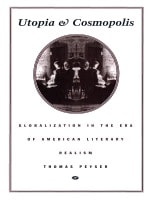
Utopia and Cosmopolis
Globalization in the Era of American Literary RealismThomas Peyser
Duke University Press, 1998
Applying current theoretical work on globalization to the writing of authors as diverse as Edward Bellamy, Charlotte Perkins Gilman, William Dean Howells, and Henry James, Peyser reveals the ways in which turn-of-the-century American writers struggled to understand the future in a newly emerging global community. Because the pressures of globalization at once fostered the formation of an American national culture and made national culture less viable as a source of identity, authors grappled to find a form of fiction that could accommodate the contradictions of their condition. Utopia and Cosmopolis unites utopian and realist narratives in subtle, startling ways through an examination of these writers’ aspirations and anxieties. Whether exploring the first vision of a world brought together by the power of consumer culture, or showing how different cultures could be managed when reconceived as specimens in a museum, this book steadily extends the horizons within which late nineteenth- and early twentieth-century American literature and culture can be understood.
Ranging widely over history, politics, philosophy, and literature, Utopia and Cosmopolis is an important contribution to debates about utopian thought, globalization, and American literature.
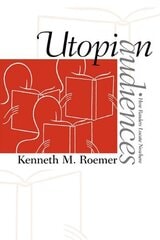
Utopian Audiences
How Readers Locate NowhereKenneth M. Roemer
University of Massachusetts Press, 2009
In the first part of the book, Kenneth M. Roemer establishes why utopian literature offers an attractive arena for reader-response criticism. He focuses on the literature's diversity, its provocative and multi-genre character, and the availability of documented responses as different as book illustrations and intentional communities. In the second part, he concentrates on late nineteenth-century America, which witnessed a grand outpouring of utopian literature, and in particular on Edward Bellamy's Looking Backward, the most popular and influential American utopian novel.
The study progresses from broad cultural constructs to specific modern responses; from the perceptual systems and reading conventions allowing readers to "see" utopias to text-based models of implied readers and to documented readings of actual people, including Bellamy himself, reviewers, and 733 late twentieth-century readers. A fictional gathering of all the readers concludes the book.

Utopian Horizons
Ideology, Politics, LiteratureZsolt Cziganyik
Central European University Press, 2017
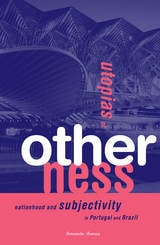
Utopias Of Otherness
Nationhood And Subjectivity In Portugal And BrazilFernando Arenas
University of Minnesota Press, 2003
Forges a new understanding of how these two Lusophone nations are connected
The closely entwined histories of Portugal and Brazil remain key references for understanding developments—past and present—in either country. Accordingly, Fernando Arenas considers Portugal and Brazil in relation to one another in this exploration of changing definitions of nationhood, subjectivity, and utopias in both cultures. Examining the two nations’s shared language and histories as well as their cultural, social, and political points of divergence, Arenas pursues these definitive changes through the realms of literature, intellectual thought, popular culture, and political discourse.
Both Brazil and Portugal are subject to the economic, political, and cultural forces of postmodern globalization. Arenas analyzes responses to these trends in contemporary writers including José Saramago, Caio Fernando Abreu, Maria Isabel Barreno, Vergílio Ferreira, Clarice Lispector, and Maria Gabriela Llansol. Ultimately, Utopias of Otherness shows how these writers have redefined the concept of nationhood, not only through their investment in utopian or emancipatory causes such as Marxist revolution, women’s liberation, or sexual revolution, but also by shifting their attention to alternative modes of conceiving the ethical and political realms.
Utter Antiquity
Perceptions of Prehistory in Renaissance EnglandArthur B. Ferguson
Duke University Press, 1993
Since the Bible left little room for speculation on prehistory—in fact no room at all for the concept itself—Utter Antiquity concentrates on myth and legend outside of the biblical context and on those who conjured prehistory out of these sources. A subtle conflict between belief and skepticism emerges from these pages, as Ferguson reveals how some Renaissance writers struggled with ancient explanations that flouted reason and experience, while others sidestepped such doubts by relating prehistory to man's social evolution. By isolating and analyzing topics such as skepticism, rationalism, and poetic history, Ferguson illuminates the development of historical consciousness in early modern England. His accessible and eloquent study contributes significantly to an understanding of the Renaissance mind and intellectual history in general.