Results by title
1713 books match the query '21st century' and 17 start with v
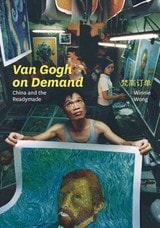
Van Gogh on Demand
China and the ReadymadeWinnie Won Yin Wong
University of Chicago Press, 2014
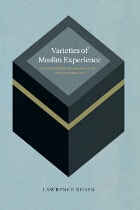
Varieties of Muslim Experience
Encounters with Arab Political and Cultural LifeLawrence Rosen
University of Chicago Press, 2008
In Varieties of Muslim Experience, anthropologist Lawrence Rosen explores aspects of Arab Muslim life that are, at first glance, perplexing to Westerners. He ranges over such diverse topics as why Arabs eschew portraiture, why a Muslim scientist might be attracted to fundamentalism, and why the Prophet must be protected from blasphemous cartoons. What connects these seemingly disparate features of Arab social, political, and cultural life? Rosen argues that the common thread is the importance Arabs place on the negotiation of interpersonal relationships—a link that helps to explain actions as seemingly unfathomable as suicide bombing and as elusive as Quranic interpretation.
Written with eloquence and a deep knowledge of the entire spectrum of Muslim experience, Rosen’s book will interest not only anthropologists and Islamicists but anyone invested in better understanding the Arab world.
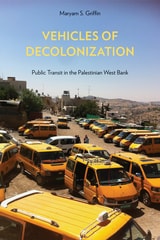
Vehicles of Decolonization
Public Transit in the Palestinian West BankMaryam S. Griffin
Temple University Press, 2022
Examining the border-enclosure strategy Israel uses to impose Palestinian im/mobilization, Maryam Griffin considers the ways public transportation in the Palestinian West Bank is a constant site of social struggle. Her illuminating book, Vehicles of Decolonization, studies collective movement, resistance, and everyday life in the West Bank to show how Palestinians assert a kind of Indigenous self-determination over mobility that Israeli settler colonialism seeks to undermine.
Having immersed herself in a year of fieldwork, Griffin maps multiple engagements with the flexible bus, shared van, and private taxi services to demonstrate that the politics of mobility are shaped by ongoing settler colonialism and Indigenous struggle. Griffin uses critical border studies to look at the contested nature of mobility at the sites of transit, where Palestinians practice self-determination through routine participation, spectacular political organizing and demonstration, and artistic renderings.
Featuring a variety of street images, Vehicles of Decolonization shows that multiple registers of people power work in concert not only to resist settler colonial logics but to reinhabit the land through the practice and preservation of alternative relations of mobility.

Vespers
Contemporary American Poems of Religion and SpiritualityVirgil Suarez
University of Iowa Press, 2003
At the heart of human existence lie fundamental questions that are pondered by philosophers, theologians, poets and thoughtful people from all walks of life. What is the meaning of life? Who or what is a divine being? How can a benevolent deity justify human suffering? Such questions are especially relevant to our lives in the current climate of American society. In Vespers: American Poems of Religion and Spirituality, editors Virgil Suárez and Ryan G. Van Cleave offer the reading world a timely anthology of powerful and passionate poems that cut to the heart of our contemporary theological and spiritual underpinnings.
Featuring fifty of today's most respected American poets, including Pulitzer Prize winners Stephen Dunn and Carolyn Kizer, Vespers allows us to witness and understand the challenging ideas and philosophies surrounding religion and spirituality. Through these poems, we can come to a better understanding of who, what, and why we are.
From deathbed spirituals to initiation songs, transformative ballads to transcendent sonnets, poets of myriad backgrounds—Native American, African American, Asian American, Latino, Protestant, Buddhist, Catholic, Jewish—echo the thoughts, concerns, and fears that linger in our souls. Their poems help us realize that we are not alone, that we're never truly alone, that even in the face of darkness the world is vibrant, beautiful, joyous.
More than a creative exploration of theological concerns—Vespers is a roadmap of where we've been, where we are, and where we are heading in terms of our spiritual and religious existence. It will keep you company, good company, whatever your religious or spiritual background.
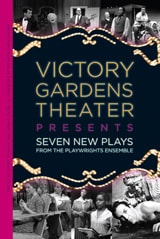
Victory Gardens Theater Presents
Seven New Plays from the Playwrights EnsembleSandy Shinner
Northwestern University Press, 2006
This collection features seven plays by talented authors from the twelve-member Playwrights Ensemble at Victory Gardens. Their works tackle a wide range of topics from a colorful and imaginative retelling of the Medea legend set in the Carribbean to the desperation and regret that can fill a high-school reunion, from a feisty stroke-survivor claiming her independence to a historical drama about the first free man of color to attend Ohio University. Whether focusing on the drama between the four walls of a home or testing the broader realms of culture, history, and politics, the Victory Gardens Theater has always encouraged diverse perspectives and supported original work. Victory Gardens Theater Presents showcases some of the best examples of the distinctive talent that continues to find a home there.
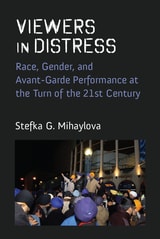
Viewers in Distress
Race, Gender, Religion, and Avant-Garde Performance at the Turn of the Twenty-First CenturyStefka G. Mihaylova
University of Michigan Press, 2023
Honorable Mention: American Society for Theatre Research Barnard Hewitt Award | November 8, 2024
Conventional notions of avant-garde art suggest innovative artists rebelling against artistic convention and social propriety, shocking unwilling audiences into new ways of seeing and living. Viewers in Distress tells a different story. Beginning in the tumultuous 1990s, after the fall of the Berlin Wall and in the wake of the Los Angeles riots, rebellious spectators in American and British theaters broke with theater decorum and voiced their radical interpretations of shows that were not meant to be radical. In doing so, audiences tried to understand the complex racial, gender, and religious politics of their times, while insisting that liberal societies fulfill their promise of dignity for all. Stefka Mihaylova argues that such non-conforming viewing amounts to an avant-garde of its own: a bold reimagining of how we live together and tell stories of our lives together, aimed to achieve liberalism’s promise. In telling this story, she analyzes the production and reception politics of works by Susan-Lori Parks, Sarah Kane, Forced Entertainment, Gurpreet Kaur Bhatti, and Young Jean Lee, as well as non-theatrical controversies such as the conflict over Halloween costumes at Yale in 2015. At the core of spectators’ discontent, this book suggests, is an effort to figure out how to get along with people different from ourselves in the diverse U.S. and British societies in which we live.

Vinyl Theory
Jeffrey R. Di Leo
Lever Press, 2020
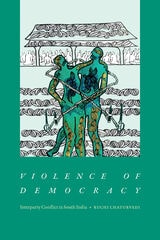
Violence of Democracy
Interparty Conflict in South IndiaRuchi Chaturvedi
Duke University Press, 2023
Viral Performance
Contagious Theaters from Modernism to the Digital AgeMiriam Felton-Dansky
Northwestern University Press, 2018
Viral performance practices testify to the age-old—and ever renewed—instinct that when people gather, something spreads. Performance, an art form requiring and relying on live contact, renders such spreading visible, raises its stakes, and encodes it in theatrical form. The artists explored here rarely disseminate their ideas or gestures as directly as a viral marketer or a political movement would; rather, they undermine simplified forms of contagion while holding dialogue with the philosophical and popular discourses, old and new, that have surrounded viral culture.
Viral Performance argues that the concept of the viral is historically deeper than immediate associations with the contemporary digital landscape might suggest, and far more intimately linked to live performance
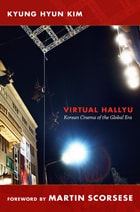
Virtual Hallyu
Korean Cinema of the Global EraKyung Hyun Kim
Duke University Press, 2011
In the late 1990s, South Korean film and other cultural products, broadly known as hallyu (Korean wave), gained unprecedented international popularity. Korean films earned an all-time high of $60.3 million in Japan in 2005, and they outperformed their Hollywood competitors at Korean box offices. In Virtual Hallyu, Kyung Hyun Kim reflects on the precariousness of Korean cinema’s success over the past decade. Arguing that state film policies and socioeconomic factors cannot fully explain cinema’s true potentiality, Kim draws on Deleuze’s concept of the virtual—according to which past and present and truth and falsehood coexist—to analyze the temporal anxieties and cinematic ironies embedded in screen figures such as a made-in-the-USA aquatic monster (The Host), a postmodern Chosun-era wizard (Jeon Woo-chi), a schizo man-child (Oasis), a weepy North Korean terrorist (Typhoon), a salary man turned vengeful fighting machine (Oldboy), and a sick nationalist (the repatriated colonial-era film Spring of Korean Peninsula). Kim maintains that the full significance of hallyu can only be understood by exposing the implicit and explicit ideologies of protonationalism and capitalism that, along with Korea’s ambiguous post-democratization and neoliberalism, are etched against the celluloid surfaces.
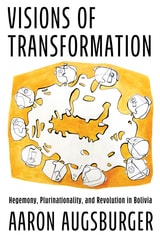
Visions of Transformation
Hegemony, Plurinationality, and Revolution in BoliviaAaron Augsburger
University of Arizona Press, 2025
On a wave of revolutionary upheaval in the early twenty-first century, Evo Morales was swept into state power as Bolivia’s first Indigenous president with a mandate to radically transform the country. The ensuing period, known simply as “el proceso de cambio” (the process of change), has been a tension-filled and contradictory process involving progressive transformations, ambiguous continuities, and outright revolutionary failures. Importantly, the contradictions have been just as much ideological as they are material.
By examining and illuminating the contrasting logics underlying opposing theories of revolutionary change, Visions of Transformation provides an analytical framework through which to understand and interpret the central conflicts and contradictions of Bolivia under Evo Morales and the Movimiento al Socialismo.
Based on nearly two years of immersive fieldwork, Visions of Transformation explores the relation between theoretical production and political practice. Through the contrasting perspectives of hegemony and plurinationality, the book analyzes three specific conjunctural moments—a proposed highway through the TIPNIS, a conflict over representation of the highland Indigenous movement organization CONAMAQ, and the struggle for Indigenous autonomy—to shed light on the primary economic, social, political, and theoretical tensions at the heart of Bolivia’s proceso de cambio.
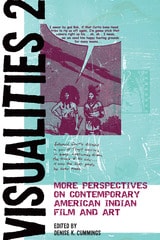
Visualities 2
More Perspectives on Contemporary American Indian Film and ArtDenise K. Cummings
Michigan State University Press, 2019
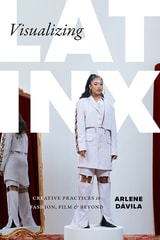
Visualizing Latinx
Creative Practices in Fashion, Film, and BeyondArlene Dávila
Duke University Press, 2026

Voices from the "Jungle"
Stories from the Calais Refugee CampCalais Writers
Pluto Press, 2017
In this moving collection of individual testimonies, Calais refugees speak directly in powerful and vivid stories, offering their memories up with stunning honesty. They tell of their childhood dreams and struggles for education; the genocides, wars, and persecution that drove them from home; the simultaneous terror and strength that filled their extraordinary journeys; the realities of living in the Calais refugee camp; and their deepest hopes for the future.
Through their stories, these refugees paint a picture of a different kind of Jungle—a powerful sense of community that has grown despite evictions and attacks and a solidarity that crosses national and religious boundaries. Interspersed with photos taken by the camp's inhabitants, taught by award-winning photographers Gideon Mendel and Crispin Hughes, original artwork by inhabitants, and powerful poems, Voices from the “Jungle” must be read by anyone seeking to understand the human consequences of our current world crisis.
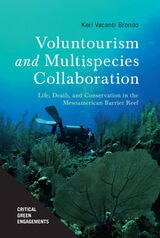
Voluntourism and Multispecies Collaboration
Life, Death, and Conservation in the Mesoamerican Barrier ReefKeri Vacanti Brondo
University of Arizona Press, 2021
Winner of the 2022 Edward M. Bruner Book Award
Voluntourism and Multispecies Collaboration is a lively ethnographic exploration of the world of conservation voluntourism and its engagement with marine and terrestrial biodiversity on the Honduran Bay Island of Utila, located in the ecologically critical Mesoamerican Barrier Reef.
In this highly readable text, anthropologist Keri Vacanti Brondo provides a pioneering theoretical framework that conceptualizes conservation voluntourism as a green industry. Brondo argues that the volunteer tourism industry is the product of coloniality and capitalism that works to produce and sustain an economy of affect while generating inequalities and dispossession. Employing a decolonizing methodology based on landscape assemblage theory, Brondo offers “thinking-like-a-mangrove” to attend to alternative worldings in Utila beyond the hegemonic tourist spectacle–dominated world attached to the volunteer tourism industry. Readers journey through the mangroves and waters alongside voluntourists, iguanas, whale sharks, turtles, lionfish, and islanders to build valuable research experience in environmental management while engaging in affective labor and multispecies relations of care.
Conservation organizations benefit from the financial capital and labor associated with conservation tourism, an industry boosted by social media. This critical work asks us to consider the impacts of this new alternative tourism market, one that relies on the exchange of “affect” with other species. How are human socialities made through interactions with other species? What lives and dies in Utila’s affect economy? Why are some species killable? Who gets to decide?
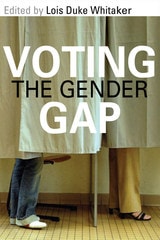
Voting the Gender Gap
Edited by Lois Duke Whitaker
University of Illinois Press, 2007
This book concentrates on the gender gap in voting--the difference in the proportion of women and men voting for the same candidate. Evident in every presidential election since 1980, this polling phenomenon reached a high of 11 percentage points in the 1996 election. The contributors discuss the history, complexity, and ways of analyzing the gender gap; the gender gap in relation to partisanship; motherhood, ethnicity, and the impact of parental status on the gender gap; and the gender gap in races involving female candidates. Voting the Gender Gap analyzes trends in voting while probing how women's political empowerment and gender affect American politics and the electoral process.
Contributors are Susan J. Carroll, Erin Cassese, Cal Clark, Janet M. Clark, M. Margaret Conway, Kathleen A. Dolan, Laurel Elder, Kathleen A. Frankovic, Steven Greene, Leonie Huddy, Mary-Kate Lizotte, Barbara Norrander, Margie Omero, and Lois Duke Whitaker.
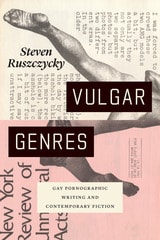
Vulgar Genres
Gay Pornographic Writing and Contemporary FictionSteven Ruszczycky
University of Chicago Press, 2021
Long fixated on visual forms, the field of porn studies is overdue for a book-length study of gay pornographic writing. Steven Ruszczycky delivers with an impressively researched work on the ways gay pornographic writing emerged as a distinct genre in the 1960s and went on to shape queer male subjectivity well into the new millennium.
Ranging over four decades, Ruszczycky draws on a large archive of pulp novels and short fiction, lifestyle magazines and journals, reviews, editorial statements, and correspondence. He puts these materials in conversation with works by a number of contemporary writers, including William Carney, Dennis Cooper, Samuel Delany, John Rechy, and Matthew Stadler. While focused on the years 1966 to 2005, Vulgar Genres reveals that the history of gay pornographic writing during this period informs much of what has happened online over the past twenty years, from cruising to the production of digital pornographic texts. The result is a milestone in porn studies and an important contribution to the history of gay life.