471 books match the query 'Aesthetics' and 4 start with v
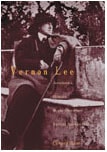
cover of Vernon Lee: Aesthetics, History, and the Victorian Female Intellectual

Vernon Lee

Aesthetics, History, and the Victorian Female Intellectual

Christa Zorn

Ohio University Press, 2003

The subject of renewed interest among literary and cultural scholars, Vernon Lee wrote more than forty books, in a broad range of genres, including fiction, history, aesthetics, and travel literature. Early on, Lee established her reputation as a public critic whose unconventional viewpoints stood out among those of her contemporaries.

To feminist and cultural critics, she is a fascinating model of the independent female intellectual who, as Desmond MacCarthy once put it, provides a rare combination of intellectual curiosity and imaginative sensibility.

A startlingly original critical study, Vernon Lee adds new dimensions to the legacy of this woman of letters whose career spans the transition from the late Victorian to the modernist period. Zorn draws on archival materials to discuss Lee’s work in terms of British aestheticism and in the context of the Western European history of ideas.

Zorn contends that Lee’s fiction and nonfiction represent a literary position that bridges and surpasses both the Victorian sage and the modernist aesthetic critic.

Through Professor Zorn’s approach, which combines theoretical framings of texts in terms of recent feminist and cultural criticism with passages of close reading, Vernon Lee emerges as an influential figure in late-nineteenth-century British and continental European thinking on history, art, culture, and gender.
[more]
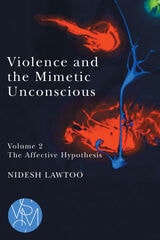
cover of Violence and the Mimetic Unconscious, Volume 2: The Affective Hypothesis

Violence and the Mimetic Unconscious, Volume 2

The Affective Hypothesis

Nidesh Lawtoo

Michigan State University Press, 2023
Representations of violence have subliminal contagious effects, but what kind of unconscious captures this imperceptible affective dynamic in the digital age? In volume two of a Janus-faced diagnostic of the cathartic and contagious effects of (new) media violence, Nidesh Lawtoo traces a genealogy of a long-neglected, embodied, relational, and highly mimetic unconscious that, well before the discovery of mirror neurons, posited mirroring reactions as a via regia to a phantom ego. Rather than being the product of a solipsistic discovery, the unconscious turns out to have haunted philosophers, psychologists, and artists for a long time. This book proposes a genealogy of untimely philosophical physicians that goes from Plato to Nietzsche, Bernheim to Féré, Freud to Bataille, Arendt to Girard, affect theory to the neurosciences. In their company, Lawtoo promotes the transdisciplinary field of mimetic studies by reevaluating the unconscious actions and reactions of homo mimeticus. As a new theory of mimesis emerges, Violence and the Mimetic Unconscious offers a searching diagnosis as to why the pathos of (new) media violence—from film to video games, police murders to the storming of the U.S Capitol—continues to cast a material shadow on the present and future.  
[more]
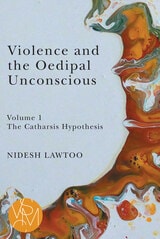
cover of Violence and the Oedipal Unconscious: vol. 1, The Catharsis Hypothesis

Violence and the Oedipal Unconscious

vol. 1, The Catharsis Hypothesis

Nidesh Lawtoo

Michigan State University Press, 2023
Representations of violence are often said to generate cathartic effects, but what does “catharsis” mean? And what theory of the unconscious made this concept so popular that it reaches from classical antiquity to the digital age? In Violence and the Oedipal Unconscious, Nidesh Lawtoo reframes current debates on (new) media violence by tracing the philosophical, aesthetic, and historical vicissitudes of the “catharsis hypothesis” from antiquity to modernity and into the present. Drawing on theorists of mimesis from Aristotle to Nietzsche, Bernays to Breuer, Freud to Girard to Morin, Lawtoo offers a genealogy of the relationship between violence and the unconscious with at least two aims: First, this study gives an account of the birth of the Oedipal unconscious—out of a “cathartic method.” Second, it provides new theoretical foundations to solve a riddle of (new) media violence that may no longer rest on Oedipal solutions. In the process, Lawtoo outlines a new theory of violence, mimesis, and the unconscious that does not have desire as a via regia, but rather, the untimely realization that all affects spread contagiously and thus mimetically.
[more]
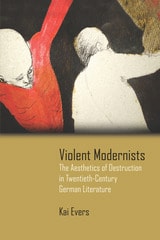
cover of Violent Modernists: The Aesthetics of Destruction in Twentieth-Century German Literature

Violent Modernists

The Aesthetics of Destruction in Twentieth-Century German Literature

Kai Evers

Northwestern University Press, 2013

Accounts of rape, murder, mutilation, and torture run like a bloodred thread through modernist literature in the German language. Previous accounts of German literary modernism have linked its fascination with violent destruction either to the militant avant-garde on the left or to fascist modernism on the right. Critics have noted that high modernists depicted violence through its impact on their own victimized protagonists. But by minimizing and ignoring the often disturbing attraction to aggression in the works of Franz Kafka and others, these prevalent readings have filtered out much of the provocative and productive potential of German modernism.

Kai Evers’s Violent Modernists: The Aesthetics of Destruction in Twentieth-Century German Literature develops a new understanding of German modernism that moves beyond the oversimplified dichotomy of an avant-garde prone to aggression on the one hand and a modernism opposed to violence on the other. Analyzing works by Robert Musil, Franz Kafka, Karl Kraus, Walter Benjamin, Elias Canetti, and others, Evers argues that these authors are among the most innovative thinkers on violence and its impact on contemporary concepts of the self, history, and society.
[more]