Results by title
239 books match the query 'Agriculture' and 3 start with v
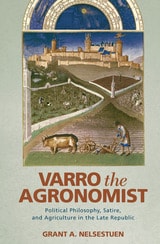
Varro the Agronomist
Political Philosophy, Satire, and Agriculture in the Late RepublicGrant A. Nelsestuen
The Ohio State University Press, 2015
On one level, Varro’s treatise presents an innovative account of the Roman farm, which rationalizes new agricultural and pastoral opportunities for contemporary elite owners of large-scale estates. But on another level, this bold agronomical vision associates the farm’s different spheres with distinct areas under Roman control, thereby allegorizing Rome’s empire on the model of a farm. Nelsestuen argues that Varro’s treatise thus provides his contemporaries with a model for governing the Roman state, anticipates Augustus’ subsequent transformation of Roman dominion into a coherent territorial state, and offers an ancient theory of imperialism.
Shedding new light on the only completely extant work of a much-celebrated but ill-understood figure, Varro the Agronomist has much to offer to those interested in Latin literature—especially, Cicero and Vergil—as well as on the political dimensions of intellectual life in first-century bce Rome, ancient imperialism, and Roman political philosophy.
Virulent Zones
Animal Disease and Global Health at China's Pandemic EpicenterLyle Fearnley
Duke University Press, 2020
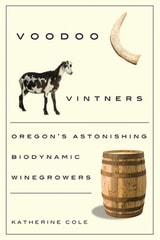
Voodoo Vintners
Oregon's Astonishing Biodynamic WinegrowersKatherine Cole
Oregon State University Press, 2011
Could cow horns, vortexes, and the words of a prophet named Rudolf Steiner hold the key to producing the most alluring wines in the world—and to saving the planet?
In Voodoo Vintners, wine writer Katherine Cole reveals the mysteries of biodynamic winegrowing, tracing its practice from Paleolithic times to the finest domaines in Burgundy today. At the epicenter of the American biodynamic revolution are the Oregon winemakers who believe that this spiritual style of farming results in the truest translations of terroir and the purest pinot noirs possible.
Cole introduces these “voodoo vintners,” examining their motivations and rationalizations and explaining why the need to farm biodynamically courses through their blood. Her engaging narrative answers the call of oenophiles everywhere for more information about this “beyond organic” style of winemaking.