664 books match the query 'Ancient & Classical' and 9 start with v
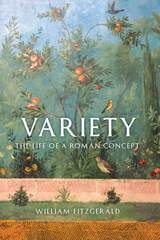
cover of Variety: The Life of a Roman Concept

Variety

The Life of a Roman Concept

William Fitzgerald

University of Chicago Press, 2016

The idea of variety may seem too diffuse, obvious, or nebulous to be worth scrutinizing, but modern usage masks the rich history of the term. This book examines the meaning, value, and practice of variety from the vantage point of Latin literature and its reception and reveals the enduring importance of the concept up to the present day.

William Fitzgerald looks at the definition and use of the Latin term varietas and how it has played out in different works and with different authors. He shows that, starting with the Romans, variety has played a key role in our thinking about nature, rhetoric, creativity, pleasure, aesthetics, and empire. From the lyric to elegy and satire, the concept of variety has helped to characterize and distinguish different genres. Arguing that the ancient Roman ideas and controversies about the value of variety have had a significant afterlife up to our own time, Fitzgerald reveals how modern understandings of diversity and choice derive from what is ultimately an ancient concept.
[more]
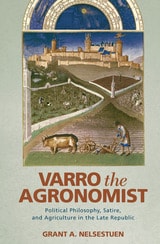
cover of Varro the Agronomist: Political Philosophy, Satire, and Agriculture in the Late Republic

Varro the Agronomist

Political Philosophy, Satire, and Agriculture in the Late Republic

Grant A. Nelsestuen

The Ohio State University Press, 2015

Some six years after his narrow escape from proscription in 43 bce, Marcus Terentius Varro, the “most learned” of the Romans, wrote a technical treatise on farming in the form of a satirico-philosophical dialogue. Grant A. Nelsestuen argues that far from simply being just another encyclopedic entry of a seemingly aloof antiquarian or offering an escapist’s retreat into rustication, Varro’s De Re Rustica uses the model of the farm to craft an implicitly political treatise that grapples with multifarious challenges facing the contemporary Roman world.
 
On one level, Varro’s treatise presents an innovative account of the Roman farm, which rationalizes new agricultural and pastoral opportunities for contemporary elite owners of large-scale estates. But on another level, this bold agronomical vision associates the farm’s different spheres with distinct areas under Roman control, thereby allegorizing Rome’s empire on the model of a farm. Nelsestuen argues that Varro’s treatise thus provides his contemporaries with a model for governing the Roman state, anticipates Augustus’ subsequent transformation of Roman dominion into a coherent territorial state, and offers an ancient theory of imperialism.
 
Shedding new light on the only completely extant work of a much-celebrated but ill-understood figure, Varro the Agronomist has much to offer to those interested in Latin literature—especially, Cicero and Vergil—as well as on the political dimensions of intellectual life in first-century bce Rome, ancient imperialism, and Roman political philosophy.
[more]
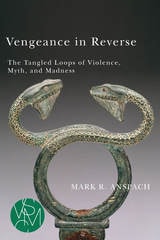
cover of Vengeance in Reverse: The Tangled Loops of Violence, Myth, and Madness

Vengeance in Reverse

The Tangled Loops of Violence, Myth, and Madness

Mark R. Anspach

Michigan State University Press, 2017
How do humans stop fighting? Where do the gods of myth come from? What does it mean to go mad? Mark R. Anspach tackles these and other conundrums as he draws on ethnography, literature, psychotherapy, and the theory of René Girard to explore some of the fundamental mechanisms of human interaction. Likening gift exchange to vengeance in reverse, the first part of the book outlines a fresh approach to reciprocity, while the second part traces the emergence of transcendence in collective myths and individual delusions. From the peacemaking rituals of prestate societies to the paradoxical structure of consciousness, Anspach takes the reader on an intellectual journey that begins with the problem of how to deceive violence and ends with the riddle of how one can deceive oneself.
 
 
[more]
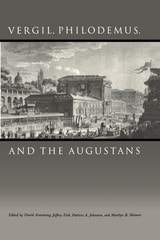
cover of Vergil, Philodemus, and the Augustans

Vergil, Philodemus, and the Augustans

Edited by David Armstrong, Jeffrey Fish, Patricia A. Johnston, and Marilyn B. Skinner

University of Texas Press, 2003

The Epicurean teacher and poet Philodemus of Gadara (c. 110-c. 40/35 BC) exercised significant literary and philosophical influence on Roman writers of the Augustan Age, most notably the poets Vergil and Horace. Yet a modern appreciation for Philodemus' place in Roman intellectual history has had to wait on the decipherment of the charred remains of Philodemus' library, which was buried in Herculaneum by the eruption of Vesuvius in 79 AD. As improved texts and translations of Philodemus' writings have become available since the 1970s, scholars have taken a keen interest in his relations with leading Latin poets.

The essays in this book, derived from papers presented at the First International Symposium on Philodemus, Vergil, and the Augustans held in 2000, offer a new baseline for understanding the effect of Philodemus and Epicureanism on both the thought and poetic practices of Vergil, Horace, and other Augustan writers. Sixteen leading scholars trace his influence on Vergil's early writings, the Eclogues and the Georgics, and on the Aeneid, as well as on the writings of Horace and others. The volume editors also provide a substantial introduction to Philodemus' philosophical ideas for all classicists seeking a fuller understanding of this pivotal figure.
[more]
cover of Virgil and Joyce: Nationalism and Imperialism in the <i>Aeneid</i> and <i>Ulysses</i>

Virgil and Joyce

Nationalism and Imperialism in the <i>Aeneid</i> and <i>Ulysses</i>

Randall J. Pogorzelski

University of Wisconsin Press, 2016

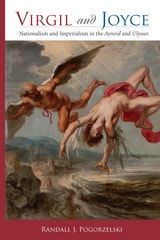
James Joyce’s Ulysses is a modern version of Homer’s Odyssey, but Joyce—who was a better scholar of Latin than of Greek—also was deeply influenced by the Aeneid, Virgil’s epic poem about the journey of Aeneas and the foundation of Rome.
            Joyce wrote Ulysses during the Irish War of Independence, when militants, politicians, and intellectuals were attempting to create a new Irish nation. Virgil wrote the Aeneid when, in the wake of decades of civil war, Augustus was founding what we now call the Roman Empire. Randall Pogorzelski applies modern theories of nationalism, intertextuality, and reception studies to illuminate how both writers confronted issues of nationalism, colonialism, political violence, and freedom during times of crisis.
[more]
cover of Virginia Woolf, Jane Ellen Harrison, and the Spirit of Modernist Classicism

Virginia Woolf, Jane Ellen Harrison, and the Spirit of Modernist Classicism

Jean Mills

The Ohio State University Press, 2014

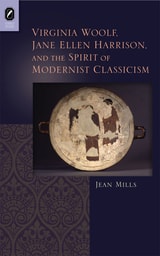
In a work that re-investigates archival materials and deploys an innovative theoretical framework, Jean Mills explores the intellectual and political relationship between Virginia Woolf and the Cambridge classicist Jane Ellen Harrison. Virginia Woolf, Jane Ellen Harrison, and the Spirit of Modernist Classicism discovers an intimate connection crucial to Woolf’s professional identity and intellectual and artistic development in Harrison’s controversial, feminist interpretations of Greek mythology. Mills argues that cross-reading Jane Harrison and Virginia Woolf exposes a distinctive relationship between two women intellectuals, one that does not rehearse the linearity of influence but instead demonstrates the intricacy of intertextuality—an active and transformative use of one body of writing by another writer—that makes of Virginia Woolf’s modernism a specifically feminist amplification. This cross-reading reveals a dimension of modernism that has been overlooked or minimized: Mills demonstrates that the questions preoccupying Harrison also resonated with Woolf, who adapted Harrison’s ideas to her own intellectual, political, and literary pursuits.

To an extent, Virginia Woolf, Jane Ellen Harrison, and the Spirit of Modernist Classicism participates in an act of classical recovery. It is an effort to revive and reclaim Harrison’s work and to illustrate the degree to which her cultural, political, and scholastic example informed one of the major modernist voices of the twentieth century.
[more]
cover of Virginia Woolf’s Mythic Method

Virginia Woolf’s Mythic Method

Amy C. Smith

The Ohio State University Press, 2022
In Virginia Woolf’s Mythic Method, Amy C. Smith reinvigorates scholarly analysis of myth in Virginia Woolf’s fiction by examining how Woolf engaged social and political issues in her work. Through close readings of Mrs. Dalloway, To the Lighthouse, and Between the Acts, Smith argues that Woolf develops a paratactic method of alluding to Greek myth that is shaped by the style of archaic oral literature and her intersectional feminist insights. By revising such famously paradoxical figures as the Great Goddess, the Eleusinian deities, Dionysus, Odysseus, and the Sirens, Woolf illustrates the links between epistemological and metaphysical assumptions and war, empire, patriarchy, capitalism, and fascism. At the same time, her use of parataxis to invoke ancient myth unsettles authorial control and empowers readers to participate in making meaning out of her juxtaposed fragments. In contrast to T. S. Eliot’s more prominent mythic method, which seeks to control the anarchy of modern life, Woolf’s paratactic method envisions more livable forms of sociality by destabilizing meaning in her novels, an agenda that aligns better with our contemporary understandings of modernism.
[more]
cover of Virtue Is Knowledge: The Moral Foundations of Socratic Political Philosophy

Virtue Is Knowledge

The Moral Foundations of Socratic Political Philosophy

Lorraine Smith Pangle

University of Chicago Press, 2014

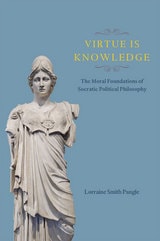
The relation between virtue and knowledge is at the heart of the Socratic view of human excellence, but it also points to a central puzzle of the Platonic dialogues: Can Socrates be serious in his claims that human excellence is constituted by one virtue, that vice is merely the result of ignorance, and that the correct response to crime is therefore not punishment but education? Or are these assertions mere rhetorical ploys by a notoriously complex thinker?

Lorraine Smith Pangle traces the argument for the primacy of virtue and the power of knowledge throughout the five dialogues that feature them most prominently—the Apology, Gorgias, Protagoras, Meno, and Laws—and reveals the truth at the core of these seemingly strange claims. She argues that Socrates was more aware of the complex causes of human action and of the power of irrational passions than a cursory reading might suggest. Pangle’s perceptive analyses reveal that many of Socrates’s teachings in fact explore the factors that make it difficult for humans to be the rational creatures that he at first seems to claim. Also critical to Pangle’s reading is her emphasis on the political dimensions of the dialogues. Underlying many of the paradoxes, she shows, is a distinction between philosophic and civic virtue that is critical to understanding them.

Ultimately, Pangle offers a radically unconventional way of reading Socrates’s views of human excellence: Virtue is not knowledge in any ordinary sense, but true virtue is nothing other than wisdom.
[more]
cover of Vision and Stagecraft in Sophocles

Vision and Stagecraft in Sophocles

David Seale

University of Chicago Press, 1982

In this study, David Seale argues that Sophocles’s use of stagecraft, which has thus far received little attention, was as sophisticated as that of Aeschylus or Euripides. His discussions of the physical and visual elements of Sophocles's seven plays center around the theme of sight; he demonstrates that each play is staged to maximize the implications and effects of “seeing” and not “seeing,” of knowledge and ignorance. This emphasis on visual perception, Seale maintains, harmonizes with Sophocles’s use of verbal and thematic techniques to create dramatic movements from delusion to truth, culminating in climaxes that are revelations—moments when things are truly “seen” by both audience and characters.
[more]