Results by title
788 books match the query 'Caribbean & Latin American' and 13 start with v
Varieties of Liberalism in Central America
Nation-States as Works in ProgressBy Forrest D. Colburn and Arturo Cruz S.
University of Texas Press, 2007
Why do some countries progress while others stagnate? Why does adversity strengthen some countries and weaken others? Indeed, in this era of unprecedented movement of people, goods, and ideas, just what constitutes a nation-state? Forrest Colburn and Arturo Cruz suggest how fundamental these questions are through an exploration of the evolution of Guatemala, El Salvador, Honduras, Nicaragua, and Costa Rica over the last quarter of a century, a period of intriguing, often confounding, paradoxes in Central America's development.
Offering an elegant defense of empiricism, Colburn and Cruz explore the roles of geography and political choice in constructing nations and states. Countries are shown to be unique: there are a daunting number of variables. There is causality, but not the kind that can be revealed in the laboratory or on the blackboard. Liberalism—today defined as democracy and unfettered markets—may be in vogue, but it has no inherent determinants. Democracy and market economies, when welded to the messy realities of individual countries, are compatible with many different outcomes. The world is more pluralistic in both causes and effects than either academic theories or political rhetoric suggest.
Violence and Naming
On Mexico and the Promise of LiteratureBy David E. Johnson
University of Texas Press, 2019
Reclaiming the notion of literature as an institution essential for reflecting on the violence of culture, history, and politics, Violence and Naming exposes the tension between the irreducible, constitutive violence of language and the reducible, empirical violation of others. Focusing on an array of literary artifacts, from works by journalists such as Elena Poniatowska and Sergio González Rodríguez to the Zapatista communiqués to Roberto Bolaño's The Savage Detectives and 2666, this examination demonstrates that Mexican culture takes place as a struggle over naming—with severe implications for the rights and lives of women and indigenous persons.
Through rereadings of the Conquest of Mexico, the northern Mexican feminicide, the Zapatista uprising in Chiapas, the disappearance of the forty-three students at Iguala in 2014, and the 1999 abortion-rights scandal centering on “Paulina,” which revealed the tenuousness of women’s constitutionally protected reproductive rights in Mexico, Violence and Naming asks how societies can respond to violence without violating the other. This essential question is relevant not only to contemporary Mexico but to all struggles for democracy that promise equality but instead perpetuate incessant cycles of repression.
Visible Dissent
Latin American Writers, Small U.S. Presses, and Progressive Social ChangeTeresa V. Longo
University of Iowa Press, 2018
As Teresa Longo’s groundbreaking examination reveals, North America’s dissident literature has its roots in the Latin American literary tradition. From Pablo Neruda’s Canto General to Eduardo Galeano’s Open Veins of Latin America to Gabriel García Márquez’s One Hundred Years of Solitude—among others—contemporary writers throughout the Americas have forced us to reconsider the United States’s relationship with Latin America, and more broadly with the Global South. Highlighting the importance of reading and re-reading the Latin American canon in the United States, Longo finds that literature can be an instrument of progressive social change, and argues that small literary presses—City Lights, Curbstone, and Seven Stories—have made that dissent visible in the United States. In the book’s final two chapters on the Robert F. Kennedy Center’s Speak Truth to Power initiative and the publication of Marc Falkoff’s Poems from Guantánamo, the author turns our attention further outward, probing the role poetry, theater, and photography play in global human rights work.
Locating the work of artists and writers alongside that of scholars and legal advocates, Visible Dissent not only unveils the staying-power of committed writing, it honors the cross-currents and the on-the-ground implications of humane political engagement.
Visions of Transformation
Hegemony, Plurinationality, and Revolution in BoliviaAaron Augsburger
University of Arizona Press, 2025
On a wave of revolutionary upheaval in the early twenty-first century, Evo Morales was swept into state power as Bolivia’s first Indigenous president with a mandate to radically transform the country. The ensuing period, known simply as “el proceso de cambio” (the process of change), has been a tension-filled and contradictory process involving progressive transformations, ambiguous continuities, and outright revolutionary failures. Importantly, the contradictions have been just as much ideological as they are material.
By examining and illuminating the contrasting logics underlying opposing theories of revolutionary change, Visions of Transformation provides an analytical framework through which to understand and interpret the central conflicts and contradictions of Bolivia under Evo Morales and the Movimiento al Socialismo.
Based on nearly two years of immersive fieldwork, Visions of Transformation explores the relation between theoretical production and political practice. Through the contrasting perspectives of hegemony and plurinationality, the book analyzes three specific conjunctural moments—a proposed highway through the TIPNIS, a conflict over representation of the highland Indigenous movement organization CONAMAQ, and the struggle for Indigenous autonomy—to shed light on the primary economic, social, political, and theoretical tensions at the heart of Bolivia’s proceso de cambio.
Visual Disobedience
Art and Decoloniality in Central AmericaKency Cornejo
Duke University Press, 2024
Visualizing Latinx
Creative Practices in Fashion, Film, and BeyondArlene Dávila
Duke University Press, 2026
Vital Voids
Cavities and Holes in Mesoamerican Material CultureBy Andrew Finegold
University of Texas Press, 2021
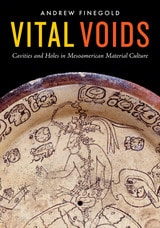
The Resurrection Plate, a Late Classic Maya dish, is decorated with an arresting scene. The Maize God, assisted by two other deities, emerges reborn from a turtle shell. At the center of the plate, in the middle of the god’s body and aligned with the point of emergence, there is a curious sight: a small, neatly drilled hole.
Art historian Andrew Finegold explores the meanings attributed to this and other holes in Mesoamerican material culture, arguing that such spaces were broadly understood as conduits of vital forces and material abundance, prerequisites for the emergence of life. Beginning with, and repeatedly returning to, the Resurrection Plate, this study explores the generative potential attributed to a wide variety of cavities and holes in Mesoamerica, ranging from the perforated dishes placed in Classic Maya burials, to caves and architectural voids, to the piercing of human flesh. Holes are also discussed in relation to fire, based on the common means through which both were produced: drilling. Ultimately, by attending to what is not there, Vital Voids offers a fascinating approach to Mesoamerican cosmology and material culture.
Viva Cristo Rey!
The Cristero Rebellion and the Church-State Conflict in MexicoBy David C. Bailey
University of Texas Press, 1974
Between 1926 and 1929, thousands of Mexicans fought and died in an attempt to overthrow the government of their country. They were the Cristeros, so called because of their battle cry, ¡Viva Cristo Rey!—Long Live Christ the King! The Cristero rebellion and the church-state conflict remain one of the most controversial subjects in Mexican history, and much of the writing on it is emotional polemic. David C. Bailey, basing his study on the most important published and unpublished sources available, strikes a balance between objective reporting and analysis. This book depicts a national calamity in which sincere people followed their convictions to often tragic ends.
The Cristero rebellion climaxed a century of animosity between the Catholic church and the Mexican state, and this background is briefly summarized here. With the coming of the 1910 revolution the hostility intensified. The revolutionists sought to impose severe limitations on the Church, and Catholic anti-revolutionary militancy grew apace. When the government in 1926 decreed strict enforcement of anticlerical legislation, matters reached a crisis. Church authorities suspended public worship throughout Mexico, and Catholics in various parts of the country rose up in arms. There followed almost three years of indecisive guerrilla warfare marked by brutal excesses on both sides. Bailey describes the armed struggle in broad outline but concentrates on the political and diplomatic maneuvering that ultimately decided the issue.
A de facto settlement was brought about in 1929, based on the government’s pledge to allow the Church to perform its spiritual offices under its own internal discipline. The pact was arranged mainly through the intercession of U.S. Ambassador Dwight Morrow. His role in the conflict, as well as that of other Americans who decisively influenced the course of events, receives detailed attention in the study. The position of the Vatican during the conflict and its role in the settlement are also examined in detail.
With the 1929 settlement the clergy returned to the churches, whereupon the Cristeros lost public support and the rebellion collapsed. The spirit of the settlement soon evaporated, more strife followed, and only after another decade did permanent religious peace come to Mexico.
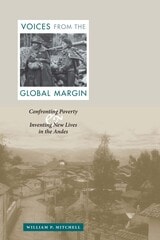
Voices from the Global Margin
Confronting Poverty and Inventing New Lives in the AndesBy William P. Mitchell
University of Texas Press, 2006
2007 — LASA Peru Flora Tristán Book Prize from the Peru Section – Latin American Studies Association
Voices from the Global Margin looks behind the generalities of debates about globalization to explore the personal impact of global forces on the Peruvian poor. In this highly readable ethnography, William Mitchell draws on the narratives of people he has known for forty years, offering deep insight into how they have coped with extreme poverty and rapid population growth—and their creation of new lives and customs in the process. In their own passionate words they describe their struggles to make ends meet, many abandoning rural homes for marginal wages in Lima and the United States. They chronicle their terror during the Shining Path guerrilla war and the government's violent military response. Mitchell's long experience as an anthropologist living with the people he writes about allows him to put the stories in context, helping readers understand the impact of the larger world on individuals and their communities. His book reckons up the human costs of the global economy, urging us to work toward a more just world.
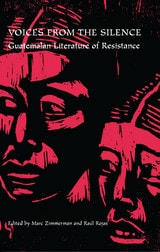
Voices from the Silence
Guatemalan Literature of ResistanceMarc Zimmerman
Ohio University Press, 1998
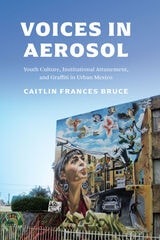
Voices in Aerosol
Youth Culture, Institutional Attunement, and Graffiti in Urban MexicoCaitlin Frances Bruce
University of Texas Press, 2024
2024 Visual Communication Division Award, National Communication Association
2025 Philosophy of Communication, Theory, and Critique Division Distinguished Book Award, National Communication Association
2025 Winans-Wichelns Memorial Award for Distinguished Scholarship in Rhetoric and Public Address, National Communication Association
How a city government in central Mexico evolved from waging war on graffiti in the early 2000s to sanctioning its creation a decade later, and how youth navigated these changing conditions for producing art.
The local government, residents, and media outlets in León, Mexico, treated graffiti as a disease until the state began sponsoring artistic graffiti through a program of its own. In Voices in Aerosol, the first book-length study of state-sponsored graffiti, Caitlin Frances Bruce considers the changing perceptions and recognition of graffiti artists, their right to the city, and the use of public space over the span of eighteen years (2000–2018). Focusing on the midsized city of León, Bruce offers readers a look at the way negotiations with the neoliberal state unfolded at different levels and across decades.
Issues brought to light in this case study, such as graffiti as a threat and graffiti as a sign of gentrification, resonate powerfully with those germane to other urban landscapes throughout the Western Hemisphere and beyond. Combining archival work, interviews, considerations of urban planning, local politics in Mexico, and insights gained by observing graffiti events and other informal artistic encounters, Bruce offers a new lens through which to understand the interplay between sanctioned and unsanctioned forms of cultural expression. Ultimately, Voices in Aerosol builds a strong case for graffiti as a contested tool for "voicing" public demands.
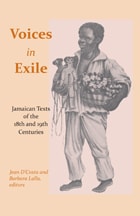
Voices in Exile
Jamaican Texts of the 18th and 19th CenturiesJean D'Costa
University of Alabama Press, 2009
Recovering the voices that shaped Jamaica's language, literature, and identity.
Voices in Exile: Jamaican Texts of the 18th and 19th Centuries is a landmark anthology that brings together a rich collection of historical documents illuminating the origins and development of Jamaican language, culture, and identity. Edited by renowned scholars Jean D'Costa and Barbara Lalla, the volume gathers songs, sermons, folk narratives, eyewitness accounts, personal testimonies, and other primary materials that reveal the complex social and cultural world of Jamaica during the colonial and post-emancipation eras.
Spanning the eighteenth and nineteenth centuries, the collection traces the emergence of a distinctive Jamaican society forged through the interaction of African, European, and Caribbean peoples. The selected texts capture the realities of plantation life, slavery, resistance, religious expression, language development, and everyday experience while showcasing the creativity and resilience of communities whose voices have often been marginalized in traditional historical narratives.
Particularly valuable for its documentation of Jamaican Creole and evolving linguistic practices, the anthology provides readers with direct access to the words and perspectives of individuals living through profound social transformation. Materials from the periods before emancipation, during apprenticeship, and after emancipation illustrate how language and culture adapted to changing political and economic conditions.
More than a collection of historical texts, Voices in Exile serves as a window into the formation of Jamaican identity and the broader cultural history of the Caribbean. By preserving and contextualizing these remarkable documents, D'Costa and Lalla offer an indispensable resource for students and scholars of Caribbean studies, literature, linguistics, history, postcolonial studies, and the African diaspora. The result is a compelling archive of voices that continue to resonate across centuries and enrich our understanding of Jamaica's cultural heritage.
Voices of Change in the Spanish American Theater
An AnthologyEdited and translated by William I. Oliver
University of Texas Press, 1971
The aim of this anthology is to present a selection of plays that are representative of a fresh spirit and of societal pressures and changes in Spanish American culture. The plays shun the earlier realistic, sentimental, and melodramatic conventions of Spanish American theater. Instead, they reflect the tenor of the dramatic imagination of the mid-to-late twentieth century—an imagination that sought new forms and ways of expressing a new awareness of the Spanish American dilemma.
In selecting these plays, William I. Oliver looked for more than mere illustrations of these changes. As a practicing director and playwright, he sought works that are effective on the stage as well as on the page. As an editor and translator, he sought works “that could be translated culturally as well as linguistically.” The six plays in this varied and vigorous anthology are the measure of his success.
The plays included are The Day They Let the Lions Loose, by Emilio Carballido (Mexico); The Camp, by Griselda Gambaro (Argentina); The Library, by Carlos Maggi (Uruguay); In the Right Hand of God the Father, by Enrique Buenaventura (Colombia); The Mulatto’s Orgy, by Luisa Josefina Hernández (Mexico); and Viña: Three Beach Plays, by Sergio Vodánovic (Chile).