Results by title
475 books match the query 'Catholic' and 3 start with v
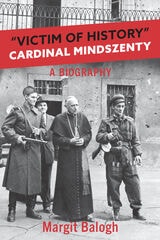
Victim of History
Cardinal Mindszenty, a biographyMargit Balogh
Catholic University of America Press, 2022
“Victim of history,” “a martyr from behind the Iron Curtain,” “the Hungarian Gandhi” – these are just some of the epithets which people used to describe Cardinal Mindszenty, archbishop of Esztergom, who was the last Hungarian prelate to use the title of prince primate. Today, Mindszenty has been forgotten in most countries except for Hungary, but when he died in 1975, he was known all over the world as a symbol of the struggle of the Catholic Church against communism.
Cardinal Mindszenty held the post of archbishop of Esztergom from 1945 until 1974, but during this period of almost three decades he served barely four years in office. The political police arrested him on December 26, 1948, and the Budapest People’s Court subsequently sentenced him to life imprisonment. Based on the Stalinist practice of show trials, one of the accusations against Mindszenty, referring to his legitimist leanings, was his alleged attempt to re-establish Habsburg rule in Hungary. He regained freedom during the 1956 revolution but only for a few days. He was granted refuge by the US Embassy in Budapest between November 4, 1956 –September 28, 1971. In the fifteen years he spent at the American embassy enormous changes took place in the world while his personality remained frozen into the past. When in 1971 Pope Paul VI received the Hungarian foreign minister, he called Mindszenty “the victim of history”. His last years were spent free at last, but far away from his homeland. In Hungary, the Catholic believers eagerly await his beatification.
[more]
Violence and Miracle in the Fourteenth Century
Private Grief and Public SalvationMichael E. Goodich
University of Chicago Press, 1995
As war, pestilence, and famine spread through Europe in the Middle Ages, so did reports of miracles, of hopeless victims wondrously saved from disaster. These "rescue miracles," recorded by over one hundred fourteenth-century cults, are the basis of Michael Goodich's account of the miraculous in everyday medieval life.
Rescue miracles offer a wide range of voices rarely heard in medieval history, from women and children to peasants and urban artisans. They tell of salvation not just from the ravages of nature and war, but from the vagaries of a violent society—crime, unfair judicial practices, domestic squabbles, and communal or factional conflict. The stories speak to a collapse of confidence in decaying institutions, from the law to the market to feudal authority. Particularly, the miraculous escapes documented during the Hundred Years' War, the Italian communal wars, and other conflicts are vivid testimony to the end of aristocratic warfare and the growing victimization of noncombatants.
Miracles, Goodich finds, represent the transcendent and unifying force of faith in a time of widespread distress and the hopeless conditions endured by the common people of the Middle Ages. Just as the lives of the saints, once dismissed as church propaganda, have become valuable to historians, so have rescue miracles, as evidence of an underlying medieval mentalite. This work expands our knowledge of that state of mind and the grim conditions that colored and shaped it.
[more]
Von Balthasar & the Option for the Poor
Theodramatics in the Light of Liberation TheologyTodd Walatka
Catholic University of America Press, 2017
Hans Urs von Balthasar’s vast corpus of theological, philosophical, literary, and pastoral writings remains one of the most impressive achievements in 20th century thought. In light of liberation theology and now the papacy of Francis, however, a theological affirmation of the option for the poor remains dangerously weak in Balthasar’s corpus. Von Balthasar and the Option for the Poor offers a sympathetic reforming of Balthasar’s account of the drama of salvation – what he calls “theodramatics” – in response to this weakness.
[more]