Results by title
260 books match the query 'Central America' and 3 start with v
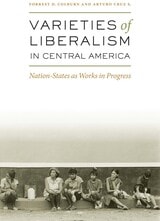
Varieties of Liberalism in Central America
Nation-States as Works in ProgressBy Forrest D. Colburn and Arturo Cruz S.
University of Texas Press, 2007
Why do some countries progress while others stagnate? Why does adversity strengthen some countries and weaken others? Indeed, in this era of unprecedented movement of people, goods, and ideas, just what constitutes a nation-state? Forrest Colburn and Arturo Cruz suggest how fundamental these questions are through an exploration of the evolution of Guatemala, El Salvador, Honduras, Nicaragua, and Costa Rica over the last quarter of a century, a period of intriguing, often confounding, paradoxes in Central America's development.
Offering an elegant defense of empiricism, Colburn and Cruz explore the roles of geography and political choice in constructing nations and states. Countries are shown to be unique: there are a daunting number of variables. There is causality, but not the kind that can be revealed in the laboratory or on the blackboard. Liberalism—today defined as democracy and unfettered markets—may be in vogue, but it has no inherent determinants. Democracy and market economies, when welded to the messy realities of individual countries, are compatible with many different outcomes. The world is more pluralistic in both causes and effects than either academic theories or political rhetoric suggest.
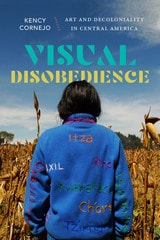
Visual Disobedience
Art and Decoloniality in Central AmericaKency Cornejo
Duke University Press, 2024
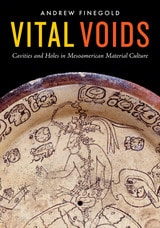
Vital Voids
Cavities and Holes in Mesoamerican Material CultureBy Andrew Finegold
University of Texas Press, 2021
The Resurrection Plate, a Late Classic Maya dish, is decorated with an arresting scene. The Maize God, assisted by two other deities, emerges reborn from a turtle shell. At the center of the plate, in the middle of the god’s body and aligned with the point of emergence, there is a curious sight: a small, neatly drilled hole.
Art historian Andrew Finegold explores the meanings attributed to this and other holes in Mesoamerican material culture, arguing that such spaces were broadly understood as conduits of vital forces and material abundance, prerequisites for the emergence of life. Beginning with, and repeatedly returning to, the Resurrection Plate, this study explores the generative potential attributed to a wide variety of cavities and holes in Mesoamerica, ranging from the perforated dishes placed in Classic Maya burials, to caves and architectural voids, to the piercing of human flesh. Holes are also discussed in relation to fire, based on the common means through which both were produced: drilling. Ultimately, by attending to what is not there, Vital Voids offers a fascinating approach to Mesoamerican cosmology and material culture.