188 books match the query 'City planning' and 3 start with v
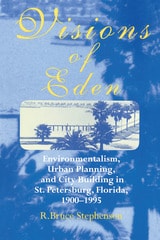
cover of VISIONS OF EDEN: Environmentalism, Urban Planning, and City Building in St. Petersburg, Florida, 1900–1995

VISIONS OF EDEN

Environmentalism, Urban Planning, and City Building in St. Petersburg, Florida, 1900–1995

R. Bruce Stephenson

The Ohio State University Press, 1997
"Stephenson's story of the rise, fall, and resurrections of a good idea takes the reader on a whirlwind tour through planning, political, and public works history. It also contains several messages we should all bear in mind. One is that any city planning should be truly comprehensive and environmentally responsible, considering both what we have built and what we have inherited, and balancing what we want with what we need. Another is that planners and zoning officers must share the same goals. The third is a timely and painful reminder to those of us who frequently lose patience with the way things work, and that is that no one really cares about the future when the present is glittering so brightly." --Environmental History "This study is the first book-length treatment of St. Petersburg's development and is a major contribution to American urban and urban-planning history." --Choice Florida enjoys the only subtropical climate in the continental United States. Its burgeoning population and robust tourist economy attest to the state's special allure. Innovative new towns like Miami Lakes and Seaside, along with established communities such as Winter Park and Coral Gables, exemplify Florida's beauty and potential. St. Petersburg, the largest city in Florida's most urbanized county, epitomizes the best and the worst of the state's city planning history. Enterprise and technology transformed this once struggling backwater into an air-conditioned vision of Eden, but a heavy debt was accumulated in the process. Paradise is under siege: wetlands have been drained, mangroves cleared, sand dunes leveled, bays degraded and filled; water must be imported from inland wells. Although the city now has an innovative growth management system, it was perilously late in coming. In Visions of Eden, R. Bruce Stephenson examines how St. Petersburg learned to control its development. Since the turn of the century, the opportunity to design a city nestled in a subtropical garden has attracted the nation's preeminent planners to St. Petersburg. The most ambitious plan was developed in 1923 by John Nolen, who believed that an interconnected system of preserves and parks would enhance the city's development and attract tourists for generations. His initiative failed miserably at the polls, however, because it threatened the conflicting notion of paradise held by hundreds of investors, who were profiting from the greatest real estate boom in the nation's history and feared that planning would curtail speculation. As Stephenson points out, a half century would pass until a series of ecological disasters in the 1970s finally compelled city officials to adopt an environmentally sound development plan that reflected Nolen's original vision. Stephenson carefully explores St. Petersburg's slow awakening to ecological responsibility--to the importance of designing a community that meets both human needs and economic demands. As the debate over the "New Urbanism" moves forward, this book will serve as a useful guide for those who will plan, build, and inhabit the cities of the twenty-first century. R. Bruce Stephenson is an associate professor and chair of the environmental studies department at Rollins College in Winter Park, Florida.
[more]
cover of VISIONS OF PLACE: CITY, NEIGHBORHOODS, SUBURBS, AND CINCINNATI'S CLIFTON, 1850–2000

VISIONS OF PLACE

CITY, NEIGHBORHOODS, SUBURBS, AND CINCINNATI'S CLIFTON, 1850–2000

ZANE L. MILLER

The Ohio State University Press, 2001

Almost every American city has or had neighborhoods like Clifton, which developed in the mid-nineteenth century as a silk-stocking suburb with a more diverse population than most observers noticed. Incorporated by Cincinnati in the late nineteenth century, Clifton had a reputation as a better-than-average place in which to live, a view that persisted until the end of the twentieth century.

In Visions of Place, Zane L. Miller treats ideas about the nature of cities—including their neighborhoods and their suburbs—as the dynamic factors in Clifton’s experience and examines the changes in Clifton's social, physical, civic, and political structure resulting from these transforming notions. These structural shifts involved a variety of familiar nineteenth- and twentieth-century urban phenomena, including not only the switch from suburban village to city neighborhood and the salience of interracial fears but also the rise of formal city planning and conflicts among Protestants, Catholics, and Jews over the future of Clifton's religious and ethnic ambiance.

Miller concludes with a policy analysis of current and future prospects for neighborhoods like Clifton and the cities and metropolitan areas of which they form a part.
[more]
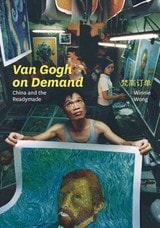
cover of Van Gogh on Demand: China and the Readymade

Van Gogh on Demand

China and the Readymade

Winnie Won Yin Wong

University of Chicago Press, 2014

In a manufacturing metropolis in south China lies Dafen, an urban village that famously houses thousands of workers who paint van Goghs, Da Vincis, Warhols, and other Western masterpieces for the world market, producing an astonishing five million paintings a year. To write about work and life in Dafen, Winnie Wong infiltrated this world, first investigating the work of conceptual artists who made projects there; then working as a dealer; apprenticing as a painter; surveying wholesalers and retailers in Europe, East Asia and North America; establishing relationships with local leaders; and organizing a conceptual art exhibition for the Shanghai World Expo. The result is Van Gogh on Demand, a fascinating book about a little-known aspect of the global art world—one that sheds surprising light on the workings of art, artists, and individual genius.
 
Confronting big questions about the definition of art, the ownership of an image, and the meaning of originality and imitation, Wong describes an art world in which idealistic migrant workers, lofty propaganda makers, savvy dealers, and international artists make up a global supply chain of art and creativity. She examines how Berlin-based conceptual artist Christian Jankowski, who collaborated with Dafen’s painters to reimagine the Dafen Art Museum, unwittingly appropriated the work of a Hong Kong-based photographer Michael Wolf. She recounts how Liu Ding, a Beijing-based conceptual artist, asked Dafen “assembly-line” painters to perform at the Guangzhou Triennial, neatly styling himself into a Dafen boss. Taking the Shenzhen-based photojournalist Yu Haibo’s award-winning photograph from the Amsterdam's World Press Photo organization, she finds and meets the Dafen painter pictured in it and traces his paintings back to an unlikely place in Amsterdam. Through such cases, Wong shows how Dafen’s painters force us to reexamine our preconceptions about creativity, and the role of Chinese workers in redefining global art.
 
Providing a valuable account of art practices in an ascendant China, Van Gogh on Demand is a rich and detailed look at the implications of a world that can offer countless copies of everything that has ever been called “art.”
[more]