Results by title
440 books match the query 'Colonialism & Post-Colonialism' and 5 start with v

Violence and Memory
The Mulele Rebellion in Postcolonial CongoEmery Kalema
Duke University Press, 2027
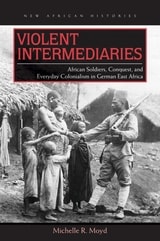
Violent Intermediaries
African Soldiers, Conquest, and Everyday Colonialism in German East AfricaMichelle R. Moyd
Ohio University Press, 2014
The askari, African soldiers recruited in the 1890s to fill the ranks of the German East African colonial army, occupy a unique space at the intersection of East African history, German colonial history, and military history.
Lauded by Germans for their loyalty during the East Africa campaign of World War I, but reviled by Tanzanians for the violence they committed during the making of the colonial state between 1890 and 1918, the askari have been poorly understood as historical agents. Violent Intermediaries situates them in their everyday household, community, military, and constabulary roles, as men who helped make colonialism in German East Africa.
By linking microhistories with wider nineteenth-century African historical processes, Michelle Moyd shows how as soldiers and colonial intermediaries, the askari built the colonial state while simultaneously carving out paths to respectability, becoming men of influence within their local contexts.
Through its focus on the making of empire from the ground up, Violent Intermediaries offers a fresh perspective on African colonial troops as state-making agents and critiques the mythologies surrounding the askari by focusing on the nature of colonial violence.
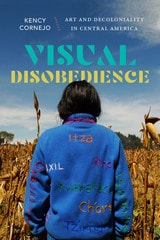
Visual Disobedience
Art and Decoloniality in Central AmericaKency Cornejo
Duke University Press, 2024
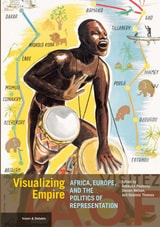
Visualizing Empire
Africa, Europe, and the Politics of RepresentationRebecca Peabody
J. Paul Getty Trust, The, 2021
An exploration of how an official French visual culture normalized France’s colonial project and exposed citizens and subjects to racialized ideas of life in the empire.
By the end of World War I, having fortified its colonial holdings in the Caribbean, Latin America, Africa, the Indian Ocean, and Asia, France had expanded its dominion to the four corners of the earth. This volume examines how an official French visual culture normalized the country’s colonial project and exposed citizens and subjects alike to racialized ideas of life in the empire. Essays analyze aspects of colonialism through investigations into the art, popular literature, material culture, film, and exhibitions that represented, celebrated, or were created for France’s colonies across the seas.
These studies draw from the rich documents and media—photographs, albums, postcards, maps, posters, advertisements, and children’s games—related to the nineteenth- and twentieth-century French empire that are held in the Getty Research Institute’s Association Connaissance de l’histoire de l’Afrique contemporaine (ACHAC) collections. ACHAC is a consortium of scholars and researchers devoted to exploring and promoting discussions of race, iconography, and the colonial and postcolonial periods of Africa and Europe.

Voices From the Other Side
An Oral History of Terrorism Against CubaKeith Bolender
Pluto Press, 2010
Keith Bolender brings to bear the enormous impact that terrorism has had on Cuba’s civilian population, with over 1,000 documented incidents resulting in more than 3,000 deaths and 2,000 injuries. Bolender allows the victims to articulate the atrocities the Cuban people have suffered - which largely originate from Cuban counter-revolutionaries based in the US, often with the active help of the CIA.
Voices From The Other Side includes first-person interviews with more than 75 Cuban citizens who have been victims of these terrorist acts, or have had family members or close friends die from the attacks. It is a unique resource for activists, journalists and students interested in Cuba's torrid relationship with the US.