Results by title
313 books match the query 'Environmental policy' and 3 start with v

Vanishing Bees
Science, Politics, and Honeybee HealthSuryanarayanan, Sainath
Rutgers University Press, 2016
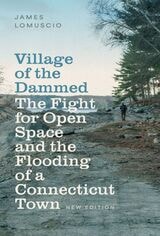
Village of the Dammed
The Fight for Open Space and the Flooding of a Connecticut TownJames Lomuscio
Brandeis University Press, 2025
In the early 1940s, the Bridgeport Hydraulic Company flooded Connecticut’s Saugatuck River Valley to create a reservoir that would meet the region’s growing population. Under twelve billion gallons of water lay Valley Forge, once a thriving iron and steel manufacturing town, which was seized by eminent domain to create the reservoir and dam. In Village of the Dammed, journalist James Lomuscio tells the story of the rise and fall of Valley Forge, drawing on Civil War-era photographs of the town and other sources to show what the town was like, document the futile battle to save it, and reveal the flooding’s life-altering repercussions. He also recounts a grassroots movement to prevent the development of nearby Trout Brook Valley in the 1990s, a heated fight with a different outcome. As the population of the American northeast continues to swell and spread, placing new demands on existing resources, communities are frequently confronted with forces and choices not unlike those faced by Valley Forge and Trout Brook Valley. Village of the Dammed reminds us to be ever vigilant in the protection of our irreplaceable environmental heritage.
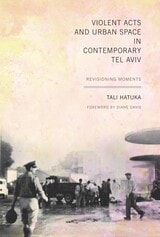
Violent Acts and Urban Space in Contemporary Tel Aviv
Revisioning MomentsBy Tali Hatuka
University of Texas Press, 2010
Violent acts over the past fifteen years have profoundly altered civil rituals, cultural identity, and the meaning of place in Tel Aviv. Three events in particular have shed light on the global rule of urban space in the struggle for territory, resources, and power: the assassination of Prime Minister Rabin in 1995 in the city council square; the suicidal bombing at the Dolphinarium Discothèque along the shoreline in 2001; and bombings in the Neve Shaanan neighborhood in 2003.
Tali Hatuka uses an interdisciplinary framework of urban theory and sociopolitical theory to shed light on the discourse regarding violent events to include an analysis of the physical space where these events take place. She exposes the complex relationships among local groups, the state, and the city, challenging the national discourse by offering a fresh interpretation of contesting forces and their effect on the urban environment.
Perhaps the most valuable contribution of this book is its critical assessment of the current Israeli reality, which is affected by violent events that continually alter the everyday life of its citizens. Although these events have been widely publicized by the media, there is scant literature focusing on their impact on the urban spaces where people live and meet. In addition, Hatuka shows how sociopolitical events become crucial defining moments in contemporary lived experience, allowing us to examine universal questions about the way democracy, ideology, and memory are manifested in the city.