Results by title
128 books match the query 'Feminism and literature' and 4 start with v
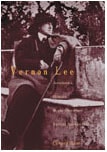
Vernon Lee
Aesthetics, History, and the Victorian Female IntellectualChrista Zorn
Ohio University Press, 2003
The subject of renewed interest among literary and cultural scholars, Vernon Lee wrote more than forty books, in a broad range of genres, including fiction, history, aesthetics, and travel literature. Early on, Lee established her reputation as a public critic whose unconventional viewpoints stood out among those of her contemporaries.
To feminist and cultural critics, she is a fascinating model of the independent female intellectual who, as Desmond MacCarthy once put it, provides a rare combination of intellectual curiosity and imaginative sensibility.
A startlingly original critical study, Vernon Lee adds new dimensions to the legacy of this woman of letters whose career spans the transition from the late Victorian to the modernist period. Zorn draws on archival materials to discuss Lee’s work in terms of British aestheticism and in the context of the Western European history of ideas.
Zorn contends that Lee’s fiction and nonfiction represent a literary position that bridges and surpasses both the Victorian sage and the modernist aesthetic critic.
Through Professor Zorn’s approach, which combines theoretical framings of texts in terms of recent feminist and cultural criticism with passages of close reading, Vernon Lee emerges as an influential figure in late-nineteenth-century British and continental European thinking on history, art, culture, and gender.
Victorian Domesticity
Families in the Life and Art of Louisa May AlcottCharles Strickland
University of Alabama Press, 1985
The subject of Victorian Domesticity is family life in America. The life and works of Louisa May Alcott served as the vehicle for exploring and analyzing this subject. Although Alcott was deeply influenced by popular currents of sentimentality, her own experience exposed her to the confusions and contradictions generated when sentiment confronted the reality of life in 19th-century America.
In the first chapter Strickland outlines the ways in which sentimentality colored the perception of 19th-century Americans about such issues as courtship, marriage, the relationship between the sexes, generational relationships, and the relationship between the nuclear family and the community outside the family. Chapters two and three trace Alcott’s childhood and adolescent experiences, exploring the tensions that developed between Louisa and her father, and detailing the ways in which she carried the double burden of being both poor and female as she sought her identity as a writer.
The following six chapters treat the varieties of family life that appear in Alcott’s stories, the impact of feminism on her life, and her emphasis on the importance of child nurture. In the final two chapters the author treats the relationships that Alcott perceived between the family and the world around it and assesses the legacy of the Victorian family idea.

Virginia Woolf Icon
Brenda R. Silver
University of Chicago Press, 1999
From Virginia Woolf's 1937 appearance on the cover of Time magazine to her current roles in theater, film, and television, Silver traces the often contradictory representations and the responses they provoke, highlighting the recurring motifs that associate Virginia Woolf with fear. By looking more closely at who is afraid and the contexts in which she is perceived to be frightening, Silver illustrates how Virginia Woolf has become the site of conflicts about cultural boundaries and legitimacy that continue to rage today.
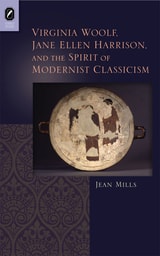
Virginia Woolf, Jane Ellen Harrison, and the Spirit of Modernist Classicism
Jean Mills
The Ohio State University Press, 2014
To an extent, Virginia Woolf, Jane Ellen Harrison, and the Spirit of Modernist Classicism participates in an act of classical recovery. It is an effort to revive and reclaim Harrison’s work and to illustrate the degree to which her cultural, political, and scholastic example informed one of the major modernist voices of the twentieth century.