Results by title
64 books match the query 'Haiti' and 2 start with v

Vodou Nation
Haitian Art Music and Cultural NationalismMichael Largey
University of Chicago Press, 2006
While the Haitian musical tradition is probably best known for the Vodou-inspired roots music that helped topple the two-generation Duvalier dictatorship, the nation’s troubled history of civil unrest and its tangled relationship with the United States is more intensely experienced through its art music, which combines French and German elements of classical music with Haiti's indigenous folk music. Vodou Nation examines art music by Haitian and African American composers who were inspired by Haiti’s history as a nation created by slave revolt.
Around the time of the United States’s occupation of Haiti in 1915, African American composers began to incorporate Vodou-inspired musical idioms to showcase black artistry and protest white oppression. Together with Haitian musicians, these composers helped create what Michael Largey calls the “Vodou Nation,” an ideal vision of Haiti that championed its African-based culture as a bulwark against America’s imperialism. Highlighting the contributions of many Haitian and African American composers who wrote music that brought rhythms and melodies of the Vodou ceremony to local and international audiences, Vodou Nation sheds light on a black cosmopolitan musical tradition that was deeply rooted in Haitian culture and politics.
Around the time of the United States’s occupation of Haiti in 1915, African American composers began to incorporate Vodou-inspired musical idioms to showcase black artistry and protest white oppression. Together with Haitian musicians, these composers helped create what Michael Largey calls the “Vodou Nation,” an ideal vision of Haiti that championed its African-based culture as a bulwark against America’s imperialism. Highlighting the contributions of many Haitian and African American composers who wrote music that brought rhythms and melodies of the Vodou ceremony to local and international audiences, Vodou Nation sheds light on a black cosmopolitan musical tradition that was deeply rooted in Haitian culture and politics.
[more]
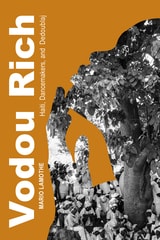
Vodou Rich
Haiti, Dancemakers, and DedoublajMario LaMothe
University of Illinois Press, 2026
Contemporary dance in Haiti challenges global stereotypes of its people, their country, and their worldmaking. Mario LaMothe profiles four celebrated Haitian choreographers to examine the influences that nurtured the generative and transgressive dance practices found today in the Caribbean nation.
LaMothe weaves Vodou teaching practices with humanist and social science theory to shed light on how choreographers move among ideas of Haitian bodies as vessels, producers, and traffickers of Vodou economies. As he shows, the dancemakers’ work maneuvers through national uncertainties and international caricatures of Haiti’s challenges. At the same time, it pivots between these phenomena via dedoublaj—the act of doubling, self-doubling, transformation, and soulful travel. LaMothe’s analysis of dedoublaj reveals how dancemakers reimagine Haitian bodies as self-possessed human beings remedying unjust practices, envisioning chances for solidarity and being, and setting a course for queerly paced futures.
Powerful and multidisciplinary, Vodou Rich explores Haitian dancemaking at home and its reception around the world.
[more]